Search the KHIT Blog

Showing posts sorted by date for query social determinants. Sort by relevance Show all posts

Tuesday, January 23, 2024

NPR while in the car: Another author and book come to my attention

Cheryl and I typically fetch our 4 yr old Grandson Calvin from his preschool on Mondays through Thursdays, so the kids can finish their workdays.


Yesterday while schlepping down to Fell's Point we had NPR's Fresh Air on the radio.

I noted the author and book title in my iPhone. The book was released this morning.
 
ucheblackstock.com
Downloaded it first thing when I got up.
 
Reading it sort of "in reverse" at the outset, following the Intro: Epilogue, Acknowledgements, Chapters 15, 14, 13, 12, 11, and then back to 1 and moving forward... "The Benjamin Button Analytical Reading Method." I do this kind of path sometimes when I am conversant in the topic (retired Medicare analyst), feel like I can trust the author(s), and want to get a quick take on the policy/solutions recommendations. e.g.,
From CHAPTER 15: Actions Speak Louder than Words

To The Nation’s Health-Care Institutions: You have historically, intentionally, and currently proven yourselves untrustworthy to Black communities. You have not treated Black patients with the humanity they deserve. You have excluded community partners in critical decision-making that has affected their neighborhoods and lives. You lack community members on the boards of your institutions. You have not formed meaningful and generative relationships with the community-based organizations that have been embedded in our communities for decades. In your hospital systems, you continue to use race-based tools to calculate, for example, kidney function, and health-care technologies with bias embedded in them, such as pulse oximeters that reinforce and even exacerbate racial health inequities. We need you to do better. We need you to provide structurally competent and culturally centered care to Black communities—care that takes into consideration the social, economic, and political context in which people live. We need you to be intentional about earning the trust of Black communities so that people will be more willing to seek care even before they really need it and have the opportunity to form meaningful and healthy relationships with health-care professionals.

To Medical Schools and Academic Medical Centers: You have one of the most important jobs. You are educating our future physicians, but you are not doing enough. I left NYU and many more will leave academic medical centers because of empty and performative diversity statements; creating chief diversity officer or dean of diversity positions that are set up to fail by providing too little commitment in funding, administrative support, and empowerment; your pushback against feedback from Black students, staff, and faculty; and your upholding and relentless centering of white supremacist cultural values—like individualism, defensiveness, fear of open conflict, overemphasis of the written word, and quantity over quality—that the educator and activist Dr. Tema Jon Okun has written about so eloquently…

Blackstock, Uché. Legacy
(pp. 256-257). Penguin Publishing Group. Kindle Edition.

To White Physicians and Health-care Professionals: This is not our struggle to fight alone. Your Black colleagues are exhausted. Your Black patients are dying. The first step toward fixing racial health inequities is for you to acknowledge that systemic racism exists and do your own due diligence to understand how it operates and impacts health outcomes. You must recognize your own individual biases and racism, no matter how altruistic or well intentioned you think you are. You may think you are treating all your patients the same, that you are colorblind, that you are giving everyone the best possible care, but you may be reinforcing systemic inequities in your interactions with Black patients by ignoring how interpersonal and systemic racism impact their health…
[pg 259]

To Elected Officials and Leaders: Closing the gap of long-standing racial health inequities will require sustained investment and commitment at all levels of government to dismantle racism and the degree to which it impacts the social determinants of health in Black communities—housing, education, employment, transportation, access to health care and healthy foods, and structural racism within health-care systems…
[pg  260]

To White Americans: You have work to do around your kitchen tables. No more hollow promises. No more ignoring our calls for action. And if you consider yourself liberal or a progressive or a supporter of Black Lives Matter, then that requires you to talk with your family, friends, loved ones, and acquaintances about systemic racism and their own biases, harmful decisions, and silence. Participating in the latest social media hashtag trend does not mean you have reckoned with anything. Our collective grief and the generational and systemic issues we face did not magically appear—white supremacy and privilege have manifested it all. We are living in two Americas because of systemic racism. I’m still angry that it took the savage murder of a Black man, George Floyd, by a white police officer for some white Americans to see the horror of racism. He and so many others of us should be alive today, and it should never have taken that heinous incident to wake you up…
[pg 262]

To The United States: However tragic, depressing, and preventable this current moment is, I also think it’s a moment in which we are called upon to think about transformative change more broadly for Black Americans, including how we can and must provide more equitable and quality health care.

If arguably the wealthiest, most well-resourced country in the world cannot take care of its own people, especially those who are crumbling under the weight of oppression, then I am deeply concerned about where we go from here.

I hope that this book is an urgent reminder of the work we have left to do. It takes all of us, from each of our seats on the arc of justice, to make a real difference in people’s lives. Beyond rhetoric, we need everyone on board to dismantle systemic racism and white supremacy—these ills are greater than any one of us.
[pp 263-4]
My first reaction was "oh, boy, Tucker Carlson will have an aneurism!"

My next thought was "Y'all gotta hook up with Mark Cuban. He is smacking the absolute shit outa the whiny-assed racist anti-DEI MAGA crowd these days."

BTW: See my 2015 riff on "#BlackDocsMatter" (please forgive the link rot).

"George Floyd?" With ya there, this ole Whitey.
 
Much more to come. This had not been on my radar for today.

THURSDAY UPDATE

Yeah. I am reminded of some 15 yr-old musings of mine.
THE U.S. "HEALTH CARE" "SYSTEM"?

I will by no means be the first to note that our medical industry is not really a "system," nor is it predominantly about "health care." It is more aptly described as a patchwork post hoc disease and injury management and remediation enterprise, one that is more or less "systematic" in any true sense only at the clinical level. Beyond that it comprises a confounding perplex of endlessly contending for-profit and not-for-profit entities acting far too often at ruinously expensive cross-purposes.

Another quick personal story:

During my first tenure (early 1990's) serving as an analyst for the Nevada/Utah Medicare Peer Review Agency (they're now called "QIO's" - Quality Improvement Organizations), in addition to our core Medicare oversight work, we had a number of small sidebar contracts, one of which involved ongoing analytical assessments of the Clark County Nevada self-funded employee health plan. One morning I accompanied my Sup, our Senior Analyst Dr. Moore, to a regular meeting of the plan's Executive Committee, wherein we would report on our latest plan utilization/outcomes evaluation.

A portion of the morning -- perhaps a half-hour, IIRC -- was always devoted to hearing claims denials appeals brought by Clark County employees. This day, two appeals were heard: one regarding an outpatient medical claim, the other concerning a dental encounter. The total sum at issue was about $350. Both appeals were denied, thereby "saving" the plan this nominal amount.

Bored by this administrative tedium, as I sat at the conference table, I did a quick, rough estimate back-of-the-envelope calculation. About a dozen executive/professional people consumed a half hour adjudicating these disputes, or, equivalently, 6 FTE hours. Assume a plausible blended G&A-multiplied cost estimate of the total compensation time for all these folks, plus all of the clerical/administrative time consumed in the processing (and subsequently denying) of these minor claims from the moment of their filing to this very hour.

Clark County easily spent well in excess of an additional $1,000 to "save" $350 at the expense of these two hapless employees, by my reckoning.

Similar scenarios -- public and private -- surely play out every day within our "health care system." Clark County would have been way ahead to have simply vetted the initial claims for fraud and then paid them! (This is one observation implicitly at the heart of the "Universal Coverage / Single Payer" model.)

But, as my Senior Medical Director was fond of pointing out, "every misspent dollar in our health care system goes into someone's paycheck."
I took a shot at "Single Payer" in 1994 via my first grad school paper—on "Argument Analysis & Evaluation." [pdf]
Argument synopsis:

Notwithstanding public misgivings about making significant public policy driven changes in the U.S.health care industry, there is extensive and persuasive empirical evidence of costly inadequacies in the system-such as lack of access/coverage uneven levels of quality of service and outcomes, market-driven rather clinical priorities, waste and duplication, etc., that can best be corrected by a unified approach to improvement driven by a scientific focus on quality issues (broadly defined) rather than those of short-term cost-control, competition, and piecemeal regulatory strategies and tactics.A single-payer health care system reformed by implementation of the ten principles detailed herein would at once extend medical access to all, reduce costs, improve clinical outcomes of the sick and injured, and elevate the overall health status of the nation, resulting in win-win consequences for providers and citizens alike.
30 years later, the problems largely remain, or have worsened in some ways—particularly with respect to racial inequities.

ERRATUM FROM 10 YRS AGO


And, fast forward.


A BOBBYG RANT
 
ON THE CANARD OF "RACE"

A DAY AT THE RACES

LET’S MOVE ON TO the final tenet of pseudoscientific racism:
One can predict average human behavioral and cognitive traits based on these broad racial categories. Racial traits are heritable and immutable, and so will be deeply resistant to any social intervention, thereby excusing ongoing oppression and denial of educational and economic opportunity to broadly defined “racial” groups.
If, as is widely held by racists, genetic differences account for a large share of the remaining IQ test score gap between blacks and whites in the United States, then there must be average differences in the prevalence of gene variants, starting with the thousand or so intelligence-related genes that have been revealed by the large GWAS investigations. Furthermore, those average racial differences must be sufficient to account for a large part of the remaining nine-point gap in IQ test score.

I can’t say this loudly enough: There is no evidence for significant average differences in intelligence-related genes between “races.” Not between self-identified whites and blacks in the United States, nor between any pair of self-defined racial groups. Not only that, there is no evidence for racial group differences in genes that have been linked to any behavioral or cognitive trait. Not aggression. Not ADHD. Not extraversion. Not depression. Nada, niente, nichts, bupkis.

Science is not about what could happen; it’s about what we can prove did happen. To assert that genetic variants underlying “racial” differences in cognitive or behavioral traits must exist because of some just-so story about continent-wide selective pressure, without providing the genetic evidence, is nonsense. It is the very definition of nonscientific, self-serving racial bigotry.


Linden, David. Unique (pp. 246-247). Basic Books. Kindle Edition. 
From Chapter 8, about 30 minutes of dispositive whup-ass. I love that book. The ongoing simplistic conflation of culturally/ socially/ environmentally evolved ("adaptive") phenotype with biochemical DNA genotype is one of our most severe chronic cognitive (and political) maladies.
 
Yeah.
____
 
More to come, including equally-deserved props for twin sister Oni and her important work.

A humbling family.
__________
 

Wednesday, July 5, 2023

Define "Ethics"


Should you be asked to define "ethics," a lot of synonyms and contextually-related terms and phrases may pop to mind (assuming you even care to venture a response).
 
I've given the topic a ton of ongoing thought since getting my Master's in Ethics & Policy Studies (EPS) in 1998 at the age of 52. EPS was an interdisciplinary curriculum comprising Western Philosophies, Jurisprudence (incl. ConLaw), ECON, PolySci, and—in my case,—Public Health (specifically, Drug Abuse Policy).
 
Just finished a couple of delightful, intriguing books by Dr. Susan Liautaud.
 

I will certainly give these well-written-and-argued books 5-star reviews on Amazon, notwithstanding a few picks.

e.g., I'm a bit of a pedant with respect to the provision of material and adequately precise definitions in complex technical arguments, e.g.,
Dr. Liautaud finally gets around to a sort of a definition of "ethics" near the end of her first book:
You and I began this narrative journey by defining ethical decision-making on the edge. Every year, I send my students off with a forward-looking definition of ethics that spotlights the messiness, imperfection, truth, and recovery. It is this:
Above all, ethics are about creating the story we want for our lives and all the lives we are privileged to touch, by applying principled decision-making, no matter how close we are to the edge. Ethics require an unflinching commitment to truth and humanity. Ethics are recording the story that we will be proud for others to uncover as our view of a life well lived—however the facts may unravel, however we may succeed or fail, whatever luck we may or may not experience, while learning from, but leaving unedited, the inevitable human moments when we don’t live up to this definition.
The Power of Ethics: How to Make Good Choices in a Complicated World (p. 218). Simon & Schuster. Kindle Edition. 
apropos, from a 2018 post of mine:

I've alluded to this a couple of times:


I reached out to these folks, and gently pointed out that their "Ethical Framework" pdf download document had no definition of "ethics." The email reply I got blew me off -- "we all know what we mean, we're not gonna get bogged down in abstract academic jargon."

Right. In Silicon Valley-speak, just "Don't Be Evil" while you "Fail Fast and Break Stuff" in your Agile Scrums.

Dudes, I'm not talkin' obtuse ivory tower "Dialectical Hermeneutics,"or hypothetical "gotcha" moral dilemma "Trolley Problems," etc, just a common-sense primer of sufficient detail. e.g., from a book I got onto via Science Based Medicine: 


Ethical Frameworks and Principles 
Ethical considerations of any problem or issue can be divided into two major categories: (a) nonconsequentialist and (b) consequentialist approaches. 1 Nonconsequentialism considers that the action (or even just the motivation behind an action) is the crucial ethical factor. In other words, the action itself is more important than the actual outcome (consequence) of the action. By contrast, consequentialism holds that outcomes (as opposed to actions) should be the crucial determinants of ethical decisions…

Principlism 
The inherent subjectivity of ethics presents a problem: even when reflexive and uncritical responses (such as the ‘gut reactions’ of tabloid readers) are excluded, along with religious outlooks, medical ethicists still do not all agree on which ethical principles are best. 

It was in response to this reality that an approach to ethical analysis known as principlism was developed. Principlism attempts to factor in both nonconsequentialist and consequentialist approaches. The standard version is based on four core principles:

(1) Respect for autonomy (a nonconsequentialist principle—but one that utilitarianism also supports). 
(2) Nonmaleficence (‘first, do no harm’—a nonconsequentialist principle). 
(3) Beneficence (increase overall utility—a consequentialist principle; it is essentially utilitarianism). 
(4) Justice (fairly distribute benefits, risks and costs—a nonconsequentialist principle). 
Principlists apply this approach to an ethical case by examining how each of the four principles (in turn) applies to the issues raised by the case. It is quite common for medical ethics committees to use this method to reach decisions. Principlism can be very useful as a structured ‘checklist’ method to address ethical problems and therefore finds favour amongst laypeople or non-ethically trained professionals, who predominate on ethics committees…

Ernst, Edzard. More Harm than Good?: The Moral Maze of Complementary and Alternative Medicine (Kindle Locations 83-208). Springer International Publishing. Kindle Edition.
That entire chapter is excellent. One need not, however, even go to that much trouble. Any quick Google search will get you tons of relevant, succinct definitional information on the topic of Ethics.

Below, a good, accessible, inexpensive resource:


I still have all of my many grad school texts, but I keep this in my Kindle as a handy refresher.

It was emphasized to us in grad school early on that "Ethics" was not about some lookup cookbook of "right/wrong," but rather a frequently arduous process of rational moral deliberation comprising evidence (including accrued wisdoms), logic, and -- yes -- "values" fused in honest attempts to derive just decisions and policies.
 
Another relevant 2018 topical post—"Information Ethics."
 
And, is there such a thing as a "Science of Deliberation?" 

Way more to come.  For now, an hour with the author, in her own words.
 
 
UPDATE
 
I watched the entire hour of the above. Pretty good discussion of the issues and methods as Susan sets them forth in her books. This is probably not practical, but I'd have liked to have viewed a substantial bit less Zoom chat "talking heads" in favor of some deftly placed graphics overlays—even if mostly bullet list Powerpoint-type deck cards. I think it'd be helpful for those who've yet to read her books (which I unreservedly recommend your doing).

A RELATED SUSAN LIAUTAUD INITIATIVE


OK, I remain a tad clueless as to what is meant by "innovative ethics."
 
But, continue to drill down for contextual clues.
Our Ethos

HUMANITY

: We respect humanity. Effective ethics tethers us to our humanity as technology and science blur the boundaries between human and machine and global risks spiral to inhuman scale.
INNOVATION
: We are a laboratory and platform for ethics innovation. Effective ethics happens along with, or prior to, the science and technology. It is a partner in progress not an impediment to innovation or a clean-up act for its unwanted consequences.
CREATIVITY: 
We seek ethical wisdom everywhere from the arts to astronomy. Effective ethics is creative and solution-oriented: a forward-looking catalyst for positive change and “first evers” not a backward-looking limitation.
TRUTH
: We seek and support truth. Effective ethics rigorously and relentlessly insists on verifiable truth and questions bias, subjectivity, and context.
COMMITMENT
: We are “all in.” Effective ethics requires commitment not compromise--even in the most challenging situations.
REALITY: 
We do real world ethics. Effective ethics has concrete impact on real people in real situations. It is not an abstract or theoretical matter.
TRANSPARENCY: 
We share all our learning (whether revealing success or failure). Effective ethics requires transparency and exchange of ideas. It is a public good for shared benefit not a private possession.
CHALLENGE: 
We humbly tackle today’s most challenging ethics topics. Effective ethics requires collaboration and cross-pollination. We invite you to join us… and to challenge us.
"Innovation," "incubation..." Man, that is SO Silicon Valley. "We're Making the World a Better Place."
 
UPDATE: LOOKING BACK SOME 17 MONTHS
 
SOME TOPICAL ERRATA BEARING ON "CRITICAL THINKING"

apropos of "The Power of Ethics."

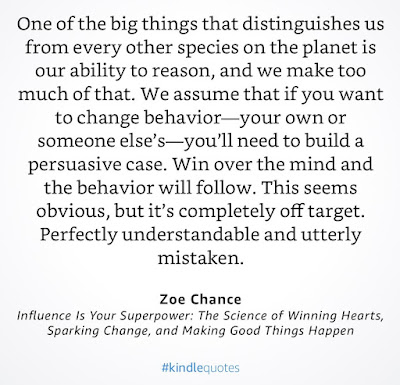
Some things that bedevil our thinking, particularly as it goes to persuasion and influence:

There is no first-person singular present-tense active voice usage of the word "wrong." No one ever says "I AM wrong."
 
[props to Kathryn Schulz]  Our aggregate default is that we're right about everything. To the extent that we continue to survive, that's an understandable assumption—as it pertains to minor, inconsequential issues, anyway, and it inexorably tilts us toward "confirmation bias."
 
Our education system mostly tells us there's one "right answer" to every question—lurking amid a boatload of "wrong ones."
 
And, those who quickly alight on the "right answer" get reinforced and nurtured as they move through the system.
 
Being wrong is not a synonym for being "stupid" or ignorant. 

Neither is "ignorant" a synonym for "stupid." But it's mostly epithetically spun that way

Humans "reason" to WIN the argument.

 Should truth happen along the way, so much the better. (See "Why Do Humans Reason?" by Sperber & Mercier) Evolutionary adaptive utility, "The Pen is Mightier Than The Sword."

He/She with the best story WINS!

Trial Lawyering 101. Prior to writing and movable type, stories were the whole ballgame. Hence, our evolved affinity.

Once you decide that X is right or wrong / good or bad, you cannot unring that bell.

A staple look-before-you-leap admonishment of mine back when I was teaching "Critical Thinking."

If, when it's all said and done, your logic is impeccable, and your facts and evidence are bulletproof, yet you remain unpersuasive, what have you really accomplished?''

Another classroom staple of mine. That one was "exceeding my brief" as it were, but my Sups never noticed or cared. Anyway, my overall teach-to-the-text priority focus as a piddly Adjunct necessarily had to be "OK, here's how this stuff works. Take it or leave it."
 
BACK TO ZOE
 

Once you finish her book you will have a firm grip on just why.
WHEN YOU THINK ABOUT the individual genetic and developmental differences that impact the sensory portions of our nervous systems, it’s remarkable that we can agree on a shared reality at all.  Linden, David. Unique(p. 253). Basic Books. Kindle Edition
A lot to think about and discuss here. "Truth?" Yeah.

SUSAN'S SECOND BOOK
The Six Forces Driving Ethics

Throughout this book, you will have seen references to six forces that I believe influence the ethics of every choice we make…

Banish the binary: Ethics are not a “yes or no” or “do it or don’t do it” choice. Some ethics failures are indeed straight-up unacceptable: racism, sexual misconduct, and disregarding science-based evidence about Covid-19. But most questions we face require navigating a gray zone…

Scattered power: Today, power is no longer concentrated only in the hands of a few; it’s more scattered than ever. Think of the power you have with your cell phone—to contribute to a political campaign or tutor a child across the country… or incite violence. The challenge today is to reconnect power to ethical responsibility… and to recognize that we each have a role…

Contagion: Ethics are contagious—for good or for ill. But we often focus so much on the unwanted behavior (fraud, social media data privacy, not wearing masks) that we ignore the factors that drove the spreading of the behavior—leaving them to fester and spur further trouble…

Pillars of ethics: Transparency and (un)informed consent are two long-standing pillars of ethical decision making. They depend on understanding what’s at stake in our decisions (short- and longer-term) but are crumbling in today’s complex, technological world…

Blurred boundaries: Blurred boundaries are everywhere today: human and machine, human and animal, and increasingly work and home. We are in uncharted, sometimes uncomfortable, territory as we think about the role of robots in society (receptionists, caring for the elderly, nannies, driverless cars), looking to animals for medical treatment (growing organs in pigs for human transplant), and beyond. We must keep humanity front and center and assure that humans take responsibility for the blur… and for reclarifying boundaries.

Compromised truth: Ethics hinge on truth. There is no such thing as post-truth or alternatively factual ethics. Today, truth is under threat in unprecedented ways from denial of science and other factual information to distrust of experts to algorithmic distortion of our news feeds and social media bubbles shielding us from diverse views. This compromised truth removes our choices from reality…


Liautaud, Susan. The Little Book of Big Ethical Questions (pp. 277-280). Simon & Schuster. Kindle Edition.
 
OK, LET'S BACK UP TO THE OUTSET OF SUSAN'S FIRST BOOK

Core considerations for contemplating pending ethically-sound decisions.
Question #1:
What are my guiding principles?

Who are you, as an individual or an organization? What do you stand for?

Our principles define our identity and tell the world what to expect from us, as well as how we expect others to behave. Principles apply to ethics choices in all aspects of our lives…
The Power of Ethics (p. 24).

Question #2:
Do I have the information I need to make this decision?

And what important information lies in the gap between the information you should know and the information you can know?

Entrepreneurs increasingly launch new products before we can fully assess the ways they might be used or misused, or before the creators fully comprehend the power and capability of the technologies behind them. We, as consumers, employees, and parents then use these new technologies before fully understanding their opportunities and risks. In between the two, regulators fail to keep pace. The complexity of technology has increased the complexity and unpredictability of information we must consider in order to make thoughtful ethical decisions before we launch, use, or regulate innovations.
(p. 27)

Question #3:
Who or what stakeholders matter to my decision?

Who or what could influence, or be affected by, your decision?

I define a stakeholder as any person, organization, object, or factor that could influence, or be affected by, a decision or situation. We often think stakeholders are only human beings, but stakeholders can also be inanimate objects if they have an impact on (or are impacted by) our choices. Even the digital assistant in your kitchen is a stakeholder if it gives you information (“It’s 35 degrees Fahrenheit outside”) that influences your decisions (I should put on a coat). Stakeholders can be a company, a policy, an algorithm, a chat bot, a test score, fake news, an edited gene, a government organization, and more. They can make positive or negative contributions to your decisions, and you can affect them positively or negatively.
(p. 30)

Question #4:
What are the potential consequences of my decision in the short, medium, and long term?

Have you considered the immediate and future impact of your decision at the time of the decision?

The framework requires us to a look at the short-, medium-, and long-term consequences of our decisions at the time they are being made. We should then do regular framework check-ins, so we can monitor consequences over time and keep up with evolving developments…
(p. 32)
Dr. Liautaud's four-facet overarching framework combined with the Six Forces criteria provide a rather comprehensive (yet broadly accessible) decision model for ethically sound small-d "democratic" decisionmaking. 
 
The stakes have never been higher.

 
After re-reading the foregoing assertion several times, I've warmed to it (at first blush I'd found it perhaps a tad hyperbolic in places). Humanity is up to its aggregate eyeballs in existential alligators. No one's coming to our rescue.
 
Recall my list:

We have much pressing moral work to do.
 
More to come...
__________
 

Wednesday, November 24, 2021

Science and scientific research publication

BREAKING NEWS UPDATE:
Omicron (B.1.1.529): SARS-CoV-2 Variant of Concern
—
Whenever my latest print edition of Science Magazine shows up, it's a "drop-what-you-were-doing" moment whenever possible (I'm a member). 
 
to wit, in the snailmail yesterday:


This one arrived packaged in a loose clear plastic outer container, within which was a companion volume.
 
 
44 pages of glossy 4-color media Icahn School of Medicine "sponsored content."
“Medical research is advancing at breakneck speed. From the creation of infrastructure and tools that can generate and capitalize on enormous datasets, to the ability to edit genetic material, to a more granular and nuanced understanding of the immune system, we now find in the lab and the clinic what was not that long ago found only in science fiction. But what will the future of medicine look like? The articles in this supplement provide a glimpse. Clinicians and researchers at the prestigious Icahn School of Medicine at Mount Sinai offer their insights on the increasing use of artificial intelligence, on pandemic responsiveness, and on drug discovery and development, and highlight systemic changes needed to improve medical education and address health inequity. They are working collaboratively to break down silos, integrate emerging technologies, and advance personalized treatments to ensure that the needs of today’s and tomorrow’s patients will be served.”
[This collection is brought to you by the Science/AAAS Custom Publishing Office.]
"The excitement and optimism around the remarkable progress in medical research and treatment is what inspired the creation of this supplement. The Icahn School of Medicine at Mount Sinai, in partnership with Science/AAAS, is spotlighting just some of the extraordinary work being done by researchers and clinicians at the frontiers of medical research. Their hard work and innovative spirit will continue to drive advancements in patient-centered health care, now and into the future."
 
Sean Sanders, Ph.D.
Custom Publishing Office
Science/AAAS
Notwithstanding my reflexive dubiety toward "sponsored content" (marketing stuff posing as neutral, objective content) this material, given the AAAS credibility rep, was not to be dismissed out of hand, in particular given that this blog commenced with a focus on medical/healthcare infotech. Much of the content set forth above remains of abiding interest to me. 
Become a Partner
To publish as a Science Partner Journals (SPJ) member, an organization must apply and undergo an evaluation process, regardless of whether that organization seeks to create a new journal or bring to the program an existing title with a prestigious background.

Partner proposals are evaluated based on research quality, scope, and organizational fit with the American Association for the Advancement of Science (AAAS). The program welcomes all scientific disciplines but places an emphasis on new and important scientific research in growing or emerging fields.

Once AAAS and a potential partner organization both decide that a title belongs in the SPJ program, AAAS will act as contractual publisher and service provider for that partner organization. This includes providing editorial training, platform access, and marketing services.

Partners participating in the program will be editorially independent and responsible for the content published in each journal. However, AAAS is highly selective about partnerships and strongly recommends that each partner adopt the Committee on Publication Ethics and the Council of Science Editors or equivalent guidelines to establish a baseline set of practices and standards to which a partner is expected to adhere.
We shall see.

This morning I made my customary priority online rounds. A mandatory early stop is that of "Science Based Medicine." Today's post:

 
Okeee dokeee, then...
The entire scientific enterprise might be viewed as an attempt to systematically weed out bias from our view of reality. At least, this is a critical component of the scientific method. But bias can be subtle, and can creep in at many stages from conception to citation of published research. The subjects of research may have bias, research methods can be biased in terms of how measurements are made or reported, which comparisons are looked at, the statistical methods used, and how data is [sic] collected. The publication process also may introduce bias, as can the way in which researchers access, evaluate, and cite published studies.

All of these sources of bias can distort the scientific literature and therefore the academic process and the conclusions that scientists and practitioners come to, with downstream effects in many aspects of how we run our society. But the key strength of science is that it can be (when done properly) self-reflective and self-corrective. This self-corrective process should apply not only to the findings of science, but to the process and institutions of science as well. This is one of the main missions of SBM, to examine and reflect upon the relationship among how science is practiced, the findings of science, and the practice and regulation of medicine…

Now we can add one more phenomenon to the list of possible journal biases – nepotistic journals.

In a massive review of publications in 5,468 biomedical journals indexed in the National Library of Medicine between 2015 and 2019, Scanff et al. examined the distribution of authors in each journal. They used two measures to quantify this: the Percentage of Papers by the Most Prolific author (PPMP), and the Gini index (level of inequality in the distribution of authorship among authors).

The authors found that the median PPMP for the journals examined was 2.9%, meaning that a typical journal may have around 3% of the papers they publish have the same author. They also used the two standard deviation model, determining the 95% cut-off for PPMP. They found that 95% of journals had a PPMP less than 10.6%, or that 5% had a PPMP of 10.6% or more. A high PPMP also correlated with a high Gini index, which indicates a highly unfair or biased distribution of authors. Further, and perhaps very significantly, they also found a correlation between the specific most prolific authors and a reduced time to publication, such as the percentage of papers that are published within three weeks of submission. This might indicate an expedited or even inadequate review process.

But the most significant correlation they found was that among that 5% of journals with the highest PPMP, in 60% of the cases the most prolific author was a member of the editorial board. This pattern held true when only research papers were considered (therefore not counting letters or editorials that might be disproportionately written by the editors). These were the journals considered “nepotistic”…

…there seems to be a subset of nepotistic journals that cater to one or more members of their editorial staff, allowing them to publish a large number of papers with little editorial barrier. This can be a method of gaming the system, affecting academic promotion and the awarding of grants. These editorial authors can also use these same papers to deliberately reference other papers in the same (or a sister) journal, therefore gaming the impact factor measure also.

One other concern that this paper could not examine is the scientific quality of nepotistic papers. Given the favorable bias and reduced editorial review, there is concern that low quality science is finding its way into the literature via this method….

The simplest partial fix to this problem (like many things in science) is transparency. Journals might be required to publish alongside their impact factor (a measure of how often they are cited) their PPMP and Gini index. Because prolific journals may mask their nepotistic practices by their high number of publications, publishing the raw number of publications by their most prolific author also helps. Further, the number and/or percentage of papers published in the journal by an author on the editorial staff is critical. At least with this transparency fellow researchers and academics on promotion committees can easily detect blatant nepotistic practices, reducing the benefit of this practice.
Yeah. One minor pedantic pick. It's "cronyism," not "nepotism." The latter is a Registered Trademark of the Donald J. Trump family.
"Cronyism is the practice of partiality in awarding jobs and other advantages to friends or trusted colleagues, especially in politics and between politicians and supportive organizations. ... Whereas cronyism refers to partiality to a partner or friend, nepotism is the granting of favour to relatives." —Wiki
I will certainly give "The Frontiers of Medical Research" a good go. At least we have "transparency" here, given that it's overtly noted as sponsored ("in partnership with") material.
 
BTW, apropos, see my prior riffs on "the 'science' of science communication." 
___
 
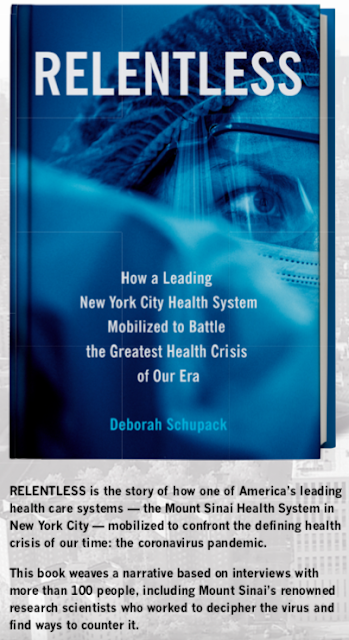
Noted at the end of the supplement: A book in the oven (Feb 15, 2022 release). 

 
The author. Sounds like a cool person.

BREAKING NEWS OFF-TOPIC ERRATUM

 
Ahmaud Arbery murder trial prosecutor Linda Dunikoski. When you want it done right, send in a woman. Her closing arguments M.O. in this case will be taught in law school. Four hours of summation, all forcefully, methodically delivered without once looking down at notes.

BACK ON TOPIC

From the Supplement:
EXPOSOMICS
Integrating exposomics into precision medicine and public health

Robert O. Wright*, Kecia N. Carroll, Rosalind J. Wright

Precision medicine, which now primarily utilizes genomic and electronic health record data, holds the potential to transform medical practice. Recent calls to expand the field’s purview to encompass all factors that predict health (1–3) underscore the need to include environment (4, 5), as human health and disease are shaped by a range of lifelong exposures and their resultant biological responses. The emerging exposome concept addresses this complexity by studying the effects of all health-relevant environmental factors over the life course (6–8). The 20th-century concept of “nature versus nurture” needs to be tossed aside, as genetics and environment do not compete—they work hand in hand through interactions in which our environment (i.e., where people are born, live, develop, learn, work, play, and age) triggers biological responses that are determined in part by our genetics in a lifelong, iterative process. However, there is not yet a systematic plan to integrate exposomics into precision medicine. Advances in computational science, medical informatics, remote sensing, geographical information systems, and analytical chemistry now provide powerful research tools to facilitate the incorporation of exposomics into precision medicine and public health (9–11).

Understanding our environment is critical to advancing human health and eliminating health inequities. The broad-ranging effects of climate change consequent to rising global average temperatures, increasing atmospheric carbon dioxide (CO2), associated extreme weather events (i.e., heat waves, droughts, floods, and hurricanes), and altered ecosystem functioning and biodiversity, have alarming potential to magnify toxic environmental exposures and amplify consequent health disparities (Figure 1) (12). Climate affects the exposome both directly and indirectly to influence the spatial and temporal distribution of infections, asthma, allergies, mental health, and dozens of other chronic diseases. Also, rates of cancer, diabetes, heart disease, and neurodegenerative diseases, among other complex diseases, continue to rise with minority groups such as Blacks, Latinx, Native Americans, and Asian Americans experiencing increased disease morbidity and/or severity. Structural racism, including redlining, has segregated minoritized groups to live in low-income communities where increased exposure to psychosocial stressors, air pollution, physical environmental toxicants, and reduced access to healthy food and green spaces are concentrated. The systematic segregation of persons of color through redlining policies has significant public health implications (13). These environmental disparities go beyond pollution, particularly for indigenous populations, as cultural practices commonly involve local food and water, further exacerbating social inequities. Health inequities arise from variable—and too often predictable—imposed environments that link to social determinants of health. The geospatial diversity of the exposome underlies its key role in explaining health inequities. Broad categories of the human exposome include nutrition, infections, chemicals, physical environment, and sociocultural conditions that act as psychosocial stressors. Because exposomics encompasses the interconnections among our social, nutritional, and chemical environments, it holds great promise for elucidating root causes of recalcitrant health disparities…
_____________________________________
Department of Environmental Medicine and Public Health and the Department of Pediatrics, Icahn School of Medicine at Mount Sinai, New York, NY
*Corresponding author: robert.wright@mssm.edu
 

Yeah. Add one to the “Omics” riffs. We used to call some of this stuff "The Upstream."

Click to enlarge.
And, "Anthropocene," anybody?
 
"EXIGENCIES?"
 
I would think all of the foregoing map to my draft list.
 
 
I've begun taking these up on my relatively infrequently used Medium site.
 
UPDATE
Heavily mutated Omicron variant puts scientists on alert
Researchers are racing to determine whether a fast-spreading coronavirus variant poses a threat to COVID vaccines’ effectiveness.
 
Researchers in South Africa are racing to track the concerning rise of a new variant of the SARS-CoV-2 coronavirus that causes COVID-19. The variant harbours a large number of the mutations found in other variants, including Delta, and it seems to be spreading quickly across South Africa.

A top priority is to follow the variant more closely as it spreads: it was first identified in Botswana earlier this month and has since turned up in a traveller arriving in Hong Kong from South Africa. Scientists are also trying to understand the variant’s properties, such as whether it can evade immune responses triggered by vaccines and whether it causes more or less severe disease than other variants do…
Swell. 2024 headline? "Z.9.9.999 SARS-Cov2 variant emerges, concerning WHO officials."
 
BRIEFLY OFF-TOPIC AGAIN

My Las Vegas music podcasts have been offline for several years now. I just remounted them. Miss my friends.
__________