Search the KHIT Blog

Wednesday, May 15, 2013

California State HIT Day


Got here without a problem (getting up at 5 was the problem). 82 miles, took only about 80 minutes, right up the 680 to the 80 to the 5 to L Street, NPR all the way on the radio. 15th floor of the Hyatt, overlooking the state Capitol.


Beautiful day. Packed agenda, much to see, hear, learn, and document.

THOMAS S. KEEFE, MA, Keynote Speaker

Senior Director, State Government Affairs.
"HIMSS State Health IT Days are some of the most important HIMSS events each year. Supported by HIMSS Chapters and HIMSS State Government Affairs, State Health IT Days aim to connect subject matter experts in health IT with their state elected officials to foster relationship building and education. Typically conducted when a state legislature is in session, a State Health IT Day may include meetings with legislators, site visits to healthcare facilities and presentations from policy experts. Alternatively, a chapter may use virtual technologies to plan a State Health IT Day or one focused on visiting state legislators within their home districts to ensure mass participation across their state..."
___

POST KEYNOTE GROUP PHOTO-OP

I got drafted into photographer duty. My first "official act" as a HIMSS NoCal member.


Above, Salim Kizaraly of Stella Technology.
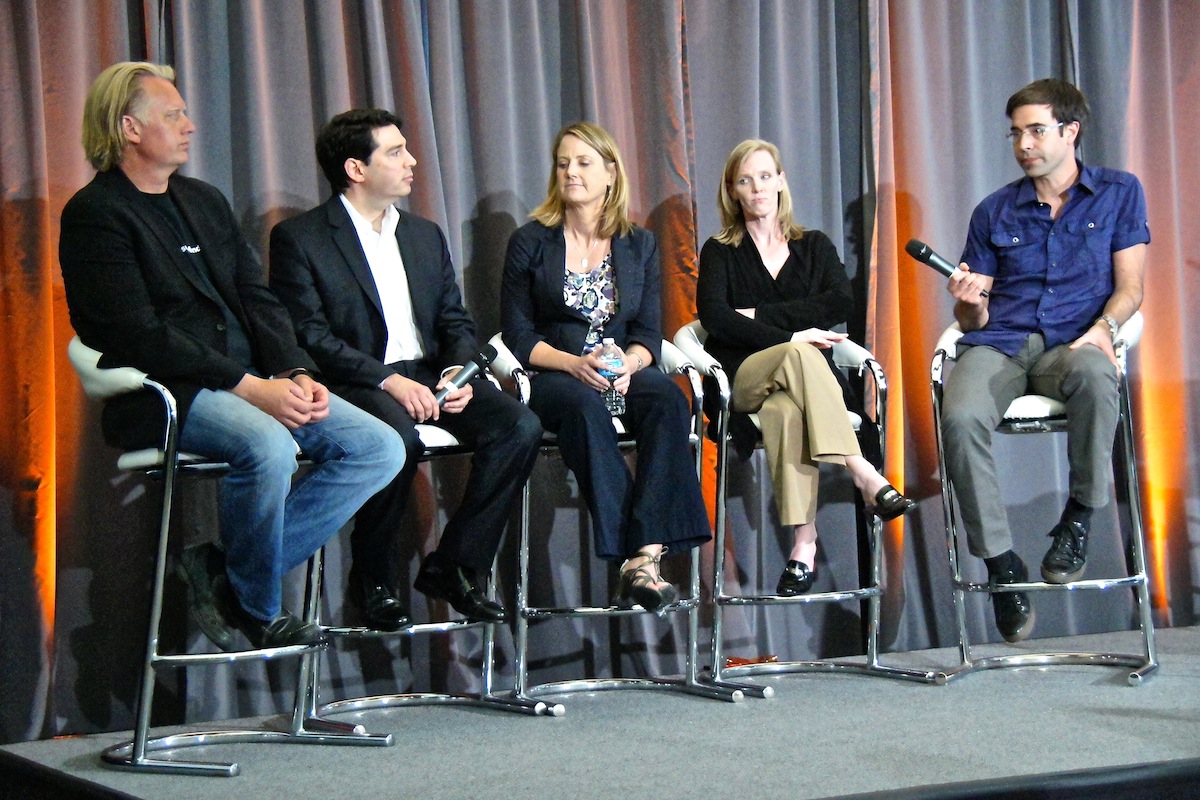
Nancy Hall, HIMSS NoCal Board Member and CIO panel moderator
Dave Minch, President & COO Health Share Bay Area
Above: CALHIPSO's Speranza Avram reported on the status of the ONC's REC program, from which I recently retired. She nailed it pretty well.
Above: Pamela Lane, MS, RHIA, CPHIMS, Deputy Secretary for Health Information Exchange Director for the Office of Health Information Integrity California Health & Human Services
__

LEGISLATIVE "ADVOCACY"

I'd not really understood this, but a couple of afternoon hours were slated for going across the street to the state Capitol to buttonhole legislators or their staffs to "advocate" (not "lobby") for Health IT support.

Interestingly, there was a loud concomitant health care reform rally ensuing on the Capitol grounds.


Nice. I first made my way to the adjacent park's statue of Friar Farzad, Patron Saint of Interoperability on my way to "my representatives'" offices.


Just kidding, obviously.

On to tout "the Ask."


Notwithstanding that I am still a legal resident of Nevada, I've been paying California state income tax for nearly 5 years as a result of my wife's work in Walnut Creek (Cheryl has had to become a California legal resident), so these legislators are in my view my reps as well in a very real, quantifiable sense.

I candidly made that clear while talking with their staffs, and they were fine with that. Nice people, all of them. They were graciously generous with their time, in part no doubt because I'm now "Health IT Press," and nothing gets pols' attention like the words "constituent" and "press" in the same sentence.

All in all, a fun day. Met a lot of fine people. Learned some stuff. Can't ask for more than that.
__

More to come...

Tuesday, May 14, 2013

Refactored Day 2

What a difference 30 minutes makes. Yesterday I left Walnut Creek at 6 a.m. and got to the Refactored Conference in an hour and five minutes. Today I didn't get off until 6:30 and it took an hour and 35 minutes.

Heard about this dustup the other day, and there's a news update this morning.

WASHINGTON (Reuters, David Morgan) - An Obama administration effort to raise private donations to help implement President Barack Obama's healthcare reform law came under fire on Monday from congressional Republicans who claim the action could violate the law.

As the Republican-controlled House of Representatives prepared to mount a new vote this week to try to repeal the law, House Energy and Commerce Committee Chairman Fred Upton asked the administration to identify the companies and organizations that have received fundraising calls from Health and Human Services Secretary Kathleen Sebelius.


The committee also sent letters to nearly a dozen healthcare companies asking if they have received solicitations from Sebelius. The list includes insurers Aetna Inc, Cigna Corp., Coventry Health Care Inc, Humana Inc, UnitedHealth Group Inc and WellPoint.


Meanwhile, Republican Senator Lamar Alexander called on Sebelius to end the fundraising, saying her actions could violate Congress' power to direct policy through appropriations...
Interesting question. Anti-ObamaCare obstructionist Republicans vow to throw tactical sand in the PPACA gears at every turn, given that they will never get the votes to repeal it outright (Rep Cantor's tiresome iterative posturing notwithstanding). By refusing to approve appropriations for the upcoming HIX deployment, they hope to help make the ACA health insurance exchanges the Cluster[bleep] they want it to be.

We shall see.

UPDATE


Uh, OK... Taking time out from her breathless warnings about the New Soviet Menace, I see. Her latest is that Obama is going to use the IRS to deny health care to Conservatives and "kill" them.

Is this a great country or what?

UPDATE2: Bachmann will have a cow...

__

Off to witness far more interesting and value-adding stuff at Health 2.0 Refactored Day 2. to wit...

L to R: Adrian Gropper, Patient Privacy Rights, Arien Malec, RelayHealth, and The Bolty Boy
Health 2.0's Jess Goldband
Fred Trotter (center) and Laura Herzog (right) presented a searing session.
Fred Trotter is a Health Hack Badass. I've reviewed his work before.
Karen Herzog
Ryan Panchadsaram, White House Special Advisor. Another brilliant youngster.
Jess Jacobs, FDA
Karen Herzog
I am way behind in posting captions and narrative updates. They will probably have to await my returning from HIMSS California State HIT Day in Sacramento tomorrow. I have copious notes.

Didn't help that I spent five hours total today in heavy Bay Area commuter traffic.
__

UI, UX, and U

Mike Cuesta, CareCloud
Sean Mehra, HealthTAP
Mike Cuesta moderated the Day 2 UI, UX, and U: Designing for Health session. Sean Mehra dazzled me fairly well with his eloquent HealthTAP presentation, which went through their design and coding proess for their product, written principally to agnostically accomodate iPhones, iPads, and Android product platforms (in addition to desktop web browsers) using combined HTML5 + JavaScript + CSS coding tools.

These kids are all really smart and into it.
___

More to come...

Monday, May 13, 2013

"Refactored" - a jam-packed two days in Mountain View


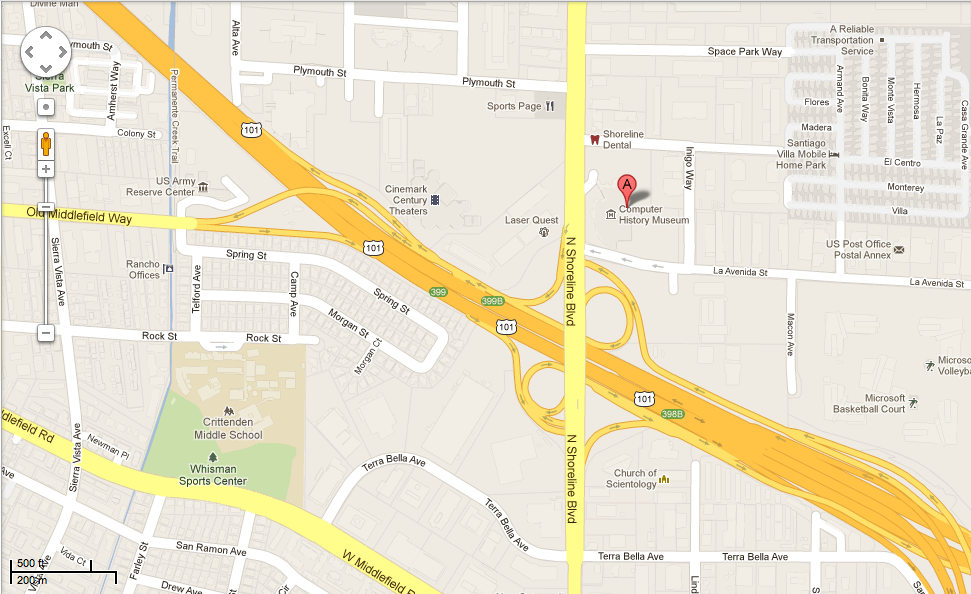
Up at 5 a.m. (ugh), zip down the 680 from Walnut Creek to the Nimitz and over to the 101 and the Computer History Museum for a day in UberGeekIstan with the Cyberscenti.

www.computerhistory.org

So, "refactored" is software development slang basically synonymous with Lean/Rapid Cycle PDSA, maybe even "Agile." This conference is focused on helping health IT developers become more adept at shaping the future of health care via information technology advances. As reported in the Sacramento Bee:
"Health:Refactored not only serves as an impetus for developers and designers to leverage their skills and creativity to build and create, but it also provides a portal into the future of health technology," said Indu Subaiya, Co-Chairman & CEO of Health 2.0.

Here are the predictions:

  • "Technology will catalyze dramatic system-wide cost savings and efficiencies. Out of $500 billion spent annually in the U.S. on doctor visits, $125 billion translates into unnecessary costs since 25% of the visits are strictly informational. Technology will serve these patients the information they need without the physical appointment."  --Sean K. Mehra, Head of Product, HealthTap
  • "In 10 years, human-centered data collection of medical records, observations, labs, etc., will go away in favor of body-worn health sensors that will be woven into fabrics, built-into our mobile phones, integrated into homes (e.g. toilets, sinks, etc.), and even embedded under our skin." -- Shahid Shah, HIT Expert/CEO, Netspective
  • "The 'wall-less hospital' will meet the empowered patient. As sensors and devices increase their power and accuracy, doctors will be able to monitor and adjust treatment approaches in real-time." -- Jan Gurley, MD, Physician and App Designer, DocGurley.com
  • "Food, physical activity and sleep recommendations will be personalized based on health risks, biomarkers, environmental factors, preferences and budget. They'll be prescribed by doctors and dietitians in the grocery store assisted by cutting-edge health technologies, and directly by apps." -- Jason Langheier, MD, MPH, CEO & Founder, Zipongo
  • "Telemedicine will allow hospitals to extend care well beyond their four walls. Consumer diagnostic devices and wearables will empower patients to proactively monitor and manage their health and physicians can transition from passive managers of health to active, ever-present participants in patients' health." -- David Chao, Senior Product Manager, MuleSoft
  • "In 5 years, when data is more portable and expectations are that data follows me and my care, rather than hide from my view....well, then things gets really interesting! Then we can really start getting deep, meaningful insights from all our shared data, and the pace of innovation in digital health will grow exponentially." -- Geoffrey Clapp, Co-Founder, Better
  • "We will shift into a synchronous 'care stream' which values preventative care over treating symptoms." -- Mike Cuesta , Director of Design and Community, CareCloud
___

UPDATE: SHOTS FROM MORNING ONE SESSIONS

Some random pics...

Above, Health 2.0 co-founder Indu Subaiya
L to R: Jean Luc-Neptune, Jessica Goldband, and Edbury Enegren
Brian Sivak
Above: legendary philantropist and VC investor Esther Dyson moderates a panel discussion featuring Jim Kean and Anmol Madan.
I missed this fellow's name. He's with Microsoft. Wincingly, his slide deck would not launch. He made some anxious remark about "all of the whiteboards in the room" -- i.e., all of our MacBooks.
Atlantic Monthly journalist and author David Ewing Duncan
Health 2.0 co-founder Matthew Holt
Above and below, my hero, Doc Gurley
Ethan Prater, Castlight Health
John Mattison, MD, CMIO Kaiser

Brad Weinberg, MD, Venture Capital Investor
Again, Health 2.0 co-founder Indu Subaiya
Dr. Jean-Luc Neptune of Health 2.0
Edbury Enegren, Health 2.0
Esther Dyson
Jim Kean
The fabulous Doc Gurley
A great first day. I dressed "business professional/casual" and felt way over-dressed. While the look was totally loose and hip, the aggregate intellect on display was both humbling and inspiring. Nice summary here by Kim Krueger:
If Subaiya’s survey is any indication, the Health:Refactored crowd is pretty heavily weighted on the technical and entrepreneurial side with maybe a slightly smaller representation of designers. Attendees also seemed evenly distributed between health care veterans and health care newbies (exciting, welcome new friends!). These buckets were hardly mutually exclusive though as most everyone seems to dabble in business, and the brave seem to dabble in everything.

The questions continued throughout the day, and with the right combination of imagination, lighting, and squinting you could almost see the raised hands shape shifting into ven diagrams. We are software developers and MBAs, but on a broader scale we are patients and stakeholders interested in fundamentally changing the world.
..
Indeed. The fermenting mixture of optimism and applied expertise was palpable.

KP's Dr. Mattison made some interesting observations. First he noted that his son, just graduating medical school, had received virtually the same medical education that he had. The pedagogy is stuck in neutral. Brings to my mind some observations of Messrs Weed in "Medicine in Denial"
VIII. Medical Education and Credentialing as Barriers to Progress
A. Extending the health care reform agenda to medical education and credentialing


1. A century of stagnation


...Were Flexner to return today, he would find that current knowledge has he power to confer vastly greater advantage than it did a century ago. But he would not find that society reaps a greater fraction of that advantage. “Between the health care that we have and the care we could have lies not just a gap but a chasm,” the Institute of Medicine has found.
 

Failings in medical education and credentialing are a central reason the chasm exists. These failings are rooted in Flexner’s embrace of the university model of formal education. This model was seen as the only way to bring scientific advances to medical practice...

2. The medical school experience
According to the Institute of Medicine, “many believe that, in general, the current curriculum is overcrowded and relies too much on memorizing facts” and that “the fundamental approach to clinical education has not changed since 1910.” [pp 195 - 197]
Beyond that, looking forward Dr. Mattison proffered five fundamental areas of improvement concern:
  1. The prevailing perverse incentive model;
  2. Uncoordinated care / lack of prevention effort;
  3. Opacity of pricing;
  4. End of Life care (he cited the UK's much higher "% of deaths at home");
  5. Lifestyle disorders.
Pretty much a recitation of the litany we've mostly all increasingly heard across the past 4-5 years.
__

More shots...

Joe DeLuca, Health Care Investment Visions. Joe said "there's not much new in ObamaCare," and admonished the developer community regarding the potential for patient harm via HIT done poorly.
Jeff Schox of Schox PLC Patent Group. Excellent speaker. Looks like he's 16. He presented on patent / intellectual property protection issues for progressive health/medical apps.
Deven McGraw, CDT. Nice to see and talk with her again.
My new friend Leslie Kernisan, MD, MPH, Geriatrician, frequent THCB contributor
SATURDAY 18th UPDATE: JEFF SCHOX

I'm watching his 1st Patent / IP lecture. Excellent. Free.


Share Information, Sell Services.
___

More to come...