Search the KHIT Blog

Showing posts sorted by relevance for query War on Science. Sort by date Show all posts

Wednesday, January 25, 2017

Dr. Aaron Carroll on "Repeal and Replace"


From The Incidental Economist. One of my many requisite stops. Always fine content there. Nice summary of the GOP alternative propositions, including those of the controversial and contentious Trump HHS Nominee Dr. Tom Price.

The health space blogosphere is on fire this week with anxious speculation over the fate of "ObamaCare." See my prior post on the topic.

Meanwhile, The Celebrity Apprentice Administration is off to a wild, disconcerting start.

READING LIST UPDATE

I'm deep into this fine book.


Highly recommended, based on my study thus far. Interesting stuff therein on the intertwined topics of "big data" / "computational journalism." Relevant to health policy as well, given the new administration's reported week one federal agencies' gag orders.

My Pinterest Page characterization:
Among other things, an utter (albeit implicit, unintended) refutation of "Libertarianism," and concomitant validation of the ever-present Gresham's Dynamic risk.
There will be a nexus with these two books below, in addition to a number of other titles in my recent stash.


The new Trump administration is staffing up with Science Deniers at the cabinet level and taking early steps toward increased opacity.

UPDATE

What is the Scientists' March on Washington
Welcome! We want to thank you all for your incredible outpouring of support for this march. We are working to schedule a March for Science on DC and across the United States. We have not settled on a date yet but will do so as quickly as possible and announce it here.

Although this will start with a march, we hope to use this as a starting point to take a stand for science in politics. Slashing funding and restricting scientists from communicating their findings (from tax-funded research!) with the public is absurd and cannot be allowed to stand as policy. This is a non-partisan issue that reaches far beyond people in the STEM fields and should concern anyone who values empirical research and science. 

 There are certain things that we accept as facts with no alternatives. The Earth is becoming warmer due to human action. The diversity of life arose by evolution. Politicians who devalue expertise risk making decisions that do not reflect reality and must be held accountable. An American government that ignores science to pursue ideological agendas endangers the world.

 Please bear with us as pull together our mission statement and further details. Many more updates to come on Monday. 
Twitter: @ScienceMarchDC
Facebook: https://www.facebook.com/groups/1862739727343189/
Reddit: /r/scientistsmarch
Get Email Updates
To help: https://goo.gl/forms/zAdY02dBEz3Ykii42
Contact: scientistsmarchonwashington@gmail.com
Count me in.

For openers, concerned people minimally simply must closely read Shawn Otto's book "The War on Science." Reciting again the Amazon blurb:
"Wherever the people are well informed," Thomas Jefferson wrote, "they can be trusted with their own government." But what happens when they are not? In every issue of modern society--from climate change to vaccinations, transportation to technology, health care to defense--we are in the midst of an unprecedented expansion of scientific progress and a simultaneous expansion of danger. At the very time we need them most, scientists and the idea of objective knowledge are being bombarded by a vast, well-funded, three-part war on science: the identity politics war on science, the ideological war on science, and the industrial war on science. The result is an unprecedented erosion of thought in Western democracies as voters, policymakers, and justices actively ignore the evidence from science, leaving major policy decisions to be based more on the demands of the most strident voices.

Shawn Otto’s compelling new book investigates the historical, social, philosophical, political, and emotional reasons why evidence-based politics are in decline and authoritarian politics are once again on the rise on both left and right, and provides some compelling solutions to bring us to our collective senses, before it's too late.
We now perhaps stand on at precipice of a destructive U.S. "Soviet Science 2.0 / Lyskenoism 2.0" that bodes ill for every aspect of the STEM space (and beyond) in our country.

Our Science Denier in Chief:
Is Anyone Actually a Scientist?
Forget the terrible “I’m not a scientist” schtick. Trump’s comments on climate change suggest no one is a scientist.

My favorite Trumpism is “nobody really knows.” He says it all the time. Did Russia interfere in the U.S. presidential election? “Nobody really knows.” How big is ISIS? “Nobody really knows.” Why did President George W. Bush invade Iraq? “Nobody really knows.” How can we identify potential terrorists? “Nobody really knows.” Most of the time, “nobody really knows” means Trump doesn’t want to, or isn’t prepared to, answer the question. (That’s why he says it so often.)

Climate change is different. “Nobody really knows” is simply Trump’s official position on global warming. It’s one of the rare times he uses his catchphrase offensively, rather than to get himself out of a jam. He doesn’t say it with a shrug and a casual toss of his hands. He leans in. To borrow a well-worn phrase from Trump supporter(ish) Donald Rumsfeld, Trump considers climate change a “known unknown“—the fact is that nobody knows about it...
I don't think we can overstate the risk here. Time to push back forcefully.
____________

More to come...

Saturday, June 6, 2026

The War On The War On Science?


Otto, 2016, Krauss (ed.), 2025. Well, you can't copyright a title.


I am a long-time devoted daily reader of SBM. A relative grasshopper. I have long made it clear that "I Am Not A Scientist."

Nonetheless, my empirical / scientific chops are OK, and I remain plugged in.
 
I exhort you to read the entire SBM article fully and carefully—inclusive of the lengthy, worthy comments section.
 
EXCERPT 
The fact that I didn’t waste my time reading the book before advising others not to waste their time reading the book generated emotional responses from several of its contributors. Professor Jerry Coyne, for example, didn’t defend the book or address the objections to it, but rather scolded me in the comments of my SBM article saying:

Perhaps the author might READ the book before he starts beefing about it and telling other people that they shouldn’t read it. He might learn something, or at least get material to sharpen his arguments.

Perhaps Professor Coyne is right. Maybe I am missing out on a truly impressive work scholarship that will upend my superficial understanding of the threats to science in 2026. So, here’s my question for the authors of The War on Science– why should I, or anyone else, read it?  

As a doctor, I know the first step is to make the right diagnosis, and to convince me their book is worth my time, the authors must first convince me they correctly identified the forces currently waging the war on science, which we all agree is being fought. I won’t be persuaded by scattered examples of wokeness gone amok. Those of us who broadly agreed with the efforts to make STEM more inclusive wouldn’t argue that its implementation was flawless. Rather, the authors need to make the affirmative case that trans people, “cancel culture”, and DEI were existential threats to science, while MAGA/MAHA wasn’t dangerous enough to warrant even a single chapter. I’d love to see them do that.

Fortunately, nearly a year after the publication of The War on Science we have some real-world data, which scientists should value above all else. It sure seems to me that the authors of The War on Science won their war and should take a well-earned victory lap. They’ll never again have to write a dreaded DEI statement or feel threatened by an 18-year-old with pronouns in their bio. Thanks to their efforts, trans people are literally on the run and research into topics our government deems “DEI” is verboten. This is exactly what they wanted, and if their theory of the case is right, we should be entering a golden era of open scientific research and discovery. 

So, let’s see them make the case that science is flourishing today, having been unleashed from wokeism’s punishing shackles. If they are able to take into account everything MAGA/MAHA has done since gaining power and convince me that science is better off for it, I’ll read their book and recommend it to everyone I know.

Ouch. Again, read the comments. I read the entire 2016 Shawn Otto book but only the Amazon (fairly generous) download sample of the 2025 Krauss et al book.

Do we all hew to the same definition of "Science?" 

Thursday, February 2, 2017

Update on The March for Science

Recall my prior post "I am not a scientist." 

In my inbox this morning.

Hello!

We are overwhelmed and grateful at the incredible support we've had in organizing this march. In the last week, almost 40,000 people have reached out to us eager to help.

We want to thank you so much for your support of the March for Science — and for you patience while we secured permits and coordinated with sister marches.

The March for Science is a celebration of our passion for science and a call to support and safeguard the scientific community. 

On April 22, 2017, scientists and science enthusiasts will take to the streets.

We will be reaching out to you for volunteer help in the coming weeks — we look forward to collaborating with you on outreach, planning events, fundraising, developing apps, brainstorming next steps, orchestrating satellite marches, and improving the world through science!

Satellite marches are being formed in countries across the globe from Canada to Australia. In Washington DC, our march will lead to a rally on the Washington Mall where scientists will hold teach-ins about their work and how science impacts our every day lives. Scientific discovery can be an arduous process, but it's also fun — it's time we share that excitement with the world!

The March for Science Team
___

I was beginning to wonder. I put in to volunteer straight away, but never heard anything in response.

They've now mounted a web page.


Twitter, Facebook, and Instagram links there. Hashtag #marchforscience.

Nice "diversity" statement:
In the past days, scientists have voiced concern over many issues - gag orders for government science agencies, funding freezes, and reversing science based policies. We recognize that these changes will differently and disproportionately affect minority scientists, science advocates, and the global communities impacted by these changes in American policies. Addressing these issues is imperative in understanding how recent developments will affect all people - not simply the most privileged among us. We take seriously your concerns that for this march to be meaningful, we must centralize diversity of the march's organizers at all levels of planning. Diversity must also be reflected in the march itself - both through the mission statement and those who participate.

At the March for Science, we are committed to highlighting, standing in solidarity with, and acting as allies with black, Latinx, Asian and Pacific Islander, indigenous, Muslim, non-Christian, non-religious, women, people with disabilities, poor, gay, lesbian, bisexual, queer, trans, non-binary, agender, and intersex scientists and science advocates. We must work to make science available to everyone and encouraging individuals of all backgrounds to pursue science careers, especially in advanced degrees and positions. A diverse group of scientists produces increasingly diverse research, which broadens, strengthens, and enriches scientific inquiry, and therefore, our understanding of the world.
Indeed.

I would gladly go and attend the DC march (I could see and stay with my son at his house in Baltimore), but I am also quite willing to help establish and participate in a Bay Area march. I will be making a donation as well.

See also the related ScienceDebate.org.

I again call attention to some excellent reading going to the central issues.


The first four comprise a compelling tour from the Big Bang to today's troubling Anthropocene era. The latter three go to issues of science denial and effective, potentially "disruptive" communication in a digital age. I've cited them before. All highly recommended.

Shawn Otto's book The War on Science dwells in particular on three areas of front-burner policy contention: [1] evolution, [2] climate change, and [3] human reproductive rights (long under attack, but increasingly so of late).

"Science Denialism" runs rampant on the first two. My position on the latter, politically radioactive topic has been set forth in some detail on one of my other blogs. See my 2008 post "Diploid Dave, Zelinda Zygote."

Shawn Otto:
When Does Life Begin? Another example of the thorny intersection of science with traditional ideas, law, and politics comes from the biosciences. Careful, reproducible observations and measurements have forced us to repeatedly refine our ideas about what life is and when it begins. Is a human being first a life when it emerges from the birth canal? Does it have any legal rights as a person before then? Or is it a life when it is able to survive independently outside of the womb even if it is removed early, as can happen naturally with premature birth or with a Caesarean section? Or is it perhaps a life at quickening (the moment a mother first feels a fetus move, at about four months), as was the legal standard for a life when America was formed? But wait! Perhaps it is really a life when a fertilized egg first implants in the uterine lining, which, based on observations, is the medical definition of when a pregnancy begins. A woman cannot be said to be pregnant until her body begins the chemical and biological changes that accompany a symbiotic hosting of the embryo, can she? If it does not implant, the egg, even if fertilized, is simply flushed. Here we get into a tricky area, because many religious conservatives say, “No, it is a life when egg and sperm meet,” whether or not the fertilized egg ever implants. 

But then, a scientist would ask the fundamentalist, is it still a life at the moment of fertilization, even if we know from careful observation that one-third to one-half of fertilized eggs never implant, and as many as three-quarters fail to lead to an ongoing pregnancy? And, of course, that brings up more questions: What are fertilized eggs that never implant? How should we define them, if life occurs at fertilization? As miscarriages? Abortions? Nonpregnancies? Suicides? Murders? Something else? What implications might that definition have— legally, ethically, morally— for the use of birth-control pills that inhibit implantation? Is that abortion, murder, or pregnancy prevention? 

As our careful observations of life continue, so does our power both to assist and prevent pregnancy. But as our skills improve, new, more troubling questions form. What if we remove the uterus from the process entirely? Is it a life when sperm and egg are joined in a test tube at a fertility clinic and allowed to divide into a group of, say, sixteen cells that are then frozen for future implantation in a woman desperate to have children? Can the woman be said to be “pregnant” as long as this microscopic clump of frozen cells exists? What does Burwell v. Hobby Lobby Stores say about that? What, if any, rights should these frozen cells possess? And is a child conceived in this way— a “test-tube baby,” as we once called them— without a soul, as was suggested by some religious conservatives in the 1970s? Once born, are the joy they bring and the contributions they make less valuable? If we make a special exception for them, by agreeing that in vitro fertilization is not interfering with God’s plan, or by acknowledging that they do appear to have souls, why? On what basis? And what does that make the dozens of frozen cells we discard after a successful pregnancy? 

While we’re pondering these linguistic, legal, and ethical quandaries, our observations lead us to yet another new understanding. We don’t need sperm to fertilize an egg; we can do it with the nucleus of another cell from the same being. We try this, and sure enough, we find we can create many identical genetic copies of a sheep or mouse. We call them clones. But then we have to ask: Is it a life if it is just an ovum that has had its nucleus removed and replaced by the nucleus of another cell, and has then been chemically or electrically shocked to induce the natural process of cell division, without fertilization by sperm? If egg and sperm have never met, is it a life? Or is that creature— possibly, one day, a human— damned or soulless as it was once argued “test tube babies” would be? 

Observations tell us that beings produced in nontraditional ways seem to be the same as any other creatures. We have to ask, then, is every one of the roughly 1.5 million eggs a woman has in her ovaries at birth a life with rights? When, exactly, does life begin? Is it true, as the comedy troupe Monty Python sang in The Meaning of Life, that “every sperm is sacred”? 

What happens if we transform adult skin cells into stem cells, and those into sperm and egg, and then fertilize one with the other? Is that a clone or something else? What if we take the troublesome term “fertilization” out of the picture? Is it a life if we design its genome on a computer (as scientists at the J. Craig Venter Institute have done), buy a high-quality DNA synthesizer on eBay for $ 8,000 or so, use it to make fragments of the genome we designed, chemically stitch the fragments together, inject the complete genome into a cell with an empty nucleus, and shock it into replicating? Here, we have made a living, reproducing thing starting with a computer design and a few common chemicals. What does that mean for our ideas about life and our definition about conception? Is it wrong to be doing this? To be asking these questions? Applying these observations? Gaining these powers? 

What is life? Is life an unbroken chain of genetic code, running down through the generations, endlessly recombining in new forms? Is it software? Does the software beget the hardware? When does it become an individual with rights? Where do we draw the legal line? The moral line? Can we draw a line at all? Is that the right way to be thinking about it? And if we do, how do we define the terms conception, fertilization, implantation, and pregnancy?
Otto, Shawn Lawrence (2016-06-07). The War on Science: Who's Waging It, Why It Matters, What We Can Do About It (Kindle Locations 1120-1164). Milkweed Editions. Kindle Edition.
"When does life begin?"

The (soon likely to be again pressing) Constitutional question is "when does personhood begin?"

I'm not sure "science" can answer that. It can help inform the answer, but the answer will necessarily come from serious, difficult moral deliberation. Serious deliberation, not the preening clean-hands moral dilettantism that seems to be at the anti-choice activist policy fore.

THE "PETITION"
"Given the many urgent scientific and technological challenges facing America and the rest of the world, the increasing need for accurate scientific information in political decision making, and the vital role scientific innovation plays in spurring economic growth and competitiveness, we call for public debates in which the U.S. presidential and congressional candidates share their views on the issues of science and technology policy, health and medicine, and the environment."
I never sign online petitions, because you typically end up as a Mark, with your info sold to fundraising hucksters. I'm making an exception this time.

UPDATE

Rational reasoning and truth have been much on my mind as we enter a world of alternative facts and crypto-fascist edicts from the White House, less than two weeks into Donald Trump’s Administration. Last week, when “1984” rose toward the top of Amazon’s best-seller list, I dug out my dog-eared paperback copy and reread a quotation that I had underlined a decade and a half earlier: “For, after all, how do we know that two and two make four? Or that the force of gravity works? Or that the past is unchangeable? If both the past and the external world exist only in the mind, and if the mind itself is controllable—what then?”

In recent days, as Trump and his cohorts have peddled blatant falsehoods—that his Inauguration attracted the largest crowd in history, or that he lost the popular vote owing to millions of votes by illegal aliens—I have wondered about the extent to which minds can be controlled, or, rather, commandeered, by the relentless deluge of misinformation...


The muddling of fact and fiction is a tried-and-true tactic of totalitarian regimes. What’s more, when the two are confused for long enough, or when an indefatigable war on truth has been waged for a year, or two years, or perhaps eight, it will likely be harder and more tiresome to untangle them and remember a time when a firm line was drawn between the true and the false as a matter of course. If amnesia breeds normalization, fatigue has always served as the authoritarian’s great accomplice...

In the next four to eight years, American children will be born in a country led by a vainglorious man who wishes to fit facts—and their future—into the convenient shape of his ego. But democracy, freedom of expression, and, above all, the right to truth are not antiquated pieties. They belong to citizens who can still make their voices heard, before resignation metastasizes into complacency, exhaustion into self-doubt. The struggle will be to maintain openness and tolerance as the norm, the values that our children absorb into their identities naturally—to be defended rather than be defensive about...
- Jiayang Fan
__

UPDATE: SOME NOTES ON TRUMP'S "EXTREME VETTING" 

Fear-mongering and otherwise pandering authoritarian irrationality extends to policy areas beyond explicit science topics such as climate change, evolution, and reproductive biology. Take, for example, the current dust-up over Trump's Executive Order immigration ban and his methodologically / operationally TBA promise of "extreme vetting." I'd call it "Total Information Awareness 2.0."

I've written on this topic elsewhere as well. After the GW Bush administration proposed a "Total Information Awareness" panoptic surveillance initiative in the wake of 9/11, I posted a web page entitled The Homeland Security Act and the proposed DARPA "Total Information Awareness" (TIA) program. (Probably a good bit of 'link rot' on that 15 yr old old thing. BTW, I had a bit of sport with the TIA Director here. Yes, I actually sent that via snailmail.)

I expanded on that riff in a more comprehensive 2008 blog post entitled Privacy and the 4th Amendment amid the "War on Terror."

Among other things, you're hemmed in by Bayes. Prevalence matters. Technologically, the gumshoe real world is not yet "The Bourne Ultimatum."
 
UPDATE: MARCH FOR SCIENCE SAN FRANCISCO FACEBOOK GROUP


Just joined. Group link here. There's also a Twitter group. One of an increasing number, it would seem. #MarchForScience

FEB 3RD UPDATE, "EXTREME VETTING"
BUT WAIT! THERE'S MORE!

Via my now-daily email newsfeed from Scientific American:
PUBLIC HEALTH
Trump Immigration Ban Can Worsen U.S. Doctor Shortage, Hurt Hospitals
Thousands of U.S. physicians and medical students from banned countries may leave hospitals without staff 


The U.S. could face a shortfall of thousands of doctors, experts warn, because Pres. Donald Trump issued an executive order last week that banned citizens of seven majority-Muslim countries from entering the U.S. for 90 days. The order has created fears among foreign-born doctors and medical students—more than a quarter of the physician workforce in the U.S. comes from other countries, including Syria and Iran—that they will be persecuted in the U.S. or forced to leave. Medical school leaders say that sought-after applicants are likely to move their careers to other countries...
The Stupid. It burns.

UPDATE: Michael Specter nails it in The New Yorker, "The Deep Denialism of Donald Trump."
____________

More to come...

Monday, March 6, 2017

"Health Care Needs an Uber"

"like it needs another Gruber."

Recall Jonathan Gruber, the too-cynical-by-half policy wonk "ObamaCare architect" caught on video back in 2010 dissing the "stupidity" of U.S. voters?

In the VC sessions of many of the health InfoTech conferences I've covered in recent years I've repeatedly heard lofty, vague, speculative allusions to "the Uber of health care." It's always evoked my reflexive snarky reaction "yeah, just like we need another Gruber."

Uber alone has acquired nearly 12 billion dollars in private funding to date: roughly $9 billion of that in VC equity stake money, and another nearly $3 billion in debt financing

Reports have it that the private U.S. venture capital expenditure last year was about $60.6 billion across all sectors, with the entire digital tech space getting about 10% of that total. Uber's estimated (and inescapably subjective) "Market Cap valuation" has been pegged at ~$68-$70 billion -- "making it the most valuable private company in the market."

Yeah, right.

Their myriad legal and regulatory woes aside (the recent "Greyball" caper report is a doozy), they have yet to turn a profit. In fact, as recently reported by TechCrunch:
Uber losses expected to hit $3 billion in 2016 despite revenue growth

Uber’s losses are growing from $2.2 billion last year to an expected $3 billion this year, according to multiple reports this week from The Information and others.

It’s hard to fathom Uber operating so far from profitability at a time when it feels like an established mainstream brand on the global stage.

Hip hop stars like Drake or Wiz Khalifa commonly name check Uber now in their lyrics, and multiple Hollywood studios have signed big names, including Will Ferrell,  to produce and star in comedies about Uber drivers.

The ride hailing pioneer is expected to surpass $5.5 billion in net revenue in 2016, according to a Bloomberg report, up from an estimated $2 billion in revenue last year.

While that kind of sales growth is normally impressive, considering the $3 billion in anticipated losses, Uber is apparently spending $1.55 for every dollar it makes.

An Uber spokesperson said the company does not comment on its financials...
Lose a little on every sale and make it up in volume?


Is there in fact any long-term strategic method to their madness? Should we even care? After all, it gets repeatedly reported that Uber continues to be "subsidized by a handful of Silicon Valley billionaires," and why should any of us give a flip if these well-heeled people waste a bunch of money?

Well, I'm sure that some of these Silicon Valley VC Principals are "billionaires" (at least on paper) but I also rather doubt that they've put their own money at risk. VCs are mostly "money managers" who put others' money in play (e.g., large pension and other retirement funds, and other aggregated pools of significant money).

While it's certainly a prurient schadenfreude-fest reading the press frenzy of late going to Uber's carnivorous bully-boy misogyny culture, intellectual property heist lawsuits, and endless regulatory smackdowns, what of the fundamental economic implications? Every dollar wasted on an Uber (or the utterly fraudulent and now-worthless Theranos, which now seems like a rounding error in comparison) is a dollar not available for underwriting more socioeconomically worthy startup initiatives.

Well, you can't do better than the long-read (thus far eight-installment) series posted over at the Naked Capitalism blog.
  1. Can Uber Ever Deliver? Part One: – Understanding Uber’s Bleak Operating Economics
  2. Can Uber Ever Deliver? Part Two: Understanding Uber’s Uncompetitive Costs
  3. Can Uber Ever Deliver? Part Three: Understanding False Claims About Uber’s Innovation and Competitive Advantages
  4. Can Uber Ever Deliver? Part Four: Understanding That Unregulated Monopoly Was Always Uber’s Central Objective
  5. Can Uber Ever Deliver? Part Five: Addressing Reader Comments and Questions
  6. Can Uber Ever Deliver? Part Six: Latest Data Confirms Bleak P&L Performance While Stephen Levitt Makes Indefensible Consumer Welfare Claims
  7. Can Uber Ever Deliver? Part Seven: Uber’s “Narrative” and The Vox and Stratechery Critiques of Naked Capitalism’s Uber Series – Defending Uber Requires Ignoring Industry Economics
  8. Can Uber Ever Deliver? Part Eight: Brad Stone’s Uber Book “The Upstarts”– PR/Propaganda Masquerading as Journalism
    __
  9. (UPDATE): Can Uber Ever Deliver? Part Nine: The 1990s Koch Funded Propaganda Program That is Uber’s True Origin Story
  10. (UPDATE): Can Uber Ever Deliver? Part Ten: The Uber Death Watch Begins
Recommend that you also take the time to peruse the numerous comments beneath each post. Naked Capitalism attracts an intelligent, thoughtful, knowledgeable readership. There are other posts focusing on Uber at Naked Capitalism, but that's enough for now.
__

JUNE 21 UPDATE: Uber CEO Travis Kalanick forced to resign

December 9 UPDATE: MIT Professor Angrist Publishes Obviously Misleading Analysis of Uber Driver Economics….With Uber Chief Economist as Co-Author
__

Suffice it to summarize for now that Uber, its scummy, Darwinian "Gresham's Dynamic" race-to-the-bottom ethos aside, simply doesn't make basic ECON sense. Not for the larger economy, and certainly not for the hapless Uber drivers. From a Facebook comment I posted a while back in response to some Uber (and competitor) news on driver compensation rates:
Assume you drive 60 hours a week (as many "top earning" Uber drivers report doing, safety concerns aside), all 52 weeks of the year (3,120 hours) and you average 25 miles an hour overall. Assume that ALL of that is with paying passengers ("meter running" no dead runs). Assume further that your car gets 25 miles to the gallon of gas. Note that you will likely go through at LEAST two sets of tires, wear out one set of brakes, and have your oil changed, say, 12 times. (Gonna to have to keep that car spiffy and clean too, so add in trips through the car wash at perhaps $7 to $8 each, at least,say, once a week.)

Note further that your federal self-employment tax will be 15.6% of your gross (exclusive of any FIT). To be charitable, assume further that you average 15% in tips on all of your fares (taxable as well). Ignore other stuff for now, such as other misc repairs/parts replacement, bridge tolls, car payment and auto insurance and depreciation (your insurance company will be just THRILLED to learn that you're driving 78,000 miles a year, all while being at injury/death liability risk for passengers). Just do the math on the foregoing. The math simply does not work, for the drivers anyway. While you may "gross" close to $50k, your net will be nil.

But, hey, it's "disruptive innovation" that "creates new jobs."
It gets worse. It was recently reported that Alphabet/Google now intends to compete with Uber by leveraging its "Waze" app, paying drivers the IRS standard mileage rate of $0.54/mile.
...do the initial arithmetic based on [the above] assumptions, and your gross hourly rate would be $15.53 per hour (for continuous 60 hour work weeks with no vacation time). $48,438, annual GROSS, before taxes, and all of the myriad very real expenses (fuel and maintenance alone are going to set you back about $9-10,000). It's absurd. One other note: the average depreciation on a new vehicle is about 2/3rds over five years, with roughly 20% in the first year -- and THAT assumes driving 12,000 to 15,000 miles a year, not 78,000.

Uber can't even keep its drivers, despite the fact that they supposedly pay more than this.
Seriously ignored in the "IRS mileage rate" compensation thing is the fact that it's a blended expense/depreciation reimbursement, it was never intended to be wage/salary compensation. If my wife uses her personal vehicle on business for her employer, she can indeed file for the $0.54/mile reimbursement, but it doesn't replace her regular pay. C'mon, people.

The only people making serious Bank here are the ride-share vendor execs. For now, anyway. Were Uber a publicly-traded corporation, I'd be shorting them big-time. As the Naked Capitalism series points out, there's a reason they've not done the customary Big Payday IPO "Exit" -- their financials could not withstand Wall Street underwriting Due Diligence. The Uber play is essentially that of trying to bankrupt the entire regulated commercial urban passenger short-haul industry to arrive at monopoly status -- a Peter Thiel wet dream.

So, again, maybe we all should look a good bit more closely at VC allocations. 'eh?

My interest in the postings at Naked Capitalism harks to my time in subprime risk management prior to the 2008 FIRE sector crash. See my old posts "Tranche Warfare" and "The Dukes of Moral Hazard," for example. Big fan of people like Yves Smith, Nomi Prins, and Bill Black.

ADDENDUM
Commentary / OPINION
Students should learn from Uber’s recent troubles
March 6, 2017 12:14 PM
By Vivek Wadhwa, The Washington Post


The criticism of Uber continues to pile up.

This week, the car service was found to use secret software to evade government regulators and a video showed its chief executive in a verbal altercation with one of the company’s drivers. Previously, the company’s self-driving cars raised safety concerns in San Francisco when, because of faulty and incomplete technology, they reportedly barreled through red lights and crossed over bike lanes. Uber has recently been accused of sexual harassment, intellectual property theft and other questionable behavior.


Uber isn’t alone. Silicon Valley is gaining a reputation for being obsessed with making money at any cost, i.e. Theranos, which made false claims and risked lives. The tech industry is becoming too much like the finance industry, which a decade ago caused the Great Recession with its greed.

The irony is that both industries compete for top engineering talent from our colleges. And each corrupts these students in a different way. Finance uses their knowledge to engineer our financial system, while tech focuses it on making money rather than on uplifting humanity...
Yeah.

WAR ON SCIENCE UPDATE

From Scientific American:
How to Defeat Those Who Are Waging War on Science
By Jonathan Foley, Christine Arena on February 27, 2017
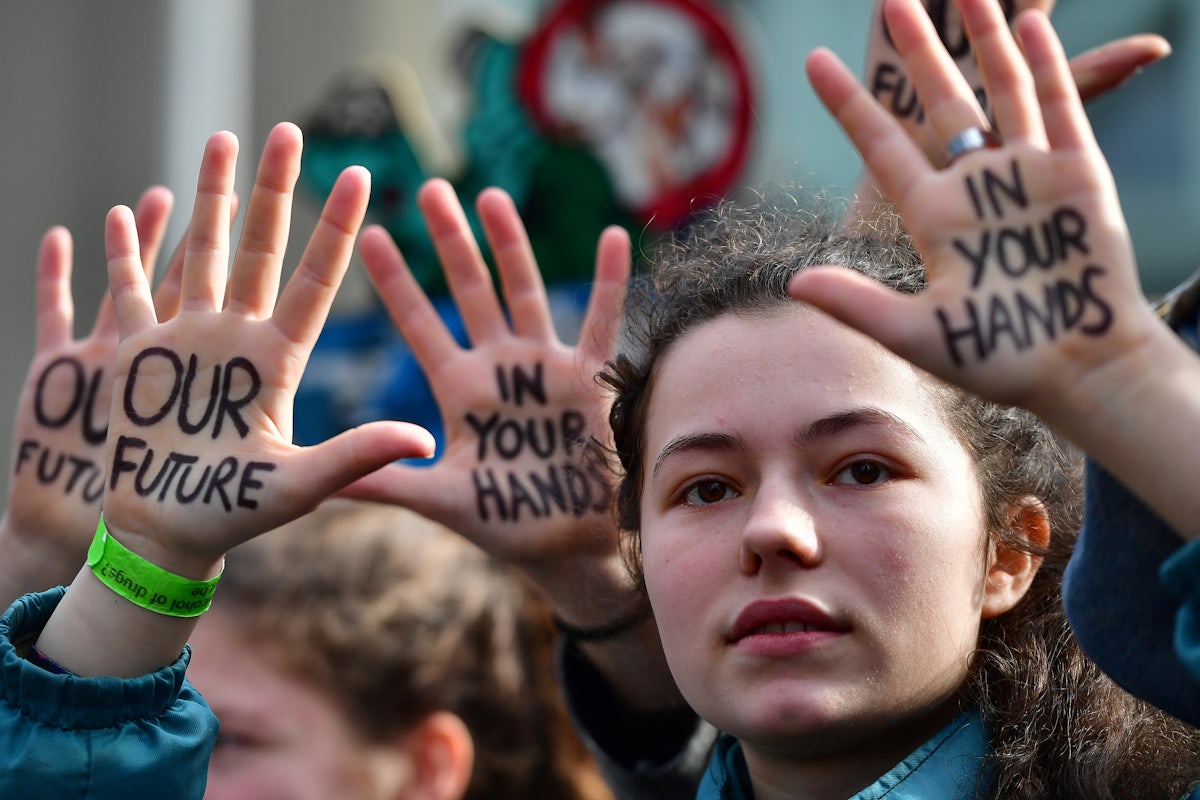
President Trump’s decision to constrain and muzzle scientific research signals an important milestone. The War on Science has shifted into high gear. This is a fight for our future, and scientists as well as citizens had better prepare for what is coming next.

At his confirmation hearings last week, the new EPA Administrator Scott Pruitt unveiled the new language of this war—a subtle, yet potentially damaging form of science skepticism. Manmade climate change, he says, is “subject to continuing debate.” There is reason to be concerned about methane released by fracking, but he’s “not deeply concerned.” And research on lead poisoning is “not something [he has] looked into.”


These might sound like quibbles compared to the larger cultural and political upheavals happening in America today, but collectively, they add up to something big.


The systematic use of so-called “uncertainty” surrounding well-established scientific ideas has proven to be a reliable method for manipulating public perception and stalling political action. And while certain private interests and their political allies may benefit from these tactics, the damages are something we will all have to face.


Make no mistake: the War on Science is going to affect you, whether you are a scientist or not. It is going to affect everything—ranging from the safety of the food we eat, the water we drink, the air we breathe, and the kind of planet we live on. It will affect the kinds of diseases we get and the medicines we can use. It will determine our safety and security, and the privacy of our data and personal lives. It will dictate what our kids are taught in our schools, what is discussed in the news, and what is debated in the halls of Congress. It will affect the jobs we have, the kind of industries that thrive here, and what powers our economy.


The reality is that science touches everything we do, and everyone we love, which is why the War on Science is so deadly serious. This is a war that needs to be won. But in order to do so, scientists and science supporters—including those participating in the upcoming March for Science—need to take a new tack...
See my prior post on the March for Science.

THERANOS UPDATE

From Forbes:
What An Entrepreneur Can Learn From Theranos
Bill Rader

A unicorn created by hype

...Just a couple months ago, a Silicon Valley venture capitalist appeared on CNBC’s “Closing Bell” and instead of talking about the elephant in the room, he diverted to a defense strategy for the Theranos CEO.

He claimed Elizabeth Holmes had been “totally attacked,” and that she is “a great example of maybe why the women are so frustrated.”

He also went on to say, “This is a great entrepreneur who wants to change health care as we know it."

The last statement was the strangest thing he said. Wouldn’t we all like to change things for the better? But “wanting” and “doing” are two different things.

If you want to “change healthcare as we know it” you have to at least understand how the development process works, which is not like a Silicon Valley tech startup...
UBER UPDATES


And the hits just keep on comin'...
CAN UBER BE SAVED FROM ITSELF?
‘They have dug themselves a very deep hole’

by Andrew J. Hawkins
Fine article. Well worth your time.

But, wait! There's more!!!
Uber's 'hustle-oriented' culture becomes a black mark on employees' résumés
Julia Carrie Wong, The Guardian
Below, ouch! 
EXCLUSIVE: EARLY UBER INVESTORS SLAM TRAVIS KALANICK
Freada and Mitch Kapor say Uber is at a “tipping point” and rip fellow investors for their “deafening silence.”

Maya Kosoff
It’s exceedingly rare for an investor in a private tech company to publicly criticize a portfolio company. Even Theranos hasn’t received so much as a public smack on the wrist from its biggest institutional tech investor, Draper Fisher Jurvetson. So it was somewhat shocking, within Silicon Valley, when Mitch and Freada Kapor, who in 2010 were among the earliest investors in Uber, penned a scathing open letter to the company’s board and fellow investors, calling out the company for a “toxic” pattern of bad behavior. After working for years “behind the scenes to exert a constructive influence on company culture,” the Kapors said they had given up on reforming Uber from the inside. “If we believed it was too late for Uber to change, we would not be writing this”...
I don't share their optimism. For all of the foregoing reasons.

See also Madison Malone Kircher's excellent "How Uber got here" at New York Magazine. A great, detailed timeline.
___

MARCH 8TH HEALTH POLICY REFORM UPDATES

The GOP has noisily published its initial draft "Repeal and Replace ObamaCare" bill. It is widely reviled out of the chute even within Republican Party factions.


THCB is albaze with several posts on the topic:
The Rust Belt Is Burning: Republicans Lay Waste to their Base on Health Reform
The House Republicans’ Terrible, Horrible, No Good, Very Bad Obamacare Replacement Plan
Healthcare Insurance: America’s Collective Action Nightmare
Aggghhh...

The GOP Health Care Plan Is in Critical Condition
I guess we'll see.

BTW, I downloaded the bill draft PDF and have keyword-scanned it. No mention of "Health IT" (in any of its phrase variants), "electronic," "technology," "improvement," or "quality." Zip, zilch, Nyet, Nada. The word "data" appears only in the context of "enrollment" and "expenditure" data. "The Secretary" is in the bill 40 times, alluding to the otherwise Trump/GOP-disdained "regulation" -- e.g., "as the Secretary shall determine."

Opposition continues to mount...
AARP Opposes Healthcare Bill
Proposal raises premiums and weakens Medicare
The American Hospital Association (AHA) and the American Medical Association (AMA) are also on record in early opposition.

UBER UPDATE, JUNE 22ND

From Naked Capitalism, "The Wheels Come off Uber."

Then there's this:

INTERESTING COMMENT AT N.C.
Lynne
June 22, 2017 at 3:56 pm


Last night, I heard a commentator say that Uber was a failure (along with Lyft) because they did not understand that their real customers were the drivers, and that the service needed to be set up to deliver (no pun intended) riders to the drivers and not the other way around. He predicted that there would be replacement companies that would succeed as soon as they realized that. Never heard that before ... The news anchor was speechless after the comment.
'eh?

JUNE 24TH UPDATE: AND THE HITS JUST KEEP ON COMIN'
Uber Spinning Out of Control: Employees Eyeing Exits as Press (Finally) Starts to Question Business Model
Anna Wiener in The New Yorker:
After Travis Kalanick’s Resignation, Will Uber Really Change?

...Startups are often shaped by the values of venture capital: speed, growth, rapid returns. These values inform business practices and company culture, and the same qualities that make a workplace exciting and engaging can also turn a company into a cautionary tale...
Yeah.
____________

More to come...

Tuesday, June 25, 2019

Define "science"

OK, continuing my riffs begun by "define 'evidence'" and "define 'expert'"--do we all mean the same thing by the word "science?"


Physicians are usually quick to point out that the word "cancer" actually denotes a host of diseases that share not only core etiologic similarities but also significant clinical differences. Similarly, when we say "science" are we really alluding to many "sciences" that differ materially (and range from heuristically "soft" to algorithmically "hard")?

Dr. Rudolph's book has thus far got me off down a number of interesting rabbit holes.

...[W]hen I began studying to be a science teacher in college, I was surprised to learn that there was no such thing as the scientific method. That was certainly the message my science-teaching methods professor instilled in us. He taught that the focus of our teaching instead should be on something called “scientific inquiry,” the details and complexities of which we learned about from an early 1960s essay by a University of Chicago professor by the name of Joseph Schwab.

Rudolph, John L. (2019-05-31T23:58:59). How We Teach Science. Harvard University Press. Kindle Edition.
Schwab, 'eh?
...Joseph Schwab (1909–1988), a contributor to the innovative Biological Sciences Curriculum Study (BSCS) high school biology course materials, who advanced our understanding of inquiry-based instruc- tion. He enrolled in the university at age 15, earning undergraduate degrees in English and physics and later a doctorate in genetics (Westbury and Wilkof 1978). Schwab worked at the University of Chicago for over 50 years, where John Dewey had set up the Lab School and where educator Ralph Tyler (1902–1994) became well-known for his work in curriculum development. 

The phrase “teaching science as enquiry” is conspicuous in a 1962 lecture by Schwab at Harvard University titled “The Teaching of Science as Enquiry.” Schwab preferred the use of enquiry to inquiry, because he disagreed with the ideas surrounding inquiry then being promoted, especially by psycholo- gists. His idea of enquiry instruction was to teach students about the major paradigms of science, that is, the manner in which a certain community of scientists view a major idea and the way they investigate it. In his lecture, Schwab urged science educators to stress the conceptions of science and how they change over time. He placed a premium on how scientists view the ideas (content) they are developing and how these ideas shape what scientists do and say about the data they collect. Science should not be viewed as dogma, he said, but as revisionary and fluid. Teachers misrepresent science when they present it as a rhetoric of conclusion or as a finished product..
. "Historical development of teaching science as inquiry."
"Inquiry" vs "enquiry?" Any substantive connotative difference there, or just "you say 'tomato' I say 'tomahto?'
BTW, regarding "educate," my grad school program director and mentor, the late Dr. Craig Walton, was fond of asserting that the etymology of the term is "e-ducere,"--to elicit, draw out, which requires of the learner both persistent, wide-ranging curiosity and a "critical thinking" mindset. Differs fundamentally from "instruction" and training.
 Back to John Rudolph (apropos of my KHIT-related interests):
Discussions of scientific methodology typically erupt publicly when the authority or the legitimate scope of science is in conflict with other social or cultural norms, knowledge systems, or local claims. The sociologist Thomas Gieryn has referred to these moments as boundary disputes. In debates over what does and does not count as science, what gets ruled in (as science) is allowed the authority to decide what counts as true. While a boundary dispute centers on the question of where the line between science and non-science is drawn, the decision about where to make that demarcation almost always hinges on an interpretation of process or methodology...
"Climate change," anyone? We know what Donald Trump "thinks."

IT MATTERS


Dr. Rudolph also makes considerable note of this:


You can buy the Kindle version for $9.99 or read for free it online.

Chapter 1: THE NATURE OF SCIENCE

Over the course of human history, people have developed many interconnected and validated ideas about the physical, biological, psychological, and social worlds. Those ideas have enabled successive generations to achieve an increasingly comprehensive and reliable understanding of the human species and its environment. The means used to develop these ideas are particular ways of observing, thinking, experimenting, and validating. These ways represent a fundamental aspect of the nature of science and reflect how science tends to differ from other modes of knowing.

It is the union of science, mathematics, and technology that forms the scientific endeavor and that makes it so successful. Although each of these human enterprises has a character and history of its own, each is dependent on and reinforces the others. Accordingly, the first three chapters of recommendations draw portraits of science, mathematics, and technology that emphasize their roles in the scientific endeavor and reveal some of the similarities and connections among them...
OK, that publication is necessary and good, but 25 years old. What have we accomplished? Where are we of late in terms of "science cred?" From "Research!America"-
From natural disasters to an opioid epidemic that prompted a public health emergency declaration, science was at the forefront of events that shaped our nation in 2017. National public opinion surveys commissioned by Research!America throughout the year revealed that a majority of Americans agree that public and private sector research is critical to better health, economic growth, global competitiveness and more. While the perception of science and scientists is positive, based on survey findings, scientists and our nation’s scientific enterprise remain largely invisible to the public.
The public overwhelmingly (82%) considers scientists trustworthy spokespersons for science, far above elected officials and the media. This level of trust includes an expectation that scientists will be the primary messengers for scientific issues, even those with policy implications. More than half of Americans agree that scientists should play a major role in shaping public policy in many areas, not only in medical and health research, but also in education (58%), infrastructure (55%) and national defense (51%). Americans recognize that science plays a role in their well-being, where they live, work and play. Yet many are unaware of the science community and those responsible for scientific advances. A strong majority of Americans (81%) cannot name a living scientist, more than two-thirds (67%) cannot name an institution, company or organization where medical or health research is conducted, and less than a quarter (21%) know that medical research is conducted in all 50 states. The findings have been consistent over the past decade, indicating the need for stronger engagement between scientists and the public.
A strong majority of Americans (71%) say they have confidence in scientific institutions compared to only 31% for Congress and 46% for the Presidency. When asked if great strides in science and innovation will continue while Donald Trump is President, opinions were divided (46% agree, 33% disagree and 22% not sure), with more Republicans (74%) than Independents (44%) and Democrats (22%) agreeing. Furthermore, a significant number of Americans (79%), including strong majorities across the political spectrum, agree that it is important for President Trump to assign a high priority to putting health research and innovation to work to assure continued medical progress (85% of Democrats, 79% of Republicans and 72% of Independents). As we pivot towards midterm elections in 2018, it is important for scientists and science advocates to ask candidates about their level of commitment to research and innovation to ensure a healthier and more prosperous future for our nation.
OK, back to the top. Define "science." See "Our Definition of Science" by the UK Science Council.
Science is the pursuit and application of knowledge and understanding of the natural and social world following a systematic methodology based on evidence.
 Ahhh... "evidence." That which makes a true conclusion more likely (or "proves" it, best case).
I searched "Science for all Americans" from beginning to end. The word "evidence" appears 57 times. Not once is there any definition of what the word means. It is simply assumed that we all have the same understanding. Is that OK? No biggie? BTW, the word "evident" shows up eight times, again with the assumption that we all know what is meant.
UPDATE, DR. RUDOLPH'S BACKSTORY ON PROJECT 2016
Chapter 9: Project 2061 and the Nature of Science

If the period from the mid-1950s through the 1960s was the golden age of science education, with its unprecedented levels of federal funding and involvement of bill laureates and other top scientists, the decade of the 1970s into the first half of the 1980s represented an era of comparative neglect. Attention to academic subjects in schools declined with the new political emphasis on urban poverty and concerns about the regressive nature of formal education that arose in the late 1960s with the more liberal views of the rule of schooling in American society. At the same time, the image of science in public favor in these years as a result of his association with environmental degradation, on one hand, and with militarization and the Vietnam War, on the other. This shift in educational priorities along with the new critical views of science led to conditions of general decline in science education that raised alarms among the scientific elite.

Those worries were felt acutely by the leadership of the American Association for the advancement of science, prompting its executive director, William Carey, to recruit Jim Rutherford in 1981 to lead a new effort to rebuild science education across the nation. Rutherford came to the AAAS from his stint as assistant director for education at the National Science Foundation the position as assistant secretary for research and improvement at the newly established Department of Education. He was someone earlier with the levers of change, such as they were, in the American educational system Rutherford's immediate task was to move education to the top of the AAAS agenda, and specifically to enact elements of a January 1981 resolution passed by the Association's Board of Directors quote to reverse the damaging decline of science and engineering education in the United States."

The challenge Rutherford-based was profitable. Since the mid-1970s, science education had been pushed to the margins of public consciousness, and the crushing recession along with the education version of the newly installed Reagan administration made prospects for any federal initiatives bleak. "It is easy enough to say that business and industry, the scientific and engineering societies, and the foundations are to pick up the slack," Rutherford wrote to a friend. But it wasn't clear to him at the time what those institutions could do to really make a difference. What was obvious to Rutherford was that a long-term plan was needed rather than some fixed. As he saw it, his job was to develop something that quote the Association can stick with the decade or longer that it takes for anything to have a lasting impact on our complex educational system."

Rutherford told the possibilities in the summer of 1982. The scientists of the 1950s had had the shock of Sputnik and the military threat from the Soviet Union to help usher reforms into the schools. The biggest threat of the 1980s, however, was economic — from Japanese automobile imports, for example. Grasping for something bold and symbolic, Rutherford latched onto Halley's comet — a satellite of a different sort. It seemed to fit the bill. The famous comet, he noted, was due to appear that October, the same month as the 25th anniversary of the Sputnik launch, and it would be 75 years before it would return again. What sort of changes might take place in our civilization between those visits? Used Rutherford. Looking at the dramatic changes that had occurred between prior flybys, he concluded that "we cannot accurately describe the world as it will be when Halley's comet next returns." However, he asserted, we do know that "the changes that will be brought about in our culture, in our way of life, will have more to do with the utilization of science and technology than with anything else."
What was needed, and Rutherford's view, was an entirely new approach to science education, one that would prepare children born in 1986 — the year of the comet would make its closest pass by Earth — to live in the scientific and technological 2, when those students would grow up to work, have children, eventually retire, and live to see the comment return in the year 2061. The length of time between sightings gave Rutherford the Longview he and AAAS were looking for to avoid yet another crisis driven crash program that was unlikely to produce meaningful and enduring change. Project 2061, as he named it, was bold and imaginative, clearly something outside the typical educational reform box. Its central goal was to articulate "what understanding of science and technology will be important for everyone in tomorrow's world" and then to work towards realizing that goal in a systematic way... [How we teach science, pp 180-182]
I encourage everyone to read the entirety of Project 2061 material. And buy and read John Rudolph's book. And join AAAS.

ALSO OF RELEVANCE TO TEACHING SCIENCE

I've previously cited this fine book:


Another important historical read. Lots of overlap with "How We Teach Science."

What's my point here? Go back to my "Is there a 'science of deliberation'?" What do we mean by "deliberation?"
When you encounter the word "deliberation," what typically comes right to mind? Jury service, yes? I'm looking into the psychology of that as well. (Excellent book.) Also, in my grad school program, deep and thorough "moral deliberation" was our constant focus ("Ethics & Policy Studies").
Finally for now, is there really such a thing as "Data Science?" Or that mostly another Bright Shiny Thing marketing hook for expensive, institutionally lucrative graduate school programs?

Stay tuned, Not done by any stretch. Juggling a lot of bowling pins this week.

UPDATE: JUST IN


Science Based Medicine rocks.
Media Literacy Is Key
Media literacy is an important component to teaching science and critical thinking. We’ll add that to our to-do list.


Educating the public about medical myths and misconceptions has various challenges. The psychological deck seems to be stacked against us. It’s easier to scare people with possible risks than to reassure them with facts. People tend to be more compelled by emotional anecdotes than dry data. There is something inherently compelling about conspiracy theories that attract many people. People are good at remembering dramatic details, but poor at remembering whether or not they are true and what the source of the information is.
But perhaps the most profound factor making our job difficult is that once an idea has taken root in someone’s mind, it is remarkably difficult to change. Humans are instinctively good at motivated reasoning and confirmation bias. We see what we want to see, remember the bits that support our narrative, and can rationalize away pesky things like logic and evidence. The result can be a powerful, even overwhelming, illusion of confident knowledge, even in notions that are patently absurd. We can then erect elaborate defenses around these beliefs to protect them from reality…

There are basically three types of preventive education that are likely to reduce susceptibility to pseudoscience. The first is scientific literacy. There is some controversy over how effective this is, however. A few decades ago the “knowledge deficit model” was dominant, and the prescription for belief in pseudoscience was to teach people science. However, recent research has not been kind to the knowledge deficit model. You cannot usually change someone’s mind about an emotionally held belief with just information…


…You can move the needle a bit with public education about certain topics. Sometimes beliefs are based more on misinformation than emotion or identity, and if you correct that misinformation you can change beliefs. This is very topic specific, and also is affected by the kind of information you give and how it is presented. For example, global warming denial is strongly predicted by political ideology, and not at all by scientific literacy. However, vaccine denial does correlate with low scientific literacy, which implies that science education can be a mitigating factor…

The second type of education is critical thinking. This relates more directly to the point about narratives. Critical thinking is about metacognition, knowing how to think with a valid process that is self-reflective and therefore potentially self-corrective. If someone understands exactly how conspiracy thinking is a cognitive trap, they are less likely to fall into that trap. Critical thinking and scientific literacy is a powerful combination – this is essentially what we mean by scientific skepticism, which is exactly what we are doing here (in the realm of medicine)…
'eh? Read all of it. This is why SBM is a requisite daily stop for me. As is The NeuroLogica Blog.

apropos, see my prior post "Selling science: effective communication with decision makers."

UPDATE

I continue to plumb "How we teach science" (while finishing up two Game Theory books).


My path here thus far has been cut-to-the-chase circuitous (an expedient MO I employ when I trust an author and the book lends itself to a non-linear read): Introduction, Chapter 1, Chapter 10, Conclusion, Chapter 4, Chapter 6, Chapter 7.

Final words:
The continued focus on students mastering scientific practice—doing science—in the hopes that some of these larger, contextual understandings will come along for free seems misguided. Perhaps the last word on this is best left to Schwab. During the Golden age of science curriculum reform, he warned that many science classrooms were "being converted into research microcosms in which every high school student, regardless of interest and competence, is supposed to act, on a small scale, like a scientist." This, unfortunately, seems to be where the current emphasis lies as well (when it isn't on the technical content of science itself). And Schwab noted to that such an approach was poorly suited to accomplishing if a understanding of the nature of scientific work. Given the choice between teaching about scientific inquiry and having students engage in the actual process of inquiry, "it is the former which should be given first priority," as Schwab said. Understanding what science is and how it works in the social context of our time is the necessary end for which we need to strive if, in Schwab's words, "we are to develop the informed public which our national need urgently demands." [How we teach science, pp. 230-231]

ERRATUM

I forgot to cite my earlier post "Is there a science of success?"

CODA

All of the foregoing brings me back to my initial core KHIT concern--science-based, optimally effective health care, aided by technology where appropriate. Today I reflected on a book I bought in hardcopy back some time ago. It's now available in Apple iBook format, which I rarely use.


Well, lookeee who shows up right off.

Foreword by Harlan M. Krumholz, MD, MS 
Medicine is an information science. In an earlier era, medicine moved from religion to science via laboratory work on the mechanism of disease. Doctors improved their results by reflecting on the likely cause of disease and the likely response of an individual to a treatment based on that understanding of disease. Although many benefitted from that approach, others were harmed because assumptions were not sufficiently tested empirically. There was a recognition that advances in the lab needed to be supplemented with more rigorous studies in patients, especially when the benefit was modest and not easily demonstrated. Moreover, as these studies grew, the need for doctors to be able to manage the information, understand it, and apply it wisely also grew. 

Today, the expert clinician must have a command of information and know how to apply it. There is more attention than ever on the quality of treatment decisions and the assumptions that underlie them. The key to knowing how best to synthesize the available information and produce the best recommendations and decisions requires an appreciation of cognitive science...
 

Preface 

Medical education tends to focus on medical content. We teach the facts and emphasize what is known. We often assume that if we apply the facts and rules, as an engineer applies principles and equations, we can solve most medical problems. But clinical medicine is not engineering—there are simply too many missing pieces, too much uncertainty. When faced with uncertainty, we inevitably use reasoning. But medical education gives the process of medical reasoning short shrift and rarely teaches it explicitly. We diligently teach the “what” but students often learn the “how” on their own...
 

This book does not present any great discoveries but, instead, synthesizes ideas that have been hiding in plain sight for years. During the past three decades, the field of cognitive psychology has developed a substantial literature on decision making but somehow hasn’t had much influence on doctors, who make tough, nuanced decisions every day. I am not a cognitive psychologist, but I have learned a great deal from Herbert Simon, Gerd Gigerenzer, Daniel Kahneman, Gary Klein, and others whose work on intuition and heuristics is directly relevant to medical decision making. Influenced by the work of Ian Hacking, I have included some introductory ideas about probability, logic, and statistical inference. I am also steeped in the literature on clinical reasoning by authors such as Alvin Feinstein, Larry Weed, Jerry Kassirer, Harold Sox, David Sackett, Pat Croskerry, Donald Redelmeier, Jerome Groopman, and Kathryn Montgomery. I continue to learn about medical reasoning from many colleagues, too numerous to list, and I hope that this book accurately reflects their teaching…
Pretty cool, I have to say. BTW: See my 2014 riff on "The Art of Medicine."
_____________

More to come...