The Trump White House is moving to paralyze a bipartisan and independent watchdog agency that investigates national security activities that can intrude upon individual rights.
The move comes as the new administration is vowing to put its own stamp on federal law enforcement and intelligence agencies. It also comes ahead of a new conflict over whether or how Congress should renew a warrantless surveillance law that is set to expire in 2026.
Congress established the agency, called the Privacy and Civil Liberties Oversight Board, as an independent unit in the executive branch after the terrorist attacks of Sept. 11, 2001. It has security clearances and subpoena power, and is set up to have five members, appointed by the president and confirmed by the Senate, who serve six-year terms. Some members are picked by the president, and some are selected by congressional leaders of the other party.
It needs at least three members in order to take official actions like starting a new investigative project or issuing a board report with a policy recommendation. Its work has included scrutiny of surveillance and bulk data collection activities, terrorism watch lists and the use of facial recognition and other biometrics at airports... (NY Times)
Recall my prior "Total Information Awareness update" post?
TRUMP EVANGELICALS UPDATE

What is psychologically intriguing is how bracing and electrifying a figure Trump is to many evangelicals. It is as if his disinhibitions have become theirs. Parents who disapproved of their children saying “damn” are now enthralled by a man who says “motherfucker.” Those who championed modesty and purity culture celebrate a thrice-married serial adulterer who made hush-money payments to a porn star. Churchgoers who can recite parts of the Sermon on the Mount are inspired by a man who, on the day he announced his candidacy for reelection, promised vengeance against his perceived enemies. Christians who for decades warned about moral relativism are now moral relativists; those who said a decent society has to stand for truth have embraced countless lies and conspiracy theories. People who rage at “woke cancel culture” delight in threats to shut down those with whom they disagree. Men and women who once stood for law and order have given their allegiance to a felon who issues pardons to rioters who have assaulted police officers…Recall my prior "Christian Nationalists" posts.
…Many evangelical churches, the pastors who lead them, and the people who comprise them are doing enormously good work. I have witnessed this with my own eyes, and been the recipient of those who are dispensers of grace. Faith, not politics, is their priority, and many of them have tried in good conscience to align their politics with their faith. When it works, as it did with the abolitionist movement, the global AIDS initiative, refugee resettlement, and protecting religious liberty around the world, it has advanced justice and healing.
But something is amiss. Today the evangelical movement is an essential part of a much larger, and largely destructive, political and cultural movement. Evangelicalism has in many instances become more tribal, unforgiving, and cruel. The world is noticing.
“As a general rule,” the Episcopal priest Barbara Brown Taylor has said, “I would say that human beings never behave more badly toward one another than when they believe they are protecting God.”
Hitching the evangelical wagon to Donald Trump has meant unhitching it from the life and teachings of Jesus. It’s a bad trade.
—Peter Wehner
Erratum:

SecDefBro confirmed in the Senate 51-50 (VP tie-breaker).


JUST IN (WaPo)
Decision not expected anytime soon.The Supreme Court agreed Friday to consider whether the state of Oklahoma may fund a proposed religious charter school, the first of its kind in the country
_____
ERRATUM

SecDefBro confirmed in the Senate 51-50 (VP tie-breaker).
SOME OF MY CURRENT READS

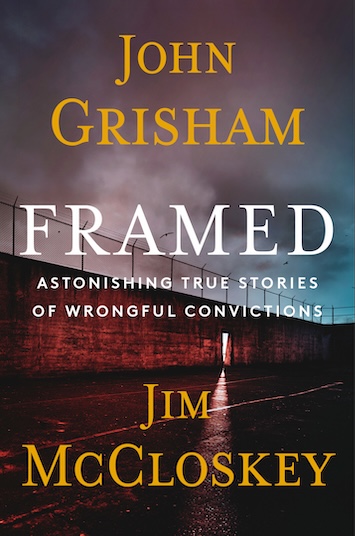


Trying to get back on track.
A UNIVERSE FROM NOTHING?
Hmmm... How 'bout we Begin Wth The End In Mind?
AFTERWORD
by Richard Dawkins
Nothing expands the mind like the expanding universe. The music of the spheres is a nursery rhyme, a jingle to set against the majestic chords of the Symphonie Galactica. Changing the metaphor and the dimension, the dusts of centuries, the mists of what we presume to call “ancient” history, are soon blown off by the steady, eroding winds of geological ages. Even the age of the universe, accurate—so Lawrence Krauss assures us—to the fourth significant figure at 13.72 billion years, is dwarfed by the trillennia that are to come.
But Krauss’s vision of the cosmology of the remote future is paradoxical and frightening. Scientific progress is likely to go into reverse. We naturally think that, if there are cosmologists in the year 2 trillion AD, their vision of the universe will be expanded over ours. Not so—and this is one of the many shattering conclusions I take away on closing this book. Give or take a few billion years, ours is a very propitious time to be a cosmologist. Two trillion years hence, the universe will have expanded so far that all galaxies but the cosmologist’s own (whichever one it happens to be) will have receded behind an Einsteinian horizon so absolute, so inviolable, that they are not only invisible but beyond all possibility of leaving a trace, however indirect. They might as well never have existed. Every trace of the Big Bang will most likely have gone, forever and beyond recovery. The cosmologists of the future will be cut off from their past, and from their situation, in a way that we are not.
We know we are situated in the midst of 100 billion galaxies, and we know about the Big Bang because the evidence is all around us: the redshifted radiation from distant galaxies tells us of the Hubble expansion and we extrapolate it backward. We are privileged to see the evidence because we look out on an infant universe, basking in that dawn age when light can still travel from galaxy to galaxy. As Krauss and a colleague wittily put it, “We live at a very special time . . . the only time when we can observationally verify that we live at a very special time!” The cosmologists of the third trillennium will be forced back to the stunted vision of our early twentieth century, locked as we were in a single galaxy which, for all that we knew or could imagine, was synonymous with the universe.
Finally, and inevitably, the flat universe will further flatten into a nothingness that mirrors its beginning. Not only will there be no cosmologists to look out on the universe, there will be nothing for them to see even if they could. Nothing at all. Not even atoms. Nothing.
If you think that’s bleak and cheerless, too bad. Reality doesn’t owe us comfort. When Margaret Fuller remarked, with what I imagine to have been a sigh of satisfaction, “I accept the universe,” Thomas Carlyle’s reply was withering: “Gad, she’d better!” Personally, I think the eternal quietus of an infinitely flat nothingness has a grandeur that is, to say the least, worth facing off with courage.
But if something can flatten into nothing, can nothing spring into action and give birth to something? Or why, to quote a theological chestnut, is there something rather than nothing? Here we come to perhaps the most remarkable lesson that we are left with on closing Lawrence Krauss’s book. Not only does physics tell us how something could have come from nothing, it goes further, by Krauss’s account, and shows us that nothingness is unstable: something was almost bound to spring into existence from it. If I understand Krauss aright, it happens all the time: The principle sounds like a sort of physicist’s version of two wrongs making a right. Particles and antiparticles wink in and out of existence like subatomic fireflies, annihilating each other, and then re-creating themselves by the reverse process, out of nothingness.
The spontaneous genesis of something out of nothing happened in a big way at the beginning of space and time, in the singularity known as the Big Bang followed by the inflationary period, when the universe, and everything in it, took a fraction of a second to grow through twenty-eight orders of magnitude (that’s a 1 with twenty-eight zeroes after it—think about it).
What a bizarre, ridiculous notion! Really, these scientists! They’re as bad as medieval Schoolmen counting angels on pinheads or debating the “mystery” of the transubstantiation.
No, not so, not so with a vengeance and in spades. There is much that science still doesn’t know (and it is working on it with rolled-up sleeves). But some of what we do know, we know not just approximately (the universe is not mere thousands but billions of years old): we know it with confidence and with stupefying accuracy. I’ve already mentioned that the age of the universe is measured to four significant figures. That’s impressive enough, but it is nothing compared to the accuracy of some of the predictions with which Lawrence Krauss and his colleagues can amaze us. Krauss’s hero Richard Feynman pointed out that some of the predictions of quantum theory—again based on assumptions that seem more bizarre than anything dreamed up by even the most obscurantist of theologians—have been verified with such accuracy that they are equivalent to predicting the distance between New York and Los Angeles to within one hairsbreadth.
Theologians may speculate about angels on pinheads or whatever is the current equivalent. Physicists might seem to have their own angels and their own pinheads: quanta and quarks, “charm,” “strangeness,” and “spin.” But physicists can count their angels and can get it right to the nearest angel in a total of 10 billion: not an angel more, not an angel less. Science may be weird and incomprehensible—more weird and less comprehensible than any theology—but science works. It gets results. It can fly you to Saturn, slingshotting you around Venus and Jupiter on the way. We may not understand quantum theory (heaven knows, I don’t), but a theory that predicts the real world to ten decimal places cannot in any straightforward sense be wrong. Theology not only lacks decimal places: it lacks even the smallest hint of a connection with the real world. As Thomas Jefferson said, when founding his University of Virginia, “A professorship of Theology should have no place in our institution.”
If you ask religious believers why they believe, you may find a few “sophisticated” theologians who will talk about God as the “Ground of all Isness,” or as “a metaphor for interpersonal fellowship” or some such evasion. But the majority of believers leap, more honestly and vulnerably, to a version of the argument from design or the argument from first cause. Philosophers of the caliber of David Hume didn’t need to rise from their armchairs to demonstrate the fatal weakness of all such arguments: they beg the question of the Creator’s origin. But it took Charles Darwin, out in the real world on HMS Beagle, to discover the brilliantly simple—and non-question-begging—alternative to design. In the field of biology, that is. Biology was always the favorite hunting ground for natural theologians until Darwin—not deliberately, for he was the kindest and gentlest of men—chased them off. They fled to the rarefied pastures of physics and the origins of the universe, only to find Lawrence Krauss and his predecessors waiting for them.
Do the laws and constants of physics look like a finely tuned put-up job, designed to bring us into existence? Do you think some agent must have caused everything to start? Read Victor Stenger if you can’t see what’s wrong with arguments like that. Read Steven Weinberg, Peter Atkins, Martin Rees, Stephen Hawking. And now we can read Lawrence Krauss for what looks to me like the knockout blow. Even the last remaining trump card of the theologian, “Why is there something rather than nothing?” shrivels up before your eyes as you read these pages. If On the Origin of Species was biology’s deadliest blow to supernaturalism, we may come to see A Universe from Nothing as the equivalent from cosmology. The title means exactly what it says. And what it says is devastating.
Krauss, Lawrence. A Universe from Nothing: Why There Is Something Rather than Nothing (pp. 187-192). (Function). Kindle Edition.
Yeah.


Ended up going down this path owing to som prior relevant reading.
More to come...
_________