Search the KHIT Blog

Friday, June 17, 2016

#HCSummit16 Day Two: We're all Shook up.

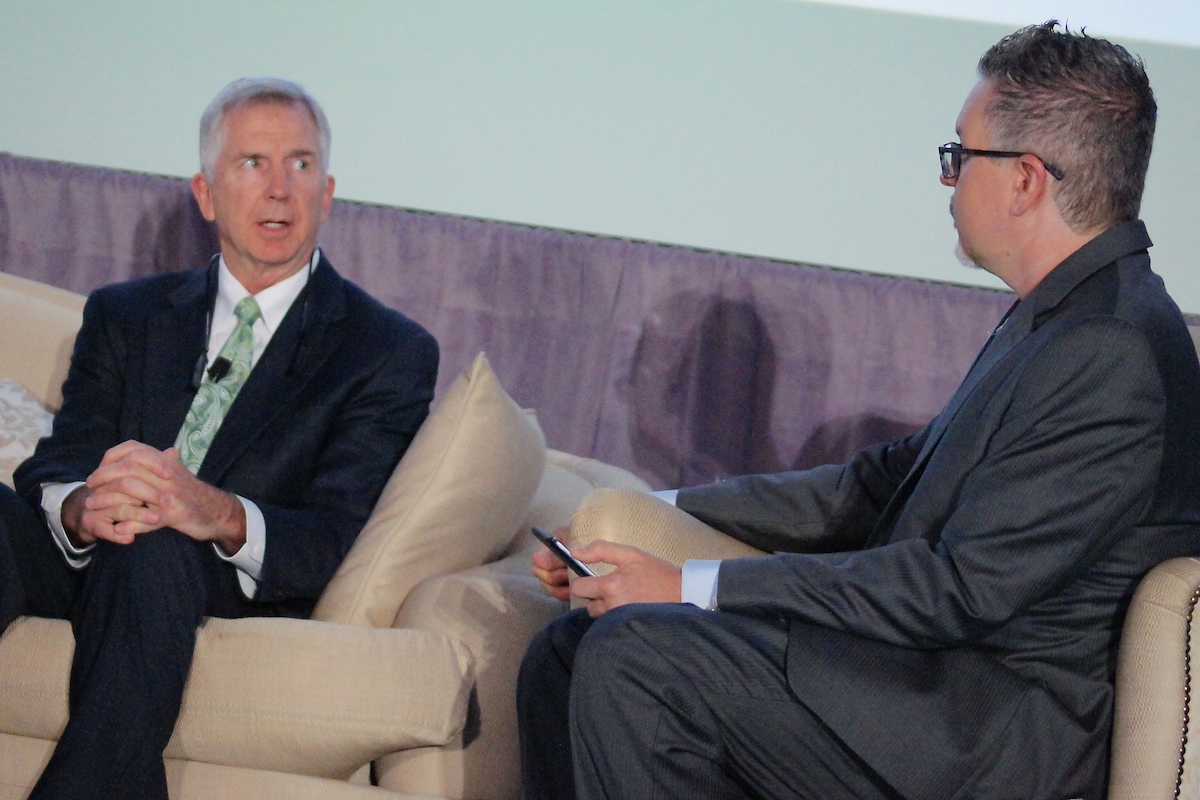
Beginning with the end in mind, John Shook's closing Keynote was worth the entire trip.


A natural communicator, this man. I hope they make the video of this talk available publicly.
Lean means working on the work: the value-creating work that occurs on the frontlines of your enterprise. - John Shook, June 11, 2015
Lots more to reflect on and write up. I'm on my way home to California. Stay tuned.

A NEW READ

apropos of Lean process QI,


Fundamentally, among the "process errors" we must be ever-vigilant against are dx errors, no? From THCB:
The National Academy of Medicine’s report offers an immediate suggestion to improve health care diagnosis today: teamwork. The same principle that rules sporting arenas and playgrounds across the world can reduce the number of diagnostic errors. The practice of medicine has traditionally been a lonely and risky competition. Doctors are used to calling the odds and making diagnoses without input from other members of the team, and nurses and physician assistants are taught not to question them. If a physician makes a mistake, there is a culture of blame, shame and fear of litigiousness, which makes it less likely that individuals will speak up or report a diagnostic error.

But better teamwork achieves much more than merely changing professional norms or local work culture...
'eh? You can spend 50-some bucks for the hardcopy or Kindle version via Amazon, or avail yourself of the free (if a bit unwieldy) National Academies PDF, which I've posted for your convenience. A long read. 450 pages. I've just started my close study. Of particular interest will be the Health IT - clinical cognition nexus. See, e.g., my May post "Technology, particularly the technology of knowledge, shapes our thought."

And, will triangulate what I learn with these two books previously cited on KHIT:


DAY 2: A FEW MORE RANDOM PICS

Cheryl DeMar
Norm Gruber
Mark Graban
Tim Johnson
____________

More to come...

Wednesday, June 15, 2016

#HCSummit16 Day One

I'm not gonna post much tonight, I'm fried. I first left SFO at 11:50 a.m. PDT yesterday, headed for MIA on American Airlines flight 931 scheduled to arrive at 8:30 p.m. EDT. We taxied out, and the fully-loaded 767-300 lumbered left onto the takeoff runway. I wasn't paying attention, as I was totally absorbed in Siddartha Mukherjee's amazing book "The Gene: An Intimate History."

All of a sudden I look up and we're pulling back to the gate. "Ladies and gentlemen, as you can see we've had to return to the departure gate. There's a pressure seal problem with the front galley door. We've called for mechanics, and we'll advise you further shortly." After about 40 minutes we were advised they had a crew of 5 mechanics working the problem, and we'd have to de-plane so they could pressurize the cabin once repairs were complete to verify the integrity of the fix.


We eventually re-boarded and left for MIA around 3 p.m. SFO time. I got to my hotel a little after midnight. Ugh.

Finished the Mukherjee book during the flight. Wow.

When I completed the final draft of the six-hundred-page Emperor of All Maladies in May 2010, I never thought I would lift a pen to write another book. The physical exhaustion of writing Emperor was easy to fathom and overcome, but the exhaustion of imagination was unexpected. When the book won the Guardian First Book Prize that year, one reviewer complained that it should have been nominated for the Only Book Prize. The critique cut to the bone of my fears. Emperor had sapped all my stories, confiscated my passports, and placed a lien on my future as a writer; I had nothing more to tell. 

But there was another story: of normalcy before it tips into malignancy. If cancer, to twist the description of the monster from Beowulf, is the “distorted version of our normal selves,” then what generates the undistorted variants of our normal selves? Gene is that story— of the search for normalcy, identity, variation, and heredity. It is a prequel to Emperor’s sequel...

Mukherjee, Siddhartha (2016-05-17). The Gene: An Intimate History (Kindle Locations 8794-8802). Scribner. Kindle Edition.
A must-read for those contemplating the future of health care as it pertains to the dx and tx roles of the "omics."

Speaking of books. One of the morning breakout learning sessions was "How to lead by asking effective questions." It is based on the Henry Schein book "Humble Inquiry," which I've cited on this blog. I attended.

I recommend quadrangulating it with three others:


Good session, Far to much to really get at in any depth in 75 minutes, but well-presented. Elevator speech summary? Too much of interrogative discourse, particularly in the workplace, is comprised of implicitly accusatory or otherwise directive questioning. e.g., the "loaded questions," which are really assertions disingenuously voiced in the nominal forms of questions. The tactic is at once dishonest and counterproductive. Think "Talking Stick."

Read the Schein book.

I've shot some Day One pics (weak light notwithstanding), but I'm fixin' to crash. Will try to catch up tomorrow. Hate to miss the music tonight.
__

A FEW RANDOM PICS


Were those "Trump Steaks" at lunch?
____________

More to come...

Monday, June 13, 2016

Next up, #HCSummit16, the 2016 Lean Summit


RE-POSTING...


I'm flying to Miami shortly to cover this year's event (at the Doral this year). Last year's Summit in Dallas was off-the-hook fine. The 2016 agenda:
Wednesday
Keynotes

  • John Toussaint, ThedaCare Center for Healthcare Value
  • Patrick Conway, MD
  • Kathryn Correia
Learning Sessions
  • Leader Standard Work
  • How to Lead by Asking Effective Questions
  • How Government, Healthcare, and Lean Come Together
  • Lean Transformation Across Cultures: The lean journey of a disability hospital & newborn healthcare programme in East Africa
  • Population Health: A journey to deploying real time decision support
  • Lean Dentist
  • Business Intellligence is no longer an Option!
  • Experiments Around the Network AM
  • Experiments Around the Network PM
Thursday
Keynotes

  • Elizabeth Mitchell
  • John Shook, Lean Enterprise Institute
Learning Sessions
  • Engaging Physicians: Lean as Preventive Medicine for Burnout
  • Results Focused, Process Driven Ambulatory Clinic Redesign
  • Payment Reform: The Employers' Perspective
  • Improving Patient Experience, Patient Safety and Patient Progression through a Lean Management System
  • Doing the Splits in the ED: Emerging Models in Academic Medicine
  • Preparing Senior Leadership and The Lean Office for Organization Transformation
  • Applying Lean to Federal Healthcare Policy, the Story of a Strategic Design Event
  • Experiments Around the Network AM
  • Experiments Around the Network PM
The Lean Summits are comprised of people and organizations who are doing it. No mere theorizing and other abstract talk or dwelling on the myriad vexing problems in the health care system, which we all know exist.

I will be all eyes and ears. In addition to "Leadership" presentations, I'll be particularly interested in seeing evidence of the effective integration of Health IT into lean workflows, given the intractable hand-wringing over the putative "impediments" of digital health InfoTech.

INTERESTING NEW BOOK

Notice about this new title arrived on my inbox via my ASQ member feed.

Preface
Chapter 1 traces the origins of probability as an academic subject and high- lights the pervasiveness of statistics and probability in today’s popular culture. Chapter 2 introduces the reader to counting techniques to determine how many ways particular outcomes can occur. Counting possible outcomes is a fundamental piece of probability calculations. In Chapter 3, we begin the hard and rewarding work of learning probability concepts and rules, including the concepts of mutual exclusivity, sampling with and without replacement, odds, conditional probability, and Bayes’ theorem. Seven detailed examples are included at the end of the chapter to help solidify your understanding. After studying the first three chapters and completing the practice problems included in the companion workbook, readers will be prepared to answer any number of probability questions, from picking socks out of a drawer, to selecting lottery numbers, to choosing colleagues for committees, to deciding whether a manufacturing lot should be shipped to the customer.

Chapter 4 introduces commonly used “named” discrete probability distributions: the discrete uniform, binomial, hypergeometric, geometric, negative binomial (also known as the Pascal), and Poisson. The formulas, parameters, and uses for each distribution are introduced, and worked examples are shown for each distribution type. Useful approximations among the distributions are also presented, and a summary of the distributions is tabulated at the end of the chapter.

Chapter 5 covers continuous probability distributions, among them the well-known normal (also known as the Gaussian), standard normal, Student’s t, F, chi-square, and Weibull distributions. Lesser known but useful and interesting distributions are also included in this chapter: the uniform, triangular, gamma, Erlang, exponential, Rayleigh, lognormal, beta, and Cauchy. In addition, key theorems such as the law of large numbers and Chebyshev’s inequality are presented and explained. At the end of the chapter, a summary of the distributions appears for quick reference. After studying the material in Chapters 4 and 5 and completing the practice problems in the companion workbook, the reader will be able to select the appropriate distribution for a wide range of scenarios, state the formulas for the mean and variance for various distributions, and correctly evaluate probability statements.

The appendices contain the distribution road map, a graphic of all the probability distributions presented in the text and how they are related. Probability tables for the binomial and Poisson distributions as well as cumulative probability tables for the binomial, Poisson, standard normal, Student’s t, chi-square, and F distributions are also provided.

As extensive as the list of rules, theorems, and distributions covered in the text happens to be, this book is by no means comprehensive! The distributions presented in the text were carefully chosen for their applicability to the types of problems that arise in the quality field. Univariate distributions not covered include the Laplace and extreme value distributions, as well as the Pearson series of distributions. There also exists a multitude of multivariate distributions in which arrays of random variables are modeled. These distributions include the Dirichlet, multivariate normal, Hotelling’s T2, and the Wishart and require a working knowledge of matrix algebra. To learn more about these distributions, you can consult a thicker and more densely written text!

Even though my outline was carefully crafted, I did experience scope creep in the writing process. Just as soon as I would finish one section, I would invariably have an idea in the shower of yet another formula, relationship, example, or interesting fact to add. Finishing the book was becoming a Sisyphean task. In order to send a completed manuscript to the publisher, I had to either stop showering or decide that, as it stood, the book more than covered what was necessary. To my family’s great relief, I chose the latter option.

It is my hope that as you read this book you underline new terms, highlight formulas, write in its margins, and refer to it often. It would be gratifying to see dog-eared copies of The Probability Handbook on office shelves or opened up during certification exams.

Feel free to contact me with comments or questions about the book or to learn more about courses based on the book. Visit www.6sigma.university.
 
Nice that she includes Bayes and Chebyshev. Color me both Bayesian and Chebyshev-ist (pdf).

Expensive book, at $99 retail and $60 ASQ member price. I personally don't need it: been there, done that (and I already have a huge stash of advanced stats books in my stacks).


For someone prepping for one of the ASQ certification exams, however, it's probably well worth the money.
Introduction
The lottery has been characterized as a tax on the mathematically naive. Consider a player who uses a “system” to carefully curate his picks based on his anniversary date, his child’s age, and the current phase of the moon. Unfortunately, all the superstition in the world can’t overcome the tyranny of random chance: a player choosing the numbers 1 2 3 4 5 has the same probability of winning as our player using his “system.” As the popular financial advisors on television tell us, in the long run it would be better to invest the dollar than to spend it on a lottery ticket. But what would be the fun in that?

The lure of easy money is nothing new. For centuries, gamblers have tried to outsmart other players, as well as fate, in the hopes of scoring the big win. Not surprisingly, the study of probability traces its origins to games of chance. Unlike the lottery, which is based on pure luck, many games involve decision making and strategy that can be crafted by using probability concepts. Girolamo Cardano (1501–1576), by turns quite a successful professional gambler, mathematician, and physician, wrote the first treatise on winning betting strategies for cards and dice using the concepts of probability. The work was published posthumously almost a century later in 1663. At about this same time, the mathematicians Blaise Pascal and Pierre de Fermat were conducting a lengthy correspondence concerning the solution to the “Problem of Points,” in which the stakes in an unfinished game of chance involving coin flips must be fairly divided between two players.

Probability has since evolved beyond rolls of the dice and flips of a coin to influence almost every aspect of our lives. Medical researchers, meteorologists, and even online dating sites use probability to estimate disease risk, create weather forecasts, and match clients, respectively...
Nothing in the table of contents regarding "design of experiments." I'd be looking to bone up on areas of "Clinical Study Design." Beyond books, there's a ton of freely available stuff out on the 'net. e.g.,


Another great free stats resource: "StatSoft has freely provided the Electronic Statistics Textbook as a public service since 1995."

There's a good bit of relatively non-technical discussion of probability issues in Dr. Hatch's book, which I first referred to here, on June 8th.

I originally envisioned Snowball in a Blizzard as a book that would focus on methodological aspects of human-subjects research, mainly the difficulties of study design and the subtleties of statistical interpretation. When, for instance, does a relative risk value diverge from an odds ratio, and why are the two often confused? What is a Type I versus Type II error? How do we “power” studies? A few years ago, as I was struggling with these kinds of issues in my professional work, I thought that they would be ideal subjects to illuminate to a general audience. I can see now that these fairly technical matters were unlikely to help nonspecialists have a more thorough understanding of clinical research, and it is probably why I received fairly tepid responses from literary agents. 

Over time, I realized that more was to be gained by telling stories about the consequences of these issues, and that I could occasionally sprinkle the text with brief explanations of the more essential methodological points. For instance, I thought it absolutely critical to explain the concept of positive predictive value in order to show why the USPSTF does not universally recommend mammograms for women under age fifty. One can’t easily grasp the justification for the task force’s reasoning without being acquainted with the notion of positive predictive value; once one understands the concept and sees the truly lousy predictive value of a positive screening mammogram in this age group, it’s hard to understand why there was (and is) so much fuss in the first place. However, I shelved the idea of devoting entire chapters, say, to the difference between nested case-control and case-cohort studies or the beauty inherent in the Mann-Whitney U test. Such subjects, fascinating though they can be to epidemiologists, would probably be valuable to nonspecialists only as a soporific. 

Thus, I elected to prioritize narration over technical explanation to describe these points, and whether I have succeeded or failed at that task, I leave for you, the reader, to judge. However, I do believe that there is one statistical concept worth exploring in a little more detail than the structure of this book allowed for because so much of what I have discussed in the previous pages relies on it: significance. I can’t speak for the basic research scientists, but for clinicians statistical significance is in many ways the yardstick by which we measure relevance in medical knowledge...

Hatch, Steven (2016-02-23). Snowball in a Blizzard: A Physician's Notes on Uncertainty in Medicine (pp. 241-242). Basic Books. Kindle Edition.
"OFF-TOPIC" ERRATUM

In the wake of Orlando,

In December 2012, a gunman walked into Sandy Hook Elementary School in Newtown, Connecticut, and killed 20 children, six adults, and himself. Since then, there have been at least 1,000 mass shootings, with shooters killing at least 1,140 people and wounding 3,942 more.

The counts come from the Gun Violence Archive, a database that tracks events since 2013 in which four or more people (not counting the shooter) were shot at the same general time and location...
____________

More to come...

Saturday, June 11, 2016

Dr. Atul Gawande on the mistrust of science

Commencement address at the California Institute of Technology, on Friday, June 10th by Dr. Atul Gawande.

If this place has done its job—and I suspect it has—you’re all scientists now. Sorry, English and history graduates, even you are, too. Science is not a major or a career. It is a commitment to a systematic way of thinking, an allegiance to a way of building knowledge and explaining the universe through testing and factual observation. The thing is, that isn’t a normal way of thinking. It is unnatural and counterintuitive. It has to be learned. Scientific explanation stands in contrast to the wisdom of divinity and experience and common sense. Common sense once told us that the sun moves across the sky and that being out in the cold produced colds. But a scientific mind recognized that these intuitions were only hypotheses. They had to be tested.


When I came to college from my Ohio home town, the most intellectually unnerving thing I discovered was how wrong many of my assumptions were about how the world works—whether the natural or the human-made world. I looked to my professors and fellow-students to supply my replacement ideas. Then I returned home with some of those ideas and told my parents everything they’d got wrong (which they just loved). But, even then, I was just replacing one set of received beliefs for another. It took me a long time to recognize the particular mind-set that scientists have. The great physicist Edwin Hubble, speaking at Caltech’s commencement in 1938, said a scientist has “a healthy skepticism, suspended judgement, and disciplined imagination”—not only about other people’s ideas but also about his or her own. The scientist has an experimental mind, not a litigious one.

As a student, this seemed to me more than a way of thinking. It was a way of being—a weird way of being. You are supposed to have skepticism and imagination, but not too much. You are supposed to suspend judgment, yet exercise it. Ultimately, you hope to observe the world with an open mind, gathering facts and testing your predictions and expectations against them. Then you make up your mind and either affirm or reject the ideas at hand. But you also hope to accept that nothing is ever completely settled, that all knowledge is just probable knowledge. A contradictory piece of evidence can always emerge. Hubble said it best when he said, “The scientist explains the world by successive approximations.”

The scientific orientation has proved immensely powerful. It has allowed us to nearly double our lifespan during the past century, to increase our global abundance, and to deepen our understanding of the nature of the universe. Yet scientific knowledge is not necessarily trusted. Partly, that’s because it is incomplete. But even where the knowledge provided by science is overwhelming, people often resist it—sometimes outright deny it. Many people continue to believe, for instance, despite massive evidence to the contrary, that childhood vaccines cause autism (they do not); that people are safer owning a gun (they are not); that genetically modified crops are harmful (on balance, they have been beneficial); that climate change is not happening (it is).

Vaccine fears, for example, have persisted despite decades of research showing them to be unfounded. Some twenty-five years ago, a statistical analysis suggested a possible association between autism and thimerosal, a preservative used in vaccines to prevent bacterial contamination. The analysis turned out to be flawed, but fears took hold. Scientists then carried out hundreds of studies, and found no link. Still, fears persisted. Countries removed the preservative but experienced no reduction in autism—yet fears grew. A British study claimed a connection between the onset of autism in eight children and the timing of their vaccinations for measles, mumps, and rubella. That paper was retracted due to findings of fraud: the lead author had falsified and misrepresented the data on the children. Repeated efforts to confirm the findings were unsuccessful. Nonetheless, vaccine rates plunged, leading to outbreaks of measles and mumps that, last year, sickened tens of thousands of children across the U.S., Canada, and Europe, and resulted in deaths.

People are prone to resist scientific claims when they clash with intuitive beliefs. They don’t see measles or mumps around anymore. They do see children with autism. And they see a mom who says, “My child was perfectly fine until he got a vaccine and became autistic.”

Now, you can tell them that correlation is not causation. You can say that children get a vaccine every two to three months for the first couple years of their life, so the onset of any illness is bound to follow vaccination for many kids. You can say that the science shows no connection. But once an idea has got embedded and become widespread, it becomes very difficult to dig it out of people’s brains—especially when they do not trust scientific authorities. And we are experiencing a significant decline in trust in scientific authorities.

The sociologist Gordon Gauchat studied U.S. survey data from 1974 to 2010 and found some deeply alarming trends. Despite increasing education levels, the public’s trust in the scientific community has been decreasing. This is particularly true among conservatives, even educated conservatives. In 1974, conservatives with college degrees had the highest level of trust in science and the scientific community. Today, they have the lowest.

Today, we have multiple factions putting themselves forward as what Gauchat describes as their own cultural domains, “generating their own knowledge base that is often in conflict with the cultural authority of the scientific community.” Some are religious groups (challenging evolution, for instance). Some are industry groups (as with climate skepticism). Others tilt more to the left (such as those that reject the medical establishment). As varied as these groups are, they are all alike in one way. They all harbor sacred beliefs that they do not consider open to question.

To defend those beliefs, few dismiss the authority of science. They dismiss the authority of the scientific community. People don’t argue back by claiming divine authority anymore. They argue back by claiming to have the truer scientific authority. It can make matters incredibly confusing. You have to be able to recognize the difference between claims of science and those of pseudoscience.

Science’s defenders have identified five hallmark moves of pseudoscientists. They argue that the scientific consensus emerges from a conspiracy to suppress dissenting views. They produce fake experts, who have views contrary to established knowledge but do not actually have a credible scientific track record. They cherry-pick the data and papers that challenge the dominant view as a means of discrediting an entire field. They deploy false analogies and other logical fallacies. And they set impossible expectations of research: when scientists produce one level of certainty, the pseudoscientists insist they achieve another.

It’s not that some of these approaches never provide valid arguments. Sometimes an analogy is useful, or higher levels of certainty are required. But when you see several or all of these tactics deployed, you know that you’re not dealing with a scientific claim anymore. Pseudoscience is the form of science without the substance.

The challenge of what to do about this—how to defend science as a more valid approach to explaining the world—has actually been addressed by science itself. Scientists have done experiments. In 2011, two Australian researchers compiled many of the findings in “The Debunking Handbook.” The results are sobering. The evidence is that rebutting bad science doesn’t work; in fact, it commonly backfires. Describing facts that contradict an unscientific belief actually spreads familiarity with the belief and strengthens the conviction of believers. That’s just the way the brain operates; misinformation sticks, in part because it gets incorporated into a person’s mental model of how the world works. Stripping out the misinformation therefore fails, because it threatens to leave a painful gap in that mental model—or no model at all.

So, then, what is a science believer to do? Is the future just an unending battle of warring claims? Not necessarily. Emerging from the findings was also evidence that suggested how you might build trust in science. Rebutting bad science may not be effective, but asserting the true facts of good science is. And including the narrative that explains them is even better. You don’t focus on what’s wrong with the vaccine myths, for instance. Instead, you point out: giving children vaccines has proved far safer than not. How do we know? Because of a massive body of evidence, including the fact that we’ve tried the alternate experiment before. Between 1989 and 1991, vaccination among poor urban children in the U.S. dropped. And the result was fifty-five thousand cases of measles and a hundred and twenty-three deaths.

The other important thing is to expose the bad science tactics that are being used to mislead people. Bad science has a pattern, and helping people recognize the pattern arms them to come to more scientific beliefs themselves. Having a scientific understanding of the world is fundamentally about how you judge which information to trust. It doesn’t mean poring through the evidence on every question yourself. You can’t. Knowledge has become too vast and complex for any one person, scientist or otherwise, to convincingly master more than corners of it.

Few working scientists can give a ground-up explanation of the phenomenon they study; they rely on information and techniques borrowed from other scientists. Knowledge and the virtues of the scientific orientation live far more in the community than the individual. When we talk of a “scientific community,” we are pointing to something critical: that advanced science is a social enterprise, characterized by an intricate division of cognitive labor. Individual scientists, no less than the quacks, can be famously bull-headed, overly enamored of pet theories, dismissive of new evidence, and heedless of their fallibility. (Hence Max Planck’s observation that science advances one funeral at a time.) But as a community endeavor, it is beautifully self-correcting.

Beautifully organized, however, it is not. Seen up close, the scientific community—with its muddled peer-review process, badly written journal articles, subtly contemptuous letters to the editor, overtly contemptuous subreddit threads, and pompous pronouncements of the academy— looks like a rickety vehicle for getting to truth. Yet the hive mind swarms ever forward. It now advances knowledge in almost every realm of existence—even the humanities, where neuroscience and computerization are shaping understanding of everything from free will to how art and literature have evolved over time.

Today, you become part of the scientific community, arguably the most powerful collective enterprise in human history. In doing so, you also inherit a role in explaining it and helping it reclaim territory of trust at a time when that territory has been shrinking. In my clinic and my work in public health, I regularly encounter people who are deeply skeptical of even the most basic knowledge established by what journalists label “mainstream” science (as if the other thing is anything like science)—whether it’s facts about physiology, nutrition, disease, medicines, you name it. The doubting is usually among my most, not least, educated patients. Education may expose people to science, but it has a countervailing effect as well, leading people to be more individualistic and ideological.

The mistake, then, is to believe that the educational credentials you get today give you any special authority on truth. What you have gained is far more important: an understanding of what real truth-seeking looks like. It is the effort not of a single person but of a group of people—the bigger the better—pursuing ideas with curiosity, inquisitiveness, openness, and discipline. As scientists, in other words.

Even more than what you think, how you think matters. The stakes for understanding this could not be higher than they are today, because we are not just battling for what it means to be scientists. We are battling for what it means to be citizens.
More shortly. Below, some of my latest reads spanning the breadth of science, beginning with subatomic physics and the origin of the universe and biological life, through biological and cultural/technological evolution, to plausible and learned speculations on where we're headed scientifically and technologically, all of which I've cited on this blog amid prior posts. I plopped this array of book covers together quickly in the SmartDraw Cloud app.

"Science is not a major or a career. It is a commitment to a systematic way of thinking, an allegiance to a way of building knowledge and explaining the universe through testing and factual observation."

Kevin Kelly, in The Inevitable:
Today, many scientific discoveries require hundreds of human minds to solve, but in the near future there may be classes of problems so deep that they require hundreds of different species of minds to solve. This will take us to a cultural edge because it won’t be easy to accept the answers from an alien intelligence. We already see that reluctance in our difficulty in approving mathematical proofs done by computer. Some mathematical proofs have become so complex only computers are able to rigorously check every step, but these proofs are not accepted as “proof” by all mathematicians. The proofs are not understandable by humans alone so it is necessary to trust a cascade of algorithms, and this demands new skills in knowing when to trust these creations. Dealing with alien intelligences will require similar skills, and a further broadening of ourselves. An embedded AI will change how we do science. Really intelligent instruments will speed and alter our measurements; really huge sets of constant real-time data will speed and alter our model making; really smart documents will speed and alter our acceptance of when we “know” something. The scientific method is a way of knowing, but it has been based on how humans know. Once we add a new kind of intelligence into this method, science will have to know, and progress, according to the criteria of new minds. At that point everything changes. [pp 47-48]
____________

More to come... 

Wednesday, June 8, 2016

Evolution, science, technology (including Health IT), and the future of cognition

Kevin Kelly's new book "The Inevitable" was released today.


While I'm eager to digest his speculations across the board (as I draft this I'm on Chapter 2, "Cognifying"), his take on "AI" in health care is of particular interest, given what I've posted on the topic before -- e.g., see "AI vs IA: At the cutting edge of IT R&D."
Like many parents of a bright mind, IBM would like Watson to pursue a medical career, so it should come as no surprise that the primary application under development is a medical diagnosis tool. Most of the previous attempts to make a diagnostic AI have been pathetic failures, but Watson really works. When, in plain English, I give it the symptoms of a disease I once contracted in India, it gives me a list of hunches, ranked from most to least probable. The most likely cause, it declares, is giardia— the correct answer. This expertise isn’t yet available to patients directly; IBM provides Watson’s medical intelligence to partners like CVS, the retail pharmacy chain, helping it develop personalized health advice for customers with chronic diseases based on the data CVS collects. “I believe something like Watson will soon be the world’s best diagnostician— whether machine or human,” says Alan Greene, chief medical officer of Scanadu, a startup that is building a diagnostic device inspired by the Star Trek medical tricorder and powered by a medical AI. “At the rate AI technology is improving, a kid born today will rarely need to see a doctor to get a diagnosis by the time they are an adult.” 
Medicine is only the beginning...

Kelly, Kevin (2016-06-07). The Inevitable: Understanding the 12 Technological Forces That Will Shape Our Future (pp. 31-32). Penguin Publishing Group. Kindle Edition. 
Yeah. Interesting, in the wake of my most recent book, which I finished while back east attending my grandson's college graduation in Minnesota followed by a family wedding in Alabama:

It may be unsettling to a reader thus far unaccustomed to these concepts to be told that uncertainty is central to modern medicine. A sense of despair can set in when discussions of probability and statistics take center stage in the doctor-patient interaction. Frank admissions of uncertainty can often be met with irritation, because the idea that a test doesn’t provide an unassailable answer that describes a crystal-clear reality is so foreign to many people. Some may have the emotional urge to conclude, after reading thus far, that these tests are pretty much worthless and that, in the immortal words of screenwriter William Goldman, “nobody knows anything.” 

But this book is not a jeremiad. The nihilism of “nobody knows anything,” although emotionally satisfying on a certain level, is just that: an emotional response, a spasm of frustration with a health-care system that is mightily complicated enough, to say nothing of expensive, bureaucratic, and frequently impersonal. Only by stripping away the layers of misunderstanding about what medicine is and how it works can patients and families begin to be their own best advocates. Uncertainty is far from the only area in which misconceptions exist, but I would argue it is a critical area, and grasping it might just help people avoid some of the more unpleasant shocks that medicine is capable of delivering. 

Indeed, the point of highlighting all these various instances of the limits of our medical knowledge is to demonstrate that these can be teaching moments— occasions where we can illustrate what’s at stake in a medical decision and how we think about a problem. Are the stakes high or low? Are the repercussions of a decision significant or trivial? And is the evidence supporting a given decision overwhelming, minimal, or somewhere in between? By opening up about uncertainty, we are championing patient autonomy, rather than arrogantly flicking it away as an irritating feel-good ideal...

Hatch, Steven (2016-02-23). Snowball in a Blizzard: A Physician's Notes on Uncertainty in Medicine (pp. 18-19). Basic Books. Kindle Edition.
An excellent read (though I found his discussion of applied stats in the text and in the appendix a bit wanting. More about that later).

His discussion of the PSA and prostate cancer was of particular interest to me, given what I went through last year.

See again the review over at Science Based Medicine.

I have an ongoing concern that simply throwing more data at clinicians will continue to prove problematic, given the myriad contending, countervailing system forces (beyond intractable issues of epistemic/clinical "uncertainty"). Efficient, effective diagnostic UX will be ever-more important. Jerome Carter, MD continues to do great work in this area over at his EHR Science. "IA" ("Intelligence Augmentation") will also be significantly important here (e.g., "Down in the Weeds'").
__

Keyword/phrase searches ("health care," "medical," "medicine") of "The Inevitable" don't yield just a whole lot beyond that already cited above.
As the old joke goes: “Software, free. User manual, $ 10,000.” But it’s no joke. A couple of high-profile companies, like Red Hat, Apache, and others make their living selling instruction and paid support for free software. The copy of code, being mere bits, is free. The lines of free code become valuable to you only through support and guidance. A lot of medical and genetic information will go this route in the coming decades. Right now getting a full copy of all your DNA is very expensive ($ 10,000), but soon it won’t be. The price is dropping so fast, it will be $ 100 soon, and then the next year insurance companies will offer to sequence you for free. When a copy of your sequence costs nothing, the interpretation of what it means, what you can do about it, and how to use it— the manual for your genes, so to speak— will be expensive. This generative can be applied to many other complex services, such as travel and health care [pg 69].

What has happened to music, books, and movies is now happening to games, newspapers, and education. The pattern will spread to transportation, agriculture, health care. Fixities such as vehicles, land, and medicines will become flows. Tractors will become fast computers outfitted with treads, land will become a substrate for a network of sensors, and medicines will become molecular information capsules flowing from patient to doctor and back [pg 80].

Every public health care expert declared confidently that sharing was fine for photos, but no one would share their medical records. But PatientsLikeMe, where patients pool results of treatments to better their own care, proves that collective action can trump both doctors and privacy scares. The increasingly common habit of sharing what you’re thinking (Twitter), what you’re reading (StumbleUpon), your finances (Motley Fool Caps), your everything (Facebook) is becoming a foundation of our culture. Doing it while collaboratively building encyclopedias, news agencies, video archives, and software in groups that span continents, with people you don’t know and whose class is irrelevant— that makes political socialism seem like the logical next step. 

A similar thing happened with free markets over the past century. Every day someone asked: What can markets do better? We took a long list of problems that seemed to require rational planning or paternal government and instead applied marketplace logic. For instance, governments traditionally managed communications, particularly scarce radio airways. But auctioning off the communication spectrum in a marketplace radically increased the optimization of bandwidth and accelerated innovation and new businesses. Instead of a government monopoly distributing mail, let market players like DHL, FedEx, and UPS try it as well. In many cases, a modified market solution worked significantly better. Much of the prosperity in recent decades was gained by unleashing market forces on social problems. 

Now we’re trying the same trick with collaborative social technology: applying digital socialism to a growing list of desires— and occasionally to problems that the free market couldn’t solve— to see if it works. So far, the results have been startling. We’ve had success in using collaborative technology in bringing health care to the poorest, developing free college textbooks, and funding drugs for uncommon diseases. At nearly every turn, the power of sharing, cooperation, collaboration, openness, free pricing, and transparency has proven to be more practical than we capitalists thought possible. Each time we try it, we find that the power of the sharing is bigger than we imagined [pp 145-146].

Routine robosurgery will necessitate the new medical skills of keeping complex machines sterile. When automatic self-tracking of all your activities becomes the normal thing to do, a new breed of professional analysts will arise to help you make sense of the data [pg 58].

Now in the third age, we’ve moved from daily mode to real time. If we message someone, we expect them to reply instantly. If we spend money, we expect the balance in our account to adjust in real time. Why should medical diagnostics take days to return results instead of immediately? [pg 64]


Digital magic has shrunk devices such as thermometers, heart rate monitors, motion trackers, brain wave detectors, and hundreds of other complex medical appliances to the size of words on this page. A few are shrinking to the size of the period following this sentence [pg 237].

Computer scientist Larry Smarr tracks about a hundred health parameters on a daily basis, including his skin temperature and galvanic skin response. Every month he sequences the microbial makeup of his excrement, which mirrors the makeup of his gut microfauna, which is fast becoming one of the most promising frontiers in medicine. Equipped with this flow of data, and with a massive amount of amateur medical sleuthing, Smarr self-diagnosed the onset of Crohn’s disease, or ulcerative colitis, in his own body, before he or his doctors noticed any symptoms. Surgery later confirmed his self-tracking [pg 239].

The standard way of doing medical research today is to run experiments on as many subjects as one possibly can. The higher the number (N) of subjects, the better. An N of 100,000 random people would be the most accurate way to extrapolate results to the entire population of the country because the inevitable oddballs within the test population would average out and disappear from the results. In fact, the majority of medical trials are conducted with 500 or fewer participants for economic reasons. But a scientific study where N = 500, if done with care, can be good enough for an FDA drug approval. 


A quantified-self experiment, on the other hand, is just N = 1. The subject is yourself. At first it may seem that an N = 1 experiment is not scientifically valid, but it turns out that it is extremely valid to you. In many ways it is the ideal experiment because you are testing the variable X against the very particular subject that is your body and mind at one point in time. Who cares whether the treatment works on anyone else? What you want to know is, How does it affect me? An N = 1 provides that laser-focused result. 

The problem with an N = 1 experiment (which was once standard procedure for all medicine before the age of science) is not that the results aren’t useful (they are), but that it is very easy to fool yourself. We all have hunches and expectations about our bodies, or about things we eat, or ideas of how the world works (such as the theory of vapors, or vibrations, or germs), that can seriously blind us to what is really happening... [pg 241]

An embrace of an expanded version of lifelogging would offer these four categories of benefits: 

  • A constant 24/ 7/ 365 monitoring of vital body measurements. Imagine how public health would change if we continuously monitored blood glucose in real time. Imagine how your behavior would change if you could, in near real time, detect the presence or absence of biochemicals or toxins in your blood picked up from your environment. (You might conclude: “I’m not going back there!”) This data could serve both as a warning system and also as a personal base upon which to diagnose illness and prescribe medicines. 
  • An interactive, extended memory of people you met, conversations you had, places you visited, and events you participated in. This memory would be searchable, retrievable, and shareable. 
  • A complete passive archive of everything that you have ever produced, wrote, or said. Deep comparative analysis of your activities could assist your productivity and creativity. 
  • A way of organizing, shaping, and “reading” your own life
To the degree this lifelog is shared, this archive of information could be leveraged to help others work and to amplify social interactions. In the health realm, shared medical logs could rapidly advance medical discoveries... [pp 249-250]
My day in the near future will entail routines like this: I have a pill-making machine in my kitchen, a bit smaller than a toaster. It stores dozens of tiny bottles inside, each containing a prescribed medicine or supplement in powdered form. Every day the machine mixes the right doses of all the powders and stuffs them all into a single personalized pill (or two), which I take. During the day my biological vitals are tracked with wearable sensors so that the effect of the medicine is measured hourly and then sent to the cloud for analysis. The next day the dosage of the medicines is adjusted based on the past 24-hour results and a new personalized pill produced. Repeat every day thereafter. This appliance, manufactured in the millions, produces mass personalized medicine [pg 173].
That's pretty much it.

apropos, see my prior post on Kevin Kelly, "Anything that CAN be tracked WILL be tracked." Inevitable Tech Forces That Will Shape Our Future."

See also "Technology, particularly the technology of knowledge, shapes our thought." And, The future of health care? "Flawlessly run by AI-enabled robots, and 'essentially' free?"

Again, I'm only two chapters into Kevin's new book (while still plowing through Siddhartha Mukherjee's amazing opus "The Gene: an intimate history"), and have supplanted my initial reading with a bit of topical searching. It's a fun read overall thus far. I'm really liking Kelly's thoughtful, broad speculations on "cognition," a fundamental issue of concern as we move toward widespread "AI."

I will be tying all of this stuff back to prior postings on "evolution" shortly.

BTW: You might want to see my September 2015 cite of "The Guide to the Future of Medicine: Technology AND the Human Touch" in my post "The future of Healthcare Futurism."


COMING UP


I'm flying to Miami Tuesday to cover this year's event. Last year's Summit in Dallas was off-the-hook fine. The 2016 agenda:
Wednesday
Keynotes

  • John Toussaint, ThedaCare Center for Healthcare Value
  • Patrick Conway, MD
  • Kathryn Correia
Learning Sessions
  • Leader Standard Work
  • How to Lead by Asking Effective Questions
  • How Government, Healthcare, and Lean Come Together
  • Lean Transformation Across Cultures: The lean journey of a disability hospital & newborn healthcare programme in East Africa
  • Population Health: A journey to deploying real time decision support
  • Lean Dentist
  • Business Intellligence is no longer an Option!
  • Experiments Around the Network AM
  • Experiments Around the Network PM
Thursday
Keynotes

  • Elizabeth Mitchell
  • John Shook, Lean Enterprise Institute
Learning Sessions
  • Engaging Physicians: Lean as Preventive Medicine for Burnout
  • Results Focused, Process Driven Ambulatory Clinic Redesign
  • Payment Reform: The Employers' Perspective
  • Improving Patient Experience, Patient Safety and Patient Progression through a Lean Management System
  • Doing the Splits in the ED: Emerging Models in Academic Medicine
  • Preparing Senior Leadership and The Lean Office for Organization Transformation
  • Applying Lean to Federal Healthcare Policy, the Story of a Strategic Design Event
  • Experiments Around the Network AM
  • Experiments Around the Network PM
The Lean Summits are comprised of people and organizations who are doing it. No mere theorizing and other abstract talk (and whining). I will be all eyes and ears.

A bunch of the presentation decks have been made available to us. I'm reviewing them now and will post more shortly.

In addition to any Lean HIT - workflow integration, I'll be particularly interested in the "Leadership" presentations, e.g.,

____________

More to come...

Thursday, June 2, 2016

A Master's in Health Policy and Law? UCSF/Hastings


So, we're down here in the Verizon 1-Bar 'Bama Boonies for a family wedding this weekend (I'm hotspotting at the moment), after attending our grandson's college graduation at St. Olaf in Minnesota last weekend.

This UCSF/Hastings "Masters of Science in Health Policy and Law" thing arrived in my inbox this morning via my daily Healthcare Dive feed.
Whether you are a legal practitioner or a health professional, with the UCSF and UC Hastings College of Law Masters of Science in Health Policy and Law, you earn a respected degree to affect positive change in the health care field.

Designed for working professionals with either part-time or full-time options, the trans-disciplinary program features expert faculty who develop your understanding of the core areas, including policy-making, legal research and writing, health economics, program evaluations and more. This education prepares you to join the national movement in creating a culture of health, bridging the complexities of the legal system with the intricacies of health care.


The online format allows you to continue working while you progress through the curriculum, providing a unique opportunity to employ lessons learned in class to your profession in real time.
I suffer from a bit of reflexive dubiety with respect to these metatastically proliferating high-dollar Masters programs in the health care space. I get pitched all the time.

This one looks interesting, however. UCSF and Hastings both have default street cred with me. The faculty looks at first blush to have major chops. No Trump University here, LOL.

The MSHPL curriculum (core and electives):
HPL Seminar (6 units)
Health Policy (3 units)
How to Evaluate Policy-Relevant Research (3 units)
Organization and Finance (3 units)
Health Economics (3 units)
U.S. Health Care System and the Law (6 units)
Cost Analysis and Value-Based Care (3 units)
Program Evaluation (3 units)
Organization and System Change (3 units)
Advanced Policy Analysis (3 units)

Yeah. Goes to the myriad topics of interest to me on this blog.


I just know someone's gonna fuss at me for not including "patient experience/POV" in that. Can you say "centrally implicit"?

Again, we can have the snazziest Health IT that designers and coders can produce, but if the numerous other contending factors in health care function at significant and persistent cross-purposes, progress will be chronically hampered. The "Free Beer Tomorrow" thing will persist to disconcerting degrees. As I observed in 2009:
THE U.S. "HEALTH CARE" "SYSTEM"?
I will by no means be the first to note that our medical industry is not really a "system," nor is it predominantly about "health care." It is more aptly described as a patchwork post hoc disease and injury management and remediation enterprise, one that is more or less "systematic" in any true sense only at the clinical level. Beyond that it comprises a confounding perplex of endlessly contending for-profit and not-for-profit entities acting far too often at ruinously expensive cross-purposes...
See also my blog rants elsewhere going back years:
And my 1994 analytical grad school argument analysis of the JAMA Single Payer Proposal (pdf).

I'll have to drill down deeper into this MSHPL offering once I return home. Were I not too old (70) and too still-ailing post-tx (though I am back in the gym now lifting weights and again pursuing my hoops delusion), this looks like something I might do (there's never a shortage of things to learn). Though, among my reservations is the whole Online Learning thing. My old-coot chalk talk bias, I guess.
__

UPDATE

Ouch.
Theranos Exposed

...The claimed breakthrough of Theranos was a streamlined process for laboratory blood analysis that promised to perform 30 tests on a single drop of blood with same-day results. This would eliminate the need for drawing vials of blood and replace that with a simple finger prick.

For any scientist there are immediate red flags. Each blood test, in a way, is its own technology. You don’t measure sodium in the blood the same way you measure glucose, or test for the presence of antibodies to a virus. Yet Theranos claimed to have revolutionized dozens of standard laboratory tests. This would require a massive amount of research and development, or the introduction of an entirely new technology.

Such technology does not come out of nowhere. Research builds upon other research and then is translated into practical applications. The myth of the lone researcher making breakthroughs in their garage is largely just that, a myth. But that image clings tightly to the public consciousness. This makes it easier to sell the narrative of the lone genius making breakthrough technology.

Perhaps the tech industry is especially susceptible to this narrative. A team of coders with a great idea can create a disruptive app that will change the game. Investors are looking for disruptive startups, nerds with a great idea and the next billion dollar company. Medical technology is different, however. There needs to be a paper trail, years of research leading up to the application.

Now that the true story of Theranos is coming out, it seems obvious in retrospect that the whole thing was a scam...
My prior Theranos posts here. Forbes just downgraded Theranos founder and CEO Elizabeth Holmes' estimated net worth from $4.5 billion to zero.

Ouch, indeed.
____________

More to come...