Search the KHIT Blog

Showing posts sorted by relevance for query Exposomics. Sort by date Show all posts

Wednesday, November 24, 2021

Science and scientific research publication

BREAKING NEWS UPDATE:
Omicron (B.1.1.529): SARS-CoV-2 Variant of Concern
—
Whenever my latest print edition of Science Magazine shows up, it's a "drop-what-you-were-doing" moment whenever possible (I'm a member). 
 
to wit, in the snailmail yesterday:


This one arrived packaged in a loose clear plastic outer container, within which was a companion volume.
 
 
44 pages of glossy 4-color media Icahn School of Medicine "sponsored content."
“Medical research is advancing at breakneck speed. From the creation of infrastructure and tools that can generate and capitalize on enormous datasets, to the ability to edit genetic material, to a more granular and nuanced understanding of the immune system, we now find in the lab and the clinic what was not that long ago found only in science fiction. But what will the future of medicine look like? The articles in this supplement provide a glimpse. Clinicians and researchers at the prestigious Icahn School of Medicine at Mount Sinai offer their insights on the increasing use of artificial intelligence, on pandemic responsiveness, and on drug discovery and development, and highlight systemic changes needed to improve medical education and address health inequity. They are working collaboratively to break down silos, integrate emerging technologies, and advance personalized treatments to ensure that the needs of today’s and tomorrow’s patients will be served.”
[This collection is brought to you by the Science/AAAS Custom Publishing Office.]
"The excitement and optimism around the remarkable progress in medical research and treatment is what inspired the creation of this supplement. The Icahn School of Medicine at Mount Sinai, in partnership with Science/AAAS, is spotlighting just some of the extraordinary work being done by researchers and clinicians at the frontiers of medical research. Their hard work and innovative spirit will continue to drive advancements in patient-centered health care, now and into the future."
 
Sean Sanders, Ph.D.
Custom Publishing Office
Science/AAAS
Notwithstanding my reflexive dubiety toward "sponsored content" (marketing stuff posing as neutral, objective content) this material, given the AAAS credibility rep, was not to be dismissed out of hand, in particular given that this blog commenced with a focus on medical/healthcare infotech. Much of the content set forth above remains of abiding interest to me. 
Become a Partner
To publish as a Science Partner Journals (SPJ) member, an organization must apply and undergo an evaluation process, regardless of whether that organization seeks to create a new journal or bring to the program an existing title with a prestigious background.

Partner proposals are evaluated based on research quality, scope, and organizational fit with the American Association for the Advancement of Science (AAAS). The program welcomes all scientific disciplines but places an emphasis on new and important scientific research in growing or emerging fields.

Once AAAS and a potential partner organization both decide that a title belongs in the SPJ program, AAAS will act as contractual publisher and service provider for that partner organization. This includes providing editorial training, platform access, and marketing services.

Partners participating in the program will be editorially independent and responsible for the content published in each journal. However, AAAS is highly selective about partnerships and strongly recommends that each partner adopt the Committee on Publication Ethics and the Council of Science Editors or equivalent guidelines to establish a baseline set of practices and standards to which a partner is expected to adhere.
We shall see.

This morning I made my customary priority online rounds. A mandatory early stop is that of "Science Based Medicine." Today's post:

 
Okeee dokeee, then...
The entire scientific enterprise might be viewed as an attempt to systematically weed out bias from our view of reality. At least, this is a critical component of the scientific method. But bias can be subtle, and can creep in at many stages from conception to citation of published research. The subjects of research may have bias, research methods can be biased in terms of how measurements are made or reported, which comparisons are looked at, the statistical methods used, and how data is [sic] collected. The publication process also may introduce bias, as can the way in which researchers access, evaluate, and cite published studies.

All of these sources of bias can distort the scientific literature and therefore the academic process and the conclusions that scientists and practitioners come to, with downstream effects in many aspects of how we run our society. But the key strength of science is that it can be (when done properly) self-reflective and self-corrective. This self-corrective process should apply not only to the findings of science, but to the process and institutions of science as well. This is one of the main missions of SBM, to examine and reflect upon the relationship among how science is practiced, the findings of science, and the practice and regulation of medicine…

Now we can add one more phenomenon to the list of possible journal biases – nepotistic journals.

In a massive review of publications in 5,468 biomedical journals indexed in the National Library of Medicine between 2015 and 2019, Scanff et al. examined the distribution of authors in each journal. They used two measures to quantify this: the Percentage of Papers by the Most Prolific author (PPMP), and the Gini index (level of inequality in the distribution of authorship among authors).

The authors found that the median PPMP for the journals examined was 2.9%, meaning that a typical journal may have around 3% of the papers they publish have the same author. They also used the two standard deviation model, determining the 95% cut-off for PPMP. They found that 95% of journals had a PPMP less than 10.6%, or that 5% had a PPMP of 10.6% or more. A high PPMP also correlated with a high Gini index, which indicates a highly unfair or biased distribution of authors. Further, and perhaps very significantly, they also found a correlation between the specific most prolific authors and a reduced time to publication, such as the percentage of papers that are published within three weeks of submission. This might indicate an expedited or even inadequate review process.

But the most significant correlation they found was that among that 5% of journals with the highest PPMP, in 60% of the cases the most prolific author was a member of the editorial board. This pattern held true when only research papers were considered (therefore not counting letters or editorials that might be disproportionately written by the editors). These were the journals considered “nepotistic”…

…there seems to be a subset of nepotistic journals that cater to one or more members of their editorial staff, allowing them to publish a large number of papers with little editorial barrier. This can be a method of gaming the system, affecting academic promotion and the awarding of grants. These editorial authors can also use these same papers to deliberately reference other papers in the same (or a sister) journal, therefore gaming the impact factor measure also.

One other concern that this paper could not examine is the scientific quality of nepotistic papers. Given the favorable bias and reduced editorial review, there is concern that low quality science is finding its way into the literature via this method….

The simplest partial fix to this problem (like many things in science) is transparency. Journals might be required to publish alongside their impact factor (a measure of how often they are cited) their PPMP and Gini index. Because prolific journals may mask their nepotistic practices by their high number of publications, publishing the raw number of publications by their most prolific author also helps. Further, the number and/or percentage of papers published in the journal by an author on the editorial staff is critical. At least with this transparency fellow researchers and academics on promotion committees can easily detect blatant nepotistic practices, reducing the benefit of this practice.
Yeah. One minor pedantic pick. It's "cronyism," not "nepotism." The latter is a Registered Trademark of the Donald J. Trump family.
"Cronyism is the practice of partiality in awarding jobs and other advantages to friends or trusted colleagues, especially in politics and between politicians and supportive organizations. ... Whereas cronyism refers to partiality to a partner or friend, nepotism is the granting of favour to relatives." —Wiki
I will certainly give "The Frontiers of Medical Research" a good go. At least we have "transparency" here, given that it's overtly noted as sponsored ("in partnership with") material.
 
BTW, apropos, see my prior riffs on "the 'science' of science communication." 
___
 
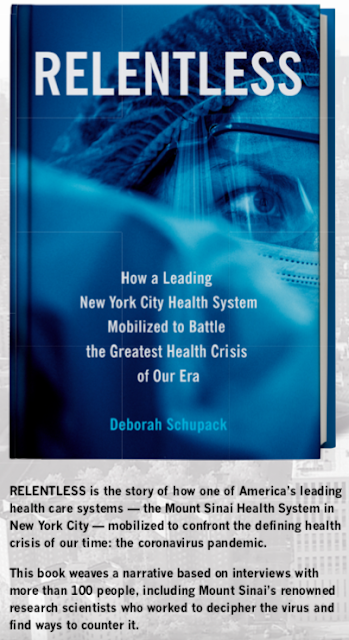
Noted at the end of the supplement: A book in the oven (Feb 15, 2022 release). 
 
The author. Sounds like a cool person.

BREAKING NEWS OFF-TOPIC ERRATUM

 
Ahmaud Arbery murder trial prosecutor Linda Dunikoski. When you want it done right, send in a woman. Her closing arguments M.O. in this case will be taught in law school. Four hours of summation, all forcefully, methodically delivered without once looking down at notes.

BACK ON TOPIC

From the Supplement:
EXPOSOMICS
Integrating exposomics into precision medicine and public health

Robert O. Wright*, Kecia N. Carroll, Rosalind J. Wright

Precision medicine, which now primarily utilizes genomic and electronic health record data, holds the potential to transform medical practice. Recent calls to expand the field’s purview to encompass all factors that predict health (1–3) underscore the need to include environment (4, 5), as human health and disease are shaped by a range of lifelong exposures and their resultant biological responses. The emerging exposome concept addresses this complexity by studying the effects of all health-relevant environmental factors over the life course (6–8). The 20th-century concept of “nature versus nurture” needs to be tossed aside, as genetics and environment do not compete—they work hand in hand through interactions in which our environment (i.e., where people are born, live, develop, learn, work, play, and age) triggers biological responses that are determined in part by our genetics in a lifelong, iterative process. However, there is not yet a systematic plan to integrate exposomics into precision medicine. Advances in computational science, medical informatics, remote sensing, geographical information systems, and analytical chemistry now provide powerful research tools to facilitate the incorporation of exposomics into precision medicine and public health (9–11).

Understanding our environment is critical to advancing human health and eliminating health inequities. The broad-ranging effects of climate change consequent to rising global average temperatures, increasing atmospheric carbon dioxide (CO2), associated extreme weather events (i.e., heat waves, droughts, floods, and hurricanes), and altered ecosystem functioning and biodiversity, have alarming potential to magnify toxic environmental exposures and amplify consequent health disparities (Figure 1) (12). Climate affects the exposome both directly and indirectly to influence the spatial and temporal distribution of infections, asthma, allergies, mental health, and dozens of other chronic diseases. Also, rates of cancer, diabetes, heart disease, and neurodegenerative diseases, among other complex diseases, continue to rise with minority groups such as Blacks, Latinx, Native Americans, and Asian Americans experiencing increased disease morbidity and/or severity. Structural racism, including redlining, has segregated minoritized groups to live in low-income communities where increased exposure to psychosocial stressors, air pollution, physical environmental toxicants, and reduced access to healthy food and green spaces are concentrated. The systematic segregation of persons of color through redlining policies has significant public health implications (13). These environmental disparities go beyond pollution, particularly for indigenous populations, as cultural practices commonly involve local food and water, further exacerbating social inequities. Health inequities arise from variable—and too often predictable—imposed environments that link to social determinants of health. The geospatial diversity of the exposome underlies its key role in explaining health inequities. Broad categories of the human exposome include nutrition, infections, chemicals, physical environment, and sociocultural conditions that act as psychosocial stressors. Because exposomics encompasses the interconnections among our social, nutritional, and chemical environments, it holds great promise for elucidating root causes of recalcitrant health disparities…
_____________________________________
Department of Environmental Medicine and Public Health and the Department of Pediatrics, Icahn School of Medicine at Mount Sinai, New York, NY
*Corresponding author: robert.wright@mssm.edu
 

Yeah. Add one to the “Omics” riffs. We used to call some of this stuff "The Upstream."

Click to enlarge.
And, "Anthropocene," anybody?
 
"EXIGENCIES?"
 
I would think all of the foregoing map to my draft list.
 
 
I've begun taking these up on my relatively infrequently used Medium site.
 
UPDATE
Heavily mutated Omicron variant puts scientists on alert
Researchers are racing to determine whether a fast-spreading coronavirus variant poses a threat to COVID vaccines’ effectiveness.
 
Researchers in South Africa are racing to track the concerning rise of a new variant of the SARS-CoV-2 coronavirus that causes COVID-19. The variant harbours a large number of the mutations found in other variants, including Delta, and it seems to be spreading quickly across South Africa.

A top priority is to follow the variant more closely as it spreads: it was first identified in Botswana earlier this month and has since turned up in a traveller arriving in Hong Kong from South Africa. Scientists are also trying to understand the variant’s properties, such as whether it can evade immune responses triggered by vaccines and whether it causes more or less severe disease than other variants do…
Swell. 2024 headline? "Z.9.9.999 SARS-Cov2 variant emerges, concerning WHO officials."
 
BRIEFLY OFF-TOPIC AGAIN

My Las Vegas music podcasts have been offline for several years now. I just remounted them. Miss my friends.
__________
 

Thursday, September 13, 2018

"Exposomics"?

"This volume presents a comprehensive overview of the science and application of the Exposome through seventeen chapters from leaders in the field. At just over ten years since the term was coined by Christopher Wild in 2005, this is the first, field-defining volume to offer a holistic picture of the important and growing field of Exposomics. 

The term “Exposome” describes the sum of all exposures (not only chemical) that an individual can receive over a lifetime from both exogenous sources (environmental contaminants, food, lifestyle, drugs, air, etc.) and endogenous sources (metabolism, oxidative stress, lipid peroxidation, chemicals synthesized by the microbiome, etc.). The first section of this book contains chapters that discuss how the Exposome is defined and how the concept fits into the fields of public health and epidemiology. The second section provides an overview of techniques and methods to measure the human Exposome. The third section contains methods and applications for measuring the Exposome through external exposures. Section four provides an overview on statistical and computational techniques- including big data analysis - for characterizing the Exposome. Section five presents a global collection of case studies."
 A.K.A. (or closely related to) "epigenomics?" How about "HGT?" (Horizontal Gene Transfer). Where does that fit? Related to "the Upstream?" 

And, again how will all of this fit into the exam room / bedside patient encounter in the "productivity treadmill" front-line world?

 Got onto this topic via STATnews:

From the moment of conception onward, genes control our development and health. But they don’t do it alone. The exposome — all the internal and external chemical exposures we experience during the course our lives — influences, for better or worse, the genes and proteins they code for. A better understanding of the exposome, a concept still in its infancy, will help identify how nongenetic factors influence biological reactions and possibly the development of chronic diseases...
apropos,


AGAIN: SEPT 16TH - 18TH, 2018

THE Health IT event of the year.
Be there. I will hate to miss this. Applied for my usual press pass. Never heard back, but, it's likely moot, given my post-op convalescence (which is proceeding apace, thought the daily conference schlep might be a bit much for me at this point).
_____________

More to come...

Tuesday, November 13, 2018

California is on fire once again


[11/19 update] The first, hellacious photo above is from the Paradise CA "Camp Fire" east of Chico, a good 150 miles from San Francisco proper. This post has accrued across a week as the fires developed and worsened. We expect rain beginning perhaps by the 21st and lasting several days, which will clean the air and douse the fires, but will likely also precipitate mudslides and complicate the ID and recovery of more human remains.

It's just like last year, but horrifically worse.

From The Atlantic:
Smoke From California’s Fires Is Harming the State’s Most Vulnerable
As wildfires burn out of control, they are impacting the state’s other crisis—the growing number of people living on the streets.
ALANA SEMUELS & ROBINSON MEYER


The deadliest fire in California’s history continues to burn, and San Francisco is filled with smoke and ash. On Tuesday, for the fifth day in a row, air throughout Northern California contained high amounts of fine-particulate-matter pollution, and the Bay Area Air Quality Management District warned that the air was unhealthy for everyone. “The public should limit outdoor activity as much as possible,” the agency said Monday, urging residents to stay inside with their windows and doors closed.

But for San Francisco’s thousands of homeless people, this warning is impossible to follow. San Francisco, like many California cities, has seen homelessness rise in recent years, as the cost of housing has gone up and zoning laws have limited the construction of new housing units. Despite an initiative passed on November 6 to tax large businesses to fund homeless services and news that the CEO of Twilio had donated $1 million to fund homeless services until the tax kicks in, thousands of people still have nowhere to go in San Francisco on any given night. As the number and deadliness of fires grows in California, the population of people negatively impacted by the air quality is growing, too…
In addition to our long-time chronic homeless population issue, we now have thousands of people newly made homeless by our fires. Same thing last year with the wine country fires. I can't imagine. 

My eyes have been burning since last Friday, and I've had a heavy feeling in my chest, notwithstanding being 140 miles to the southwest of the closest fire near Chico. Our area in Antioch smells like BBQ, the sky a chalky grey-yellow, with the sun a dull orange-reddish orb. We were all advised to close windows, bring the dogs in, and stay inside. On Sunday the manager of my Muir cardiac rehab PT clinic called to say that PT was cancelled for Monday and perhaps today as well. As I post this the death toll has risen to at least 44, with hundreds of people yet missing.


Numerous vehicles have literally melted along the roads. Thousands of structures have been reduced to ashes (some with human remains cremated inside).

UPDATE

Before-and-after pics from one street corner.


Wow.

BTW: look under your sinks, and out on your garage shelves. Ponder all of those toxic household cleaning products, paints, solvents, landscaping, herbicides, pesticides, and automotive chemicals, etc. The smoke cloud now enveloping us is full of them in addition to burned wood and grass particulates (along with what used to be plastics).


I first came to the Bay Area in 1967 (subsequently lived in Seattle, Birmingham and Tuscaloosa AL, Knoxville TN, and Las Vegas, prior to returning here in 2013). The California population has since more than doubled, from ~19 million to more  than 39 million people. Along with population pressure, persistent drought, exacerbated by climate change has contributed significantly to the frequency and severity of western wildfires.

 
Tangentially, time for deployment of "exposomics" monitoring tech in fire-affected areas?
No rain in sight for us yet.


UPDATES

Cardiac rehab was open today, btw. Good workout.

The Atlantic has another good one up on widfires:

The Simple Reason That Humans Can’t Control Wildfires

___

RELATEDLY, COURTESY OF KAISER HEALTH NEWS

High Stakes, Entrenched Interests And The Trump Rollback Of Environmental Regs


Since his days on the campaign trail, President Donald Trump has promised to roll back environmental regulations, boost the use of coal and pull out of the Paris climate agreement — and he’s moving toward doing all those things.

He has pushed ahead with such action even as a report by the United Nations’ Intergovernmental Panel on Climate Change released in October concluded that without much stronger measures to reduce the use of fossil fuels, a warming planet will witness the spread of tropical diseases, water shortages and crop die-offs affecting millions of people.

Supporters of the administration’s changes — some of whom are skeptical of accepted science — say the administration’s moves will save money, produce jobs and give more power to states.

But critics say new strictures on scientific research and efforts to overturn standards for protecting air, water and worker safety could have long-term, widespread effects that would upend hard-won gains in environmental and public health.

The Trump administration’s many environmental proposals vary widely in target and reach.
For example, the administration has delayed the implementation and enforcement of many Obama-era rules, saying they need time to draw up new rules or study some that are already on the books. Industry generally agrees, arguing these rules are an overreach with negative financial consequences. 

Critics fear that the delays will undermine hard-fought public health protections.

Among such efforts:
The Environmental Protection Agency recently argued it needs until 2020 to decide on a controversial Obama-era directive expanding to smaller streams and waterways the types of wetlands protected by the federal Clean Water Act. That directive might mean fewer pollutants released into tributaries of larger waterways, from which millions of people get their drinking water. But the controversial rule has been fought by farming, mining and other industry groups that say it is too restrictive.
The EPA also sought to delay by nearly two years standards to protect workers and emergency responders at chemical plants, part of an Obama-era rule in response to a 2013 fire at a Texas fertilizer plant that killed 15 people. Industry says that the rule is costly and that providing information about chemical storage at plants could raise security concerns.
In March 2017, then-EPA chief Scott Pruitt rejected a petition filed in 2007 by environmental groups seeking to ban a commonly used pesticide, chlorpyrifos, which the groups say harms health, particularly citing developmental damage to children and fetuses. The agency said it needed more time to study the chemical. 
All three of those delays were blocked by federal court judges, although the administration may decide to appeal, so final outcomes are unclear.

But one thing is clear: Everyone is likely to spend a lot of time in court.

“Folks are already lining up to challenge the Affordable Clean Energy rule, and that’s probably true for just about anything this administration does when it comes to environmental reform,” said Nicolas Loris, a research fellow at the Heritage Foundation, a conservative think tank.

The clean energy rule, introduced in August, would replace a more stringent Obama-era rule for coal-burning power plants.

An EPA analysis said the proposed rule would reduce industry costs and create jobs.

The same analysis concluded, though, that the looser standards, which would supersede the never-implemented Obama-era regulation, would cause as many as 1,400 premature deaths and 15,000 new cases of upper respiratory problems annually by 2030.

On another front, scientists are protesting new Trump administration policies they say would effectively curtail their ability to study the health effects of environmental exposures.

This spring, the EPA proposed a rule dubbed Strengthening Transparency in Regulatory Science, which would restrict the use of studies as the basis for advancing environmental regulations if researchers have not released all their raw data, potentially including medical records.

The Trump administration said this step would ensure that data and methods can be checked for accuracy, echoing a long-running argument from industry and some in Congress.

From scientists, though, reaction was immediate, widespread and negative. Hundreds of researchers and dozens of public health organizations said the proposal would quash important research into the effects of pollution and chemicals on health.

No longer would they be able to promise confidentiality of medical records to people who take part in research studies, which would have a chilling effect on their willingness to participate.

Many of the submitted comments noted that such a rule would undermine key studies that led to pollution laws and prevailing attitudes about the interaction of environmental and human health.
Case in point: the seminal 1993 “Six Cities” research by Harvard scientists linking air pollution to premature death.

That study did not disclose the identities of its 22,000 participants or their medical information.
Its findings led in 1997 to new restrictions under the Clean Air Act for fine particles, tiny pieces of soot, dust, carbon and other pollutants that get inhaled deep into the lungs, potentially causing asthma, lung cancer and other health conditions. By 2020, those rules are expected to have prevented more than 230,000 early deaths.

Scientists say the administration is handicapping their ability to do important research. The plan comes amid other efforts critics see as attacking science, such as removing information from government websites about climate change, restrictions on who can sit on EPA advisory boards and a proposal to more narrowly target safety reviews of chemicals.

“By attacking the science that talks about adverse effects on health,” the administration hopes to allow deregulation yet claim “they are not harming people,” said Francesca Dominici, a professor of biostatistics at the Harvard’s T.H. Chan School of Public Health.

The range and scope of the proposed changes has brought praise from some in industry and agriculture for loosening restrictions and giving states more flexibility. But the changes frustrate public health and environmental health advocates.

“We would like to be moving forward rather than fighting these kind of rollbacks,” said Janice Nolen, assistant vice president for national policy at the American Lung Association.

Kaiser Health News (KHN) is a national health policy news service. It is an editorially independent program of the Henry J. Kaiser Family Foundation which is not affiliated with Kaiser Permanente.
Is it too early to start drinking?


THURSDAY UPDATE

The air here remains "unhealthy." It was chokingly smoky today, with a sharp burnt odor. The wildfires body count continues to rise (63 as I write, hundreds still missing). More than 10,000 structures destroyed or damaged (mostly destroyed). Thousand are now homeless, many near Paradise sleeping in cars or tents in a Walmart parking lot.

I had cardiac rehab PT today. Pushed it hard. Felt good, but now I can feel it in my chest. Staying in the house.

FRIDAY NOV 16TH UPDATE

More than 630 people reported as missing in the #CampFire area. More than 15,000 structures destroyed. The Bay Area air is so bad that UC Berkeley has closed for the day (as well as Contra Costa County schools). And, coming soon:

No, again, I don't like him.

From Vox:


IN MY SATURDAY EMAIL INBOX

In The New Yorker
SUNDAY MORNING

Spot-on CNN OpEd by Tess Taylor. "In California, the apocalypse keeps getting worse."

ON DECK

Finished two books.


Both excellent, both broadly germane to KHIT topics.

Starting two more (notwithstanding that I still have a number of others in progress. Amazon "Buy with 1-click" is gonna BK me).


So much to learn. Love it. Given that we pretty much still have to stay inside, I'm grinding away with my studies,

Topically apropos, I read a Naked Capitalism post, which led me to this (and subsequent interesting stuff):

Startup Boom a “Dangerous, High-Stakes Ponzi Scheme”: Silicon Valley Investor

And, oh, yeah, I finished this one:


The less said about it, the better. I can't recall ever before having a book make me angry.
_____________ AnthropoceneDenial

More to come...

Monday, September 24, 2018

The Biden Cancer Initiative

"The Biden Cancer Initiative is a response to the lack of a cohesive, comprehensive and timely approach to cancer prevention, detection, diagnosis, research, and care."

One hopes this effort will get significant, sustained, and effective traction.

BidenCancer.org
@BidenCancer
#BidenCancerSummit

Last Friday Cheryl and I attended the local Biden Cancer Summit, which was held at John Muir Hospital in Concord (where I'd had my SAVR px heart surgery 28 days prior). Local congressman (and cancer survivor) Mark DeSaulnier hosted the event, which was comprised of a panel of clinical and medical business experts, and a panel of cancer survivors, with Q&A sessions following each panel discussion.
The CEO of the Muir Health System, Cal Knight, spoke. I subsequently introduced myself to him, and gave the hospital high praise for my treatment.
Given our long and painful history as family cancer caregivers and my own 2015 experience as a cancer patient, we found it all very interesting, if not exactly news to us. Nicely done.

Joe Biden:


I need to give some thought on how best to support this effort going forward, as I heal up fully.

All lofty, laudable principles. A number of them, however, (1, 2, 4 & 5 in particular), go to chronically contentious "multi-stakeholder" policy issue areas (e.g., "data transparency / interoperability," proprietary intellectual property vs. "open source," a more just and broadly effective health care payment system, etc). I find no detail on the website at this point addressing any of these areas in any substance (beyond, arguably, tangentially, inferentially these links). There's much drill-down work to be done (say, e.g., seven BCI "White Papers" for starters) if this undertaking is to bear fruit.


apropos, see also the NIH/NCI "Cancer Moonshot."

UPDATE

Again, from a BCI website link:
BIDEN CANCER INITIATIVE ANNOUNCES 57 NEW COMMITMENTS TO DOUBLE THE RATE OF PROGRESS
The Biden Cancer Initiative announced 57 new commitments from the public and private sectors in response to Vice President Joe and Dr. Jill Biden’s call to find solutions that will double the rate of progress against the [sic?] cancer. These innovative programs and partnerships focus on data sharing, patient support, education, and empowerment, research, clinical trials, access to care, disparities, and prevention and early detection...
OK. "...double the rate of progress." Do we have a current baseline aggregate operational definition of the current "rate of progress?" (Or, more plausibly, stratified rates of progress? Changes in Prevalence? Incidence? Mortality rates? Median survival times? Remission rates? etc.)
___

OCTOBER 3RD UPDATE

Some cautionary thoughts, via STATnews:
More research on ‘dying healthy’ will also help us live healthier
By GEORGE J. ANNAS and SANDRO GALEA, OCTOBER 3, 2018


…Advances in medical treatment, including cancer treatments, are increasingly unlikely to provide further significant gains in human longevity. An analysis of 71 cancer drugs consecutively approved between 2001 and 2012, for example, suggests that their overall contribution to survival was just 2.1 months; the gains attributable to personalized cancer medicine have, so far, also been minimal.

Lacking evidence that the human life span can be radically increased by new medical technologies, we believe it’s time to shift our country’s investment priorities away from medical research that aims to extend life and instead focus on the same social, cultural, and political factors that successfully prolonged life in the last century.

That means more public investment in education, transportation, and housing. That kind of investment would directly contribute to the prevention of chronic diseases such as diabetes, heart disease, and many cancers, and would do more to improve the quality of life of the population than additional medical research aimed at treating individuals with specific diseases.

Don’t get us wrong. We aren’t suggesting that we should eliminate funding for medical research to try to prevent, or even cure, diseases. Instead, we are suggesting that public funding should emphasize research on improving and sustaining quality of life rather than focusing on increasing length of life. This means giving greater priority to diseases that affect decades of people’s lives, such as arthritis, autism, macular degeneration, and Alzheimer’s disease over end-of-life diseases like extreme dementia and many cancers…
My early 90's healthcare QI Mentor, IHC's Brent James (MD, M.Stat) cautioned us "let's don't kid ourselves that we're going to QI our way out of the larger social conundrum: every patient for whom you provide the very best care and outcome today will eventually return as a much older and sicker patient."

And, now, as I've noted recently, to the myriad largely "non-clinical" socioeconomic "upstream" factors to be taken into account, we have to add in "exposomics" to the vast "Omics" disciplines.
Tangentially, does "dying healthy" have anything to do with "A Good Death?"
SPEAKING OF "RESEARCH"


Stay tuned. Forefront cancer research will surely be fraught with multiple difficulties.

Click to enlarge
"Given the billions of dollars the world invests in science each year, it's surprising how few researchers study science itself. But their number is growing rapidly, driven in part by the realization that science isn't always the rigorous, objective search for knowledge it is supposed to be. Editors of medical journals, embarrassed by the quality of the papers they were publishing, began to turn the lens of science on their own profession decades ago, creating a new field now called “journalology.” More recently, psychologists have taken the lead, plagued by existential doubts after many results proved irreproducible. Other fields are following suit, and metaresearch, or research on research, is now blossoming as a scientific field of its own.

For some, studying how the sausage is made is a fascinating intellectual pursuit in itself. But other metaresearchers are driven by a desire to clean up science's act…"
Tangentially, I cannot help but be reminded of something I wrote more than 20 years ago during my late elder daughter's cancer illness:
'Arrogant, narrow-minded, greedy, and indifferent?'
Is science the enemy? To the extremist "alternative healing" advocate, the answer is a resounding 'yes'! A disturbing refrain common to much of the radical "alternative" camp is that medical science is "just another belief system," one beholden to the economic and political powers of establishment institutions that dole out the research grants and control careers, one that actively suppresses simpler healing truths in the pursuit of profit, one committed to the belittlement and ostracism of any discerning practitioner willing to venture "outside the box" of orthodox medical and scientific paradigms.
 
One e-mail correspondent, a participant in the internet newsgroup alt.support.cancer, vented splenetic at length recently regarding U.S. authorities' alleged hounding, arrest, and imprisonment of alternative healers. He railed that law enforcement, at the behest of the AMA/FDA Conspiracy (a.k.a. the "corrupt AMA/FDA/NCI/ACS cartel"), had made the practice of alternative medicine illegal in the U.S. Moreover, he considered the fact that medical science can only claim "cures" for approximately 10% of the roughly 10,000 classified human diseases an a priori indictment of the mainstream profession.

I know: this is akin to the U.N. Black Helicopters/One-World-Government Conspiracy stuff of the not-too-tightly-wrapped. Still, I couldn't resist-- pointing out in (no doubt futile) reply that no one came with guns drawn and cuffs at the ready the night at Brotman Rehab when "Healing Angelite Crystals" practitioners-- devotees of India's Sai Baba-- came from Topanga Canyon to hover for hours in ceremony over Sissy (to the curious and wary befuddlement of the night shift nurses); neither did Security nor the medical staff at Brotman confiscate the goopy-looking herbal tonic we brought in, an elixir prescribed for Sissy by a Chinese herbal pharmacist doing business quite openly in Chinatown near downtown L.A.; nor would SWAT teams pounce on the backyard in the Valley where we took part in evening-long Lakota Souix "healing sweat lodge" ceremonies conducted by the venerable Wallace Black Elk; and finally, Wyndie, one of Sissy's highly skilled and effective physical therapists at Brotman did not have her certification revoked for counseling my daughter on the Hindu principles of the Chakras and efficacy of aromatherapy.

Moreover, I had to respond, the fact that we can only cure 10% of known diseases implies nothing regarding the quality of mainstream medical research and practice, unless the alternatives industry can provide hard, "case-mix adjusted," scientifically valid data showing their methods to effect consistently and significantly better outcomes-- which they cannot (a dearth of peer-reviewed studies being a central characteristic of "alternative" practice). Additionally, I asked, can anyone even cite historical curative percentages from 30, 50, or perhaps 100 years ago? Indeed, even such statistics would prove problematic-- "shooting at a moving target," as it were-- in that more subtle and clinically unresponsive maladies continue to be discovered and classified while the easier to treat are dealt with more readily. And, classificatory observation is easy compared to the work and resources required to effect cures; we should expect that identification will outpace remedy. Finally, 50 years ago death certificates listing demise from "natural causes" would today likely have identifiable diseases recorded as the cause of death.

Purveyors of medical quackery should fear the hot breath and hard heel of competent authority, but I see no evidence of suppression of alternative therapy methods that are not certifiably fraudulent. All manner of "unproven" substances are sold quite openly at retail, both in the health food stores and in the national chain outlets; all that need accompany the product is the legal boilerplate disclaimer acknowledging an absence of FDA blessing, along with the inoculating phrase 'dietary supplement.'

In fairness, as I've noted before, "I am not a scientist."
___

"More recently, psychologists have taken the lead, plagued by existential doubts after many results proved irreproducible."
apropos, I just finished this excellent book by esteemed psychologist James Alcock.


As reviewed at Science Based Medicine:
How We Believe
James Alcock’s new book about belief is a masterpiece that explains how our minds work, how we form beliefs, and why they are so powerful. It amounts to a course in psychology and an owner’s manual for the brain.
Harriet Hall on June 26, 2018


In James Alcock’s classic 1995 article “The Belief Engine“, he said, “Our brains and nervous systems constitute a belief-generating machine, a system that evolved to assure not truth, logic, and reason, but survival.” Now he has expanded that thesis into a book, Belief: What It Means to Believe and Why Our Convictions Are So Compelling. It’s much more than a book about belief. In the Foreword, Ray Hyman says it would be an ideal textbook for a course that provides an integrated overview of all the areas of psychology. He says every psychologist and psychology student should read it. It is an outstanding achievement of scholarship; its 640 pages include over 70 pages of references. It covers everything from the latest findings in neuroscience to a catalog of many of the questionable beliefs people hold, and why they hold them…
The neuropsychology of cognition (and our chronic risks of irrationality), basically. A must-read, IMO. Add another tome to my stash going to my abiding interest in the salient aspects of the cognitive attributes (and liabilities) of "expertise" (e.g., "how doctors think").

UPDATE

Got onto this via a STATnews article, "There's so much health noise..."

"I’m not a cynic. I think we need to keep an open mind and look for potential benefits wherever they may be found. But in this era of twisted facts, we all could use a nudge to keep applying critical thinking skills."
Read Alcock's compelling book "Belief." I've long and deeply studied "critical thinking," both as an undergrad and in grad school, and even thereafter got to teach it as an adjunct, but Alcock's work adds a much larger dimension. Were I teaching today, "Belief" would be a required text.

See also

Joe Schwarcz PhD - Director

I've just finished watching the Netflix "Detox" episode of Timothy Caulfield's documentary. A must-see.

BACK TO SCIENCE, AND BIDEN PRINCIPLE #6, "FIND NEW SOLUTIONS, DISSEMINATE"

Biden Summit discussions were replete with allusions to the imperative of "early detection." As reported in (firewalled) Science Magazine:
"CancerSEEK, and ye shall find?"

Most cancers are detected when they cause symptoms that lead to medical evaluation. Unfortunately, in too many cases this results in diagnosis of cancers that are locally invasive or already metastatic and hence no longer curable with surgical resection or radiation treatment. Medical therapies, which might be curative in the setting of minimal tumor burden, typically provide more limited benefit in more advanced cancers, given the emergence of drug resistance (1). On page 926 of this issue, Cohen et al. (2) describe a strategy for early cancer detection, CancerSEEK, aimed at screening for multiple different cancers within the general population. This study challenges current assumptions in the field of blood-based biomarkers and sets the stage for the next generation of cancer screening initiatives.

Given the potential curative advantage of earlier diagnosis and treatment, why have so many cancer screening approaches failed? In the past, efforts at screening healthy populations for cancer have relied on tests that were insufficiently specific. For example, most men with rising serum prostate-specific antigen (PSA) do not have prostate cancer but instead have benign prostatic enlargement. However, where accurate tests exist, there have been dramatic improvements in cancer outcomes (3). For example, advanced cervical cancer has virtually disappeared in countries where Pap screening is the standard of care; although less reliable, mammography and screening colonoscopy are recommended for early detection of breast and colon cancers in individuals above ages 40 to 45 and 50, respectively, and screening heavy smokers by use of low-dose chest computed tomography (CT) scans reduces deaths from lung cancer (4). However, these tests are imperfect, and cost-effectiveness for broad deployment remains a challenge, particularly because a multitude of false-positive test results may lead to extensive diagnostic evaluations and unnecessary medical interventions. Unfortunately, for the majority of cancers no effective early screening tests are available.

It is in this setting that emerging molecular analyses of blood specimens, so-called “liquid biopsies,” are poised to revolutionize cancer screening (5). Circulating cell-free DNA (cfDNA) in the blood consists of small fragments of DNA that are approximately 150 nucleotides in length. cfDNA is primarily derived from normal tissues, but a small fraction may be derived from tumor cells in individuals who have cancer. This circulating tumor DNA (ctDNA) may be identified by the presence of characteristic mutations in cancer genes or by variations in chromosome copy numbers (6). Recent studies have established the reliability of ctDNA genotyping for monitoring treatment response and identifying drug resistance mechanisms in patients with advanced cancer (7, 8). However, the much lower amount of ctDNA in the plasma of patients who have a localized tumor poses a challenge for early cancer screening, as does the absence of knowledge about which mutation to look for. Furthermore, some background mutations detectable in the blood may arise from nonmalignant proliferation of blood cells in older individuals, a phenomenon called clonal hematopoiesis of indeterminate potential (CHIP) (9). Importantly, cancer gene mutations alone are insufficient to identify the tissue of origin for a given cancer signal in the blood because similar mutations are present in multiple different cancers. Thus, a tissue-agnostic blood-based screening test has limited clinical utility, unless accompanied by insight into which organ should be investigated for follow-up…

There are a number of important caveats. The predictive value of any diagnostic test relies on the prevalence of the disease within the tested population. For instance, in testing apparently healthy individuals within the general population, the prevalence of all eight cancers can be conservatively estimated as 1% of people over age 64 (11). Hence, in this setting even a test that is 99% sensitive and 99% specific will yield a positive predictive value (PPV) of only 50% (half of all test positives will be a false-positive result). Similarly, a positive CancerSEEK test result would be predicted to have a PPV of 40 to 45% for a person having any of the eight different cancers (2). Although the model was not designed to screen for individual cancer types, breaking down the aggregate PPV into its individual component cancers would result in further reduction in PPV, particularly for rare cancers. Because PPVs improve with higher disease prevalence, application of any cancer screening test to subpopulations with increased genetic or environmental risk factors (for example, carriers of familial breast cancer susceptibility mutations, heavy smokers at risk for lung cancer, or patients with liver cirrhosis predisposed to hepatocellular carcinoma) would of course increase the likelihood of true-positive results.

A well-documented challenge in early cancer detection studies is that patient populations at increased risk for cancer may also have precancerous or inflammatory conditions resulting in baseline elevation of serum protein biomarkers, a confounding factor that is not well recapitulated in the healthy control population used to build the CancerSEEK test…

Undoubtedly, effective screening for early invasive cancers represents the best hope for reducing cancer mortality and morbidity. The conceptual advances and the practical feasibility of the CancerSEEK assay constitute an important milestone toward the application of early cancer detection. Most importantly, the ongoing development of cost-effective and accurate blood-based cancer screening strategies is poised to revolutionize clinical cancer care, bringing with it new emphasis on genetic and environmental risk stratification so as to tailor application of screening tests; minimally invasive imaging, biopsy, and molecular characterization of early tumors that are discovered and might be either indolent or invasive; and deployment of increasingly effective therapeutic options to stages of cancer for which they have curative potential. The vision of effective earlier cancer detection and intervention warrants validation in appropriate populations through large-scale clinical trials that are likely to radically change the way we diagnose and treat cancer.
Promising. Yet fraught with difficulty (pay particular attention to the "important caveats" paragraph).

Nonetheless, a priority research area in my view (in part, personally, because both of my late daughters presented at Stage IV).

ERRATUM

ProPublica Patient Safety Community
Ran across this Facebook group (and joined) while searching out information about medical costs and pseudoscience / quack goods and services. Some of my prior blog riffs on patient safety issues are linked here.

OCTOBER 1ST BREAKING NEWS
Nobel Prize in medicine awarded to two cancer researchers for immune system breakthrough

CODA

On deck, "Data Science." Yet another fad?


Stay tuned. "Coding Boot Camps," anyone? More here.
_____________

More to come...