Search the KHIT Blog

Showing posts sorted by date for query ASQ Health Care. Sort by relevance Show all posts

Monday, July 20, 2026

AI slop and scientific publishing

A Science Magazine OpEd.
   
AI in scientific publishing: Slower, worse, and more expensive
H. HOLDEN THORP, Ed., Science Magazine

There’s a saying in the management world, popularized by NASA administrator Daniel Goldin in the 1990s, that the goal of technological improvements is to make products faster, better, and cheaper. Although this strategy had some success in the aerospace industry, the zealots of artificial intelligence (AI) have been making the same argument regarding how it will transform work, claiming that so little human effort will be required that humanity will enter an era of radical abundance, free from disease, drudgery, and danger, among other benefits, leaving society with more time for creative pursuits. But history tells a different story. When machines began to increase productivity during the second industrial revolution, American engineer Frederick Winslow Taylor’s The Principles of Scientific Management encouraged corporations to use surveillance to get employees to work harder and longer, an approach that exhausted and discouraged workers and led to the transfer of knowledge and any decision-making from workers to management, while enriching the profits for only those at the top. Yet, it remains foundational to the American economic enterprise. Indeed, scientific publishing is starting to experience some Taylorism with the insertion of AI. Rigorous human checking of AI-generated research papers is creating bottlenecks as publishers strive to maintain the integrity of the scientific record. The challenge is requiring even more human effort, making the whole endeavor slower and more expensive...
 
These factors are complicating scientific publishing. The rate of research submissions at Science and other journals is increasing because conducting research and producing papers are accelerating. But because more papers contain more AI-generated errors, greater human oversight is required to check the findings...
 
The creation of robust human-curated scientific literature has never been more crucial. The propagation of AI slop in the scientific record and generally on the internet is making science less trustworthy...The history of Taylorism indicates that society should fight to protect the welfare and agency of those being pushed to do too much by technology in the name of production.

If the scientific community fails to address the influence of AI, then authentic research and validated findings will slow down to an expensive trickle into established knowledge, and the opportunities for flawed or fabricated information to be seen as reality will grow—all while AI profiteers cash in.
TAYLORISM, UGH
INTRODUCTION 
President Roosevelt in his address to the Governors at the White House, prophetically remarked that “The conservation of our national resources is only preliminary to the larger question of national efficiency.” 
 
The whole country at once recognized the importance of conserving our material resources and a large movement has been started which will be effective in accomplishing this object. As yet, however, we have but vaguely appreciated the importance of “the larger question of increasing our national efficiency.” 
 
We can see our forests vanishing, our water-powers going to waste, our soil being carried by floods into the sea; and the end of our coal and our iron is in sight. But our larger wastes of human effort, which go on every day through such of our acts as are blundering, ill-directed, or inefficient, and which Mr. Roosevelt refers to as a lack of “national efficiency,” are less visible, less tangible, and are but vaguely appreciated. 
 
We can see and feel the waste of material things. Awkward, inefficient, or ill-directed movements of men, however, leave nothing visible or tangible behind them. Their appreciation calls for an act of memory, an effort of the imagination. And for this reason, even though our daily loss from this source is greater than from our waste of material things, the one has stirred us deeply, while the other has moved us but little. 
 
As yet there has been no public agitation for “greater national efficiency,” no meetings have been called to consider how this is to be brought about. And still there are signs that the need for greater efficiency is widely felt. 
 
The search for better, for more competent men, from the presidents of our great companies down to our household servants, was never more vigorous than it is now. And more than ever before is the demand for competent men in excess of the supply. 
 
What we are all looking for, however, is the readymade, competent man; the man whom someone else has trained. It is only when we fully realize that our duty, as well as our opportunity, lies in systematically cooperating to train and to make this competent man, instead of in hunting for a man whom someone else has trained, that we shall be on the road to national efficiency. 
 
In the past the prevailing idea has been well expressed in the saying that “Captains of industry are born, not made”; and the theory has been that if one could get the right man, methods could be safely left to him. In the future it will be appreciated that our leaders must be trained right as well as born right, and that no great man can (with the old system of personal management) hope to compete with a number of ordinary men who have been properly organized so as efficiently to cooperate. 
 
In the past the man has been first; in the future the system must be first. This in no sense, however, implies that great men are not needed. On the contrary, the first object of any good system must be that of developing first-class men; and under systematic management the best man rises to the top more certainly and more rapidly than ever before. 
 
This paper has been written: 
 
First. To point out, through a series of simple illustrations, the great loss which the whole country is suffering through inefficiency in almost all of our daily acts. 
 
Second. To try to convince the reader that the remedy for this inefficiency lies in systematic management, rather than in searching for some unusual or extraordinary man. 
 
Third. To prove that the best management is a true science, resting upon clearly defined laws, rules, and principles, as a foundation. And further to show that the fundamental principles of scientific management are applicable to all kinds of human activities, from our simplest individual acts to the work of our great corporations, which call for the most elaborate cooperation. And, briefly, through a series of illustrations, to convince the reader that whenever these principles are correctly applied, results must follow which are truly astounding. 
 
This paper was originally prepared for presentation to the American Society of Mechanical Engineers. The illustrations chosen are such as, it is believed, will especially appeal to engineers and to managers of industrial and manufacturing establishments, and also quite as much to all of the men who are working in these establishments. It is hoped, however, that it will be clear to other readers that the same principles can be applied with equal force to all social activities: to the management of our homes; the management of our farms; the management of the business of our tradesmen, large and small; of our churches, our philanthropic institutions our universities, and our governmental departments.
Frederick Winslow Taylor. The Principles of Scientific Management (pp. 5-7). (Function). Kindle Edition.  
I came to the "quality control & management" movement in 1986 when I took up 5 & 1/2 yrs of contract employment with a forensic-level environmental radiation laboratory in Oak Ridge.
 
I joined ASQ—back then "ASQC," the "American Society for Qualty Control." I served the Lab as a technical apps programmer and Statistical Process Control analyst (SPC).
 
Back then, "Taylorism" was a cautionary tale of the outdated (mostly white male) paternalistic past. The Main Dudes were Shewhart and Deming.
 
Shewhart was esteemed history. Deming was methodologically "Biblical" in the era. We were all in. I soaked it all in. In 1992 I passed the intimidating ASQ Exam for Certified Quality Engineer. The 4-hour open book test from Hell with a fail rate of 50%. I headed to the nearest bar after finishing.
 
My subsequent Cert was 'Total Quality Management / Continuous Quality Improvement" issued in the wake of 6 moths' training at IHC in Salt Lake City. 
 
Eventually, all things went "Lean."
 

I became a member of ASQ's "Lean Division." Touted "Lean" books here on the blog.
 
 
When I began posting this blog, I made ample note of my affinity for progressive QC/QA/QI methods. By 2016 I was covering various "Lean Heathcare" events. On the heels of that stuff came our mixed-metaphor "Agile" schtick. (My dubiety reeks a bit.)
I eventually became the ASQ Las Vegas Section 705 Chairman, and then went on to co-found and lead the Nevada Quality Alliance (NvQA), a state-level Baldrige-modeled nonprofit assessment and award program.
QI has by now turned out to be a mixed blessing. Specifically under the likes of Jeff Bezos et al, much of it has become faux-quantifed (e.g., "6-Sigma") gussied-up Taylorism. I am pleased to see AAAS voicing their/our concerns. Unsure at this point as to what will prove to be effective remediation.
"The creation of robust human-curated scientific literature has never been more crucial. The propagation of AI slop in the scientific record and generally on the internet is making science less trustworthy."
 
CODA
[NY Times] A Florida pastor sued OpenAI on Wednesday, claiming that its chatbot, ChatGPT, had offered him “extremely dangerous medical recommendations” that led to delayed care for a life-threatening pulmonary embolism last year.

The lawsuit claims that ChatGPT had assured Scott Winters that the early warning signs of his health crisis were “not something dangerous,” and had dissuaded him from seeking medical advice, instead telling him to trust that “God did not design your body to endlessly fail.”

The suit, filed in the Superior Court of California in San Francisco, accuses OpenAI and its chief executive, Sam Altman, of negligence and the “unauthorized practice of medicine,” pointing to moments when the chatbot offered Mr. Winters diagnoses and treatment plans and encouraged him to ignore pleas from friends and family to seek medical care… 
Practicing Medicine without a license or SME.

Monday, May 1, 2023

Reflecting on the Electronic Medical Record

Happy MayDay, btw.

Ten years ago this month I took my retirement from HealthInsight, the Nevada-Utah Medicare QIO. It'd been my 3rd tenure with them, and the focus of this work was on the federal "Meaningful Use" initiative, via which to accelerate the conversion of outpatient primary care clinics from paper-based medical records to HHS "Certified EMRs" (Electronic Medical Records, also more broadly dubbed "EHRs"—Electronic Health Records).
 
The goal—and assumption—was quantifiably improved health care outcomes resulting from having digitized current and longitudinal patient data always close at "hand" (literally, via keystrokes or mouse clicks).
 
I was certainly a Kool-aid drinking True Believer at the outset, particularly in light of my lengthy former work as a laboratory programmer and QC statistician (pdf) in Oak Ridge, and my abiding interest in all things QI as an ASQ Certified Quality Engineer. Things would turn out to be considerably more complex, however.
 
This morning I opened my New Yorker to find this:

The Curious Side Effects of Medical Transparency
When we peer into our patient portals, we don’t always see ourselves more clearly.
By Danielle Ofri


One afternoon not long ago, I sat entering notes into a patient’s medical record. She was in her forties, and her labs showed anemia. The causes of anemia range from menstruation to cancer, and so pinpointing the correct underlying diagnosis is critical. Physicians are trained to formulate a full roster of possibilities, known as the differential diagnosis, and then to work down the list systematically. We’re taught to cast a wide net—celiac disease, parasitic infections, thalassemia, lead poisoning, liver disease, B12 deficiency, myeloma, sickle-cell disease, G6PD deficiency—because you’ll never make a diagnosis if you haven’t included it in your differential.

But I hesitated before entering my differential into the computer system. Should I include the more serious possibilities, even though they were much less likely? In the past, I wouldn’t have thought twice about it, as the chart served primarily as a tool for the medical team to communicate among ourselves. But a new law, the 21st Century Cures Act, had recently been fully implemented, making medical records open to patients by default, in real time, including doctors’ notes. My in-box was already jammed with panicked messages from people convinced that they had catastrophic illnesses, based on minuscule lab discrepancies and panic-inducing Google searches. How would my patient react to seeing my ruminations about possible colon cancer or duodenal ulcer in the note?…

From my end of the stethoscope, it’s always seemed obvious that patients should own their medical records, and be able to see them. But openness can be challenging in practice. When our hospital initially rolled out its patient portal, a few of my older patients asked that I remove references to erectile dysfunction from their medical records. Their adult children handled the household tech, they explained, and my patients preferred to keep their Viagra prescriptions private. In other cases, multiple family members can access a patient’s chart, messaging me about test results and treatment plans, and it can be complicated to deduce the hierarchy of responsibility. Advocates have raised increasing concerns about the ease with which abusers can gain access to victims’ medical records; health-care settings have traditionally been secure places for people experiencing domestic violence, elder abuse, and human trafficking, but, with medical records becoming more accessible, patients may feel less certain that their words are safe.

At the same time, there are remarkable upsides to the transparent medical record. Patients are able to review their diagnoses, medications, and treatments at their own pace. They are able to share information with family members if they choose. They can spot errors—medications they are no longer taking, medical history that’s missing, allergies that aren’t noted. They can prepare for their next visit, and perhaps feel on more equal footing with their doctor. And they can obtain test results without the interminable wait for the doctor’s call.

Medicine is a highly specialized field, and like philosophy it involves the challenge of bridging the gap between experts and nonexperts. Regulations coming out of the Cures Act prohibit “information blocking,” and in effect require that test results and doctors’ notes be released immediately to patient portals. In practice, this means that patients often see results before their doctors do and are presented with a fire hose of raw data, shorn of context. And yet on many patient portals, because of algorithms that offer only a binary distinction between normal and abnormal, lab values that stray a meaningless half percentage point out of range are labelled as “abnormal” along with results that have grave portent. Doctors’ ubiquitous use of multicomponent lab panels, which bundle together many different tests, virtually guarantees that every patient receives at least one “abnormal,” which, in our hospital’s system, is written in blood-red letters with garish yellow highlighting, plus an exclamation point, just in case the takeaway hasn’t been fully conveyed. Even seemingly straightforward yes-or-no results, such as those from H.I.V. or covid tests, can be easily misinterpreted, since false positives and false negatives occur depending on the course of the disease and the operating characteristics of the test. Meanwhile, results such as CT scans and MRIs often contain paragraphs’ worth of information that looks alarming but isn’t. Try reading the CT report of your lumbar spine and not coming away convinced that you’ll be paralyzed for life.

Patients turn from the portal to Google, then flood doctors’ in-boxes with messages, panicked by the possibility that they have cancer or multiple sclerosis or any of an assortment of inglorious diseases that appear on the Internet grossly out of proportion to their actual prevalence. But some abnormal test results will indeed be real, and some will be seriously concerning. In our current transparent system, tests showing brain atrophy or liver masses are released to the portal in the same manner as cholesterol levels and blood-pressure readings. For some patients, discovering these results on their own can be empowering; for others, it can be catastrophic. In one devastating stretch of twenty-four hours, two of my patients learned of their cancers’ metastatic reappearance by way of the portal. Their in-boxes pinged with new test results; they read them before either their oncologist or I had even seen the scans, let alone called.

Each morning, I log into our medical-record system with a certain amount of dread. Which will I tackle first—the torrent of test results or the deluge of responses it’s inspired? Some patients will have to be talked down from a ledge over a minor lab abnormality. Far worse is the serious result to which I haven’t yet had time to formulate a response: a biopsy result for which I’ve not yet tracked down the appropriate specialist to sketch a road map, or an adrenal mass on a CT scan for which I’ve not yet orchestrated the intricate endocrine evaluation. In the past, I’d do the legwork before I called the patient. Now that buffer is gone, and I am pressured to act immediately: the patient has seen the result, and further delay would be unconscionable. This timbre of rush imperils thoughtful analysis, and I worry incessantly about missteps…
It's a paywalled long-read, and well worth your time.

Long-time Danielle Ofri FanBoy here.

Her most recent book.
CHAPTER ONE
JUMBO JETS CRASHING


“Is this really true?” my editor at Beacon Press emailed me skeptically. It was a spring afternoon in 2016 and she had tacked on an article from the British Medical Journal (BMJ) that caused headlines in the mainstream media (though it stirred up a healthy dose of criticism in academic circles).1 Medical error, the article concluded, was the third-leading cause of death in the United States.

I floundered for an answer to her question, and not just because I hadn’t been keeping up with the medical journals that pile up relentlessly in my clinic, in my mailbox, in my inbox, and, okay, even in my bathroom. I floundered because I genuinely could not answer her question. Third-leading cause of death? Really? Did medical error really beat out breast cancer, stroke, Alzheimer’s disease, accidents, diabetes, and pneumonia?

As a practicing internist for the past twenty-five years at Bellevue Hospital, one of the largest and busiest hospitals in the United States, I feel as though I see a reasonable cross-section of medicine today. My patients suffer overwhelmingly from the ailments of a twenty-first-century “developed” society—obesity, diabetes, heart disease, hypertension, cancer.

If medical error is the third-leading cause of death, then I should be seeing it all the time, right? I should be hearing about it from friends and family. If medical error clocks in just after heart disease and cancer as a killer, it should be part of my everyday medical experience.

But it isn’t.

Or at least it doesn’t feel that way.

I have witnessed medical errors, of course, and I’ve certainly made my share of them. I’ve heard bone-chilling tales in hospital corridors and read shocking, heart-wrenching stories in the media. Yet these all feel like exceptions—rare and horrible. These deaths don’t pop up in my clinical practice with a frequency remotely near that of congestive heart failure, lung cancer, or emphysema.

Yet the data keep coming. From the first Institute of Medicine report in 19992 that estimated 44,000 to 98,000 deaths per year from medical error to this BMJ analysis suggesting upward of 250,000 deaths per year—medical error seems on the verge of a public health emergency. Even if the numbers aren’t completely precise—the methodologies of these papers have been challenged—researchers are in agreement that the number of errors is not small at all.

Are the data wrong? Or am I wrong?

Am I—and most medical staff—simply not seeing this epidemic? Are we biased? In denial? Are we clinicians killing our patients at an unprecedented rate and somehow remaining blithely unaware? If that’s really the case, perhaps we should take down our collective shingles and spare our patients the damage. We could just tack a note onto the door: “Eat quinoa and beans. Take the stairs. Stay away from the healthcare system.”

While the “third leading cause of death” claim is likely an overstatement, there is definitely a yawning gap between the published statistics of medical error and the experience of the everyday clinician. And then there are the experiences of the everyday patient, which also diverge from the data but in different ways.

As a practicing physician—and an occasional patient myself—I feel I have to get to the bottom of this. What I experience and what the published data conjecture seem at complete odds. One of us is calling it wrong, and my goal is to find out who…

Ofri, Danielle (2020-03-31T23:58:59.000). When We Do Harm. Beacon Press. Kindle Edition.
FanBoy.
 
After QIO retirement, I continued on for several years covering the (mostly Silicon Valley) Health IT startup space. But, now I'm just a cranky retired 77 yr-old patient with Parkinson's, no longer up-to-date competent to opine on the status of EHRs.
 
I sure had my fun. Here as well. “There’s a whole lot of things that I never done, but I ain’t never had too much fun.” For example, from a prior post in June 2019:
 
CLINIC MONKEY ERRATUM

Back when I was working for the HealthInsight REC ("Meaningful Use" program) I routinely bit the hand that fed me when I felt it was warranted. Among other irreverent things, I posted a spoof "Certified EHR" site I called "Clinic Monkey" (tangentially riffing on Survey Monkey, which we used all the time).
When I put it up I embedded "under the hood" an mp3 autoplay endless loop file of ambulance sirens and jungle critters screeching and yacking, for comic effect. No longer works in Safari. I think it's an html thing, no longer supporting the old legacy "embed code." Whatever. It was funny.
One morning I got to the office and found a toy set of simian "office workers" on my chair. One of my colleagues had bought it for me. A Clinic Monkey admirer, no doubt.

Off to the garage I go forthwith after work.


BobbyG's on-the-fly Dollar Store photoshoot cyc.


Yeah, I have an Attitude. One frowned upon by the Really Serious (and snark-challenged) People. It's OK to lighten up.
 
ALL JOKING ASIDE: DR. OFRI ON THE EMR
…One morning in my clinic, as I was seeing my first patient of the day, I noticed that the electronic medical record (EMR) looked a little different. Apparently there had been some sort of “rollout” of various updates in the wee hours of the night, and now a bunch of minor things were out of order and tripping me up.

My fingers automatically knew, for example, that Spanish was #41 when it came to the language spoken by the patient, since Spanish is our most common second language. Knowing the number by heart saved me the aggravation of scrolling through the whole list. But somehow in this rollout, another language had been added, bumping Spanish to #42. My fingers still went to #41, though, so every patient that day came out speaking Serbian.

And then all of sudden, three brand-new fields popped up that I’d never seen before: latex allergies, food allergies, and environmental allergies. We’d always had a required allergies field, and you could enter any kind of allergy—medication allergies, food allergies—or even free-text other kinds of allergies (a few times I’d been tempted to write in “EMR allergy,” but I restrained myself). But now these three new required fields popped up, and they each demanded my attention.

Now, it’s not that I think latex, food, and environmental allergies are unimportant, but their inopportune debut made a hard day even harder. I typically type most of my notes after the patient has left the room, to avoid having the computer be the focus of a visit. So now I would encounter those new fields and face the prospect of sprinting out to flag down patients before they entered the elevator, hollering incoherently about latex gloves, kiwi fruits, and cat dander, smack in the middle of a day when everyone was suddenly speaking Serbian.

I recognized that these additional fields in the EMR were interventions to prevent medical error. They were placed there as part of a well-meaning effort on behalf of our patients to avoid using latex gloves if they were allergic or to make sure the staff didn’t inadvertently deck the halls with boughs of ragweed during holiday season. But I found myself incensed by the whole process. The hospital was already using latex-free gloves, so the potential yield on that effort was distinctly low. But filling in these boxes took away time from focusing on things such as diabetes and heart disease that were really posing threats to my patients’ safety.

You can be sure there was a 100% compliance rate on this effort—it was a required field, so no doctor could close out a note until something had been entered. Somewhere in some office there was a midlevel manager proudly reporting to his supervisor that the medical staff was “100% compliant.” Did this effort actually advance the cause of patient safety in our hospital? I highly doubt it, since nearly everyone gave up in frustration and just clicked “no” to the latex allergy question (and faked the food and environmental allergy questions as well).

At the time I viewed this whole episode as just one more EMR annoyance and one more example of bumbling administration. But after reviewing the experience with checklists, I can see it as an implementation disaster. It was a laudable patient-safety intervention that lacked even the slightest attention to implementation. We had not been given any heads-up that we’d have to start asking patients about latex allergies or that our Hispanic patients would start yammering away in Serbian. No one thought through the unintended consequences of rejiggering the workflow that hundreds of doctors were doing automatically. No one thought about the time it would take. No one seemed to weigh the potential value of this intervention in a hospital that does not use latex gloves. (Yes, there are some latex catheters, but gloves are the overwhelming source of latex.) No one asked whether the juice was worth the squeeze.

This approach to allergies illustrates how checklists can become victims of their own success. Once you start checklisting everything, it devolves into checklist overload. One of the reasons the central-line and surgical checklists worked well was that they were the only checklists on the block. Once you have dozens in play, doctors and nurses can’t cope. There are so many things to check off that you can hardly take care of your patients. Everyone just checks off everything to make it all go away. It’s not necessarily a deliberate gaming of the system; it’s a survival mechanism. A number of lessons can be gleaned from these initial forays into decreasing medical error and improving patient safety. One is that you have to address the system as a whole; piecemeal efforts get you only so far. Another is that if you overemphasize “100% compliance,” you will most certainly end up with people gaming the system, even if they aren’t doing it with malicious intent…
[Ofri, pp. 13-15]
Ouch. Yeah. I know this kind of stuff all too well.
__________
 

Thursday, December 1, 2022

FTX: "Mistakes Were Made"

Ya THINK?
 
"SAM BANKMAN-FRIED: Thanks for having me. At the end of the day, I was C.E.O. of FTX, and that means whatever happened, why ever it happened — I had a duty. I had a duty to all of our stakeholders, to our customers, our creditors. I had a duty to our employees, to our investors and to the regulators of the world to do right by them and make sure the right things happened at the company. And clearly, I did not do a good job with that.

Clearly I made a lot of mistakes. There are things I would give anything to be able to do over again. I did not ever try to commit fraud on anyone. I was excited about the prospects of FTX a month ago. I saw it as a thriving, growing business. I was shocked by what happened this month. And reconstructing it, were there things I wish I had done differently…”
 
I read through the entire NY Times transcript of this interview. In the wake of this 1:13:57, I have now exceeded my Lifetime Permissible Dose of platitudinous lubricant Financial / CryptoBro JargonBabble and poignant passive-voice evasions (and, yeah, he starts out first-person, past tense, active voice, but, read/listen on). I'm now in need of neuro-chelation.
 
Yeah, Mistakes Were Made, son. Well...
 
"Experience is that which you get just AFTER you really needed it."


OK, is it too early to start drinking? Re-read the latter five sentences slowly, out loud. The utter incoherence of crypto, in 31 words (contractions count as 1 each). Y’see, you’re supposed to trust “the code,” not other people.

Ya with me there? Need I really elaborate?

"You talk about trust. Crypto ultimately is about trust. It’s about not having to trust others. It’s about a trust-free system. That’s why you’re supposed to trust it so much."

(more New Yorker)…Hastings, of Netflix, said that it was “legal cringiness” for S.B.F. to keep giving interviews: “His parents must be, like, ‘Oh, my God.’ ” (Bankman-Fried’s parents are both Stanford Law professors; he has said that “my lawyers” have advised him, futilely, to stay quiet.) “He has nothing to gain from this,” Joe Appelbaum said. “If he thinks he can keep bullshitting his way out of trouble at this point, he’s delusional.” Appelbaum is the president of the New York Thoroughbred Horsemen’s Association. “I’m half a professional gambler, half a farmer,” he continued. “I’m pretty tech-forward, but most of the crypto stuff sounds pretty nuts to me…”
Indeed.

MORE 

Click above.
BELOW: FROM YAHOO FINANCE
With customers, investors and, potentially, law enforcement closing in, the fate of crypto wunderkind-turned-pariah Sam Bankman-Fried may rest on two key questions: What did he know about Alameda Research, and when did he know it?

Since the stunning, early November collapse of both Alameda, a secretive crypto hedge fund Bankman-Fried cofounded in 2017, and FTX, a crypto exchange he cofounded in 2019 and grew into one of the world’s largest, speculation has run rampant about how the two operations were intertwined and what chain of events drove both businesses into bankruptcy.

Bankman-Fried, in a series of high-profile media appearances this week, has begun offering his own working theory: Alameda took on far too much leverage to make risky investments on the FTX platform, and FTX failed to recognize and prevent it. A key claim: that Bankman-Fried himself didn’t really know what Alameda was up to…
Yeah, sure.

UPDATE
 
 
See related New Yorker article.
 
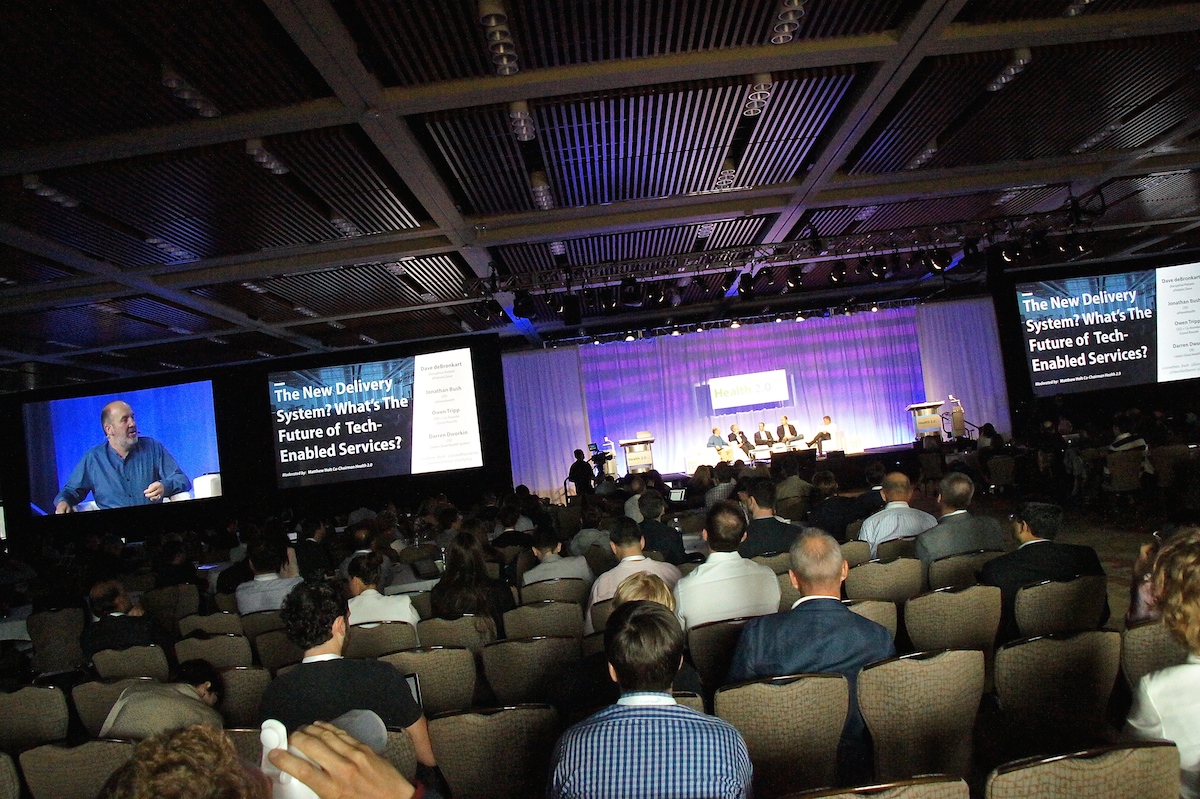
That pic cracks me up. Beginning in 2010, as an "extracurricular" part of my last job (electronic medical records systems consulting) prior to "retiring," I covered the "#HealthIT" sector as a "photojournalist" for about 8 years. Most of this stuff was in the Silicon Valley-ish Health IT startup space. I also covered national HIMSS, IHIASQ Health Care DivisionLean HC Summitsand NYeC conferences.
It commenced from a lark. I was living and working in Las Vegas for the Medicare QIO, and HIMSS had come to town for its annual conference. While surfing their website, I came upon their "apply for a Press Pass" link. I applied, citing my EHR work and blog. To my utter surprise, they granted it. I parlayed things from there.
Peyton Manning, Closing HIMSS16 Keynote Speaker. He was great.

So, yeah, I've seen a ton of ego and opaque high-tech BS along with a good bit of genuine, eventually profitable and beneficial innovation.
 

Gotta say, after my kids turned me on to "Silicon Valley HBO," I could hardly do it with a straight face any more.


MORE
 
Bitcoin miners, which already have up to $2.5 billion in loans outstanding, could find themselves in even hotter water as many have exposure to failed crypto exchange FTX and lenders such as BlockFi.

Miners’ balance sheets have been steadily deteriorating over the past few months as the price of bitcoin has slumped, killing their revenue. Meanwhile, energy prices have soared, increasing their costs. This has resulted in one of the biggest mining data center operators in the U.S., Compute North, to file for chapter 11 bankruptcy protection in September, while big players such as Core Scientific (CORZ), Argo Blockchain (ARBK) and Greenidge Generation (GREE) have said they are in a liquidity crunch. The stock prices of all three publicly traded miners have plunged more than 90% this year.

Now, some of the lenders working with these already struggling bitcoin miners are in deeper trouble after getting caught up in the FTX blowup – potentially causing another major hit for the mining industry…
Again, there are no "mines." There are no "coins." There are no "tokens." There are no "wallets." There are only enticing yet fatuous metaphors. (And, "Smart Contracts" are neither.) When the radioactive crypto dust settles, all that remain are, in the main, unenforceable obligor-obligee signatures (many of them not even "wet").

The Already Struggling Bitcoin Miner
YO, STANFORD


I won't hold my breath for any response.
 
FROM THE "MISTAKES CONTINUE TO BE MADE" CHANNEL
 

Cat 5 Cringeworthiness. Son, you are about to Go Through Some Things.
___
 
URGENT OFF TOPIC
 
Click here.

Diego is a dear friend of my nephew Nathan, my sister Carole's youngest. I've not met Diego (yet),  As a permanently grieving father who lost both of his daughters to cancers, I ask that you contribute any amount. 
 
Jeff is the husband of my niece April, Nathan's brother. He put this GoFundMe site up.

Please help us help Diego.
__________ #cryptNOcurrency
 

Wednesday, May 1, 2019

AAAS goes "social"


As a member, I just signed up for this. We shall see.
All individual members of AAAS can join up to three Sections. Sections are a great way to network with other members while participating in the AAAS Annual Meeting, and providing our leadership with expertise on issues of importance within the scientific community.
There are 28 "Sections," roughly equivalent to my ASQ "Divisions."
AAAS FORCE FOR SCIENCE GROUP
AAAS MEMBER COMMUNITY
AGRICULTURE, FOOD, AND RENEWABLE RESOURCES (SECTION O)
ANTHROPOLOGY (SECTION H)
ASTRONOMY (SECTION D)
ATMOSPHERIC AND HYDROSPHERIC SCIENCES (SECTION W)
BIOLOGICAL SCIENCES (SECTION G)
CHEMISTRY (SECTION C)
DENTISTRY AND ORAL HEALTH SCIENCES (SECTION R)
EDUCATION (SECTION Q)
ENGINEERING (SECTION M)
GENERAL INTEREST IN SCIENCE AND ENGINEERING (SECTION Y)
GEOLOGY AND GEOGRAPHY (SECTION E)
HISTORY AND PHILOSOPHY OF SCIENCE (SECTION L)
INDUSTRIAL SCIENCE AND TECHNOLOGY (SECTION P)
INFORMATION, COMPUTING, AND COMMUNICATION (SECTION T)
LINGUISTICS AND LANGUAGE SCIENCE (SECTION Z)
MATHEMATICS (SECTION A)
MEDICAL SCIENCES (SECTION N)
NEUROSCIENCE (SECTION V)
PHARMACEUTICAL SCIENCES (SECTION S)
PHYSICS (SECTION B)
PSYCHOLOGY (SECTION J)
SCIENCE IN HISTORY
SOCIAL, ECONOMIC, AND POLITICAL SCIENCES (SECTION K)
SOCIETAL IMPACTS OF SCIENCE AND ENGINEERING (SECTION X)
STATISTICS (SECTION U)
WOMEN IN STEM
My principal Section, I guess, will be "Social, Economic, and Political Sciences," followed by "Societal Impacts of Science and Engineering," and a 3rd one TBD (a lot to choose from).

apropos of a prior post, is there really a "science of deliberation?" Also, "I am not a scientist."

Unlike some eminent others.


OFF-TOPIC ERRATUM


These folks are unhappily going to come to know Bad Bobby--and his attorney. More on that at another time on another blog. Suffice it to say we had a very bad experience with these people, expensively so. My Yelp review rating will start with a decimal point.

BACK ON TOPIC

Once we get functionally settled in Baltimore in the wake of this CusterFluck transcontinental move, my thrust going forward (as might be inferentially evident from recent topics) will increasingly focus on larger issues, climate change policy and tech (and human health impacts) chiefly among them. If we continue our anti-science global warming remediation denial much longer, advocating "Lean process QI" ways of perhaps shaving another 30 seconds off patient encounter EHR SOAP note workflows is not going to matter materially.

Props to The Neurologica Blog
UPDATE

Just ran across this on Linkedin:

The healthcare industry encompasses a large and diverse workforce with many skills, roles, and practice settings. As our effort builds, we are mindful of supporting all those who are vulnerable to bias, harassment, and discrimination, whether due to gender, gender identity, sexual orientation, race, ethnicity, country of origin, disability, or any other factor.

When TIME'S UP was established in response to the common experience of power inequity and unsafe workplaces for women and other underrepresented groups everywhere, women in healthcare took notice.
We had been having the same conversations about the profound problems in our industry. While women make up over 80% of the healthcare workforce, the decision makers, including hospital leadership, executives and association presidents, are largely men. We continue to work in environments highly tolerant of sexual harassment. We had been gathering in women's groups and social media platforms and saying to each other, “It's time for change!”
We reached out to the TIME’S UP organization and decided to join them and their affiliates in the work of supporting safe, fair, and dignified workplaces, with a focus on the issues and solutions specific to health care. 
In healthcare, we know that lives are saved by working together and improving collective intelligence through teams that are not only diverse, but are respectful, inclusive, and equitable.
Starting from an initial core network of founders, our plan is to grow our team to span a wide variety of roles, types of practice, settings, and locations, until we are a unified and powerful voice for change.
Together, we can create a better future for ourselves, our patients, and future generations of healthcare workers.
 Indeed.

Relatedly,

JusticeInMedicine.com
_____________

More to come...

Saturday, March 9, 2019

Health care for the homeless


More on that logo art in a moment. Love it.

First, as part of my customary early morning online news review workflow, I ran across this at The Atlantic:
Medieval Diseases Are Infecting California’s Homeless
Typhus, tuberculosis, and other illnesses are spreading quickly through camps and shelters.


…“Our homeless crisis is increasingly becoming a public-health crisis,” California Governor Gavin Newsom said in his State of the State speech in February, citing outbreaks of hepatitis A in San Diego County, syphilis in Sonoma County, and typhus in Los Angeles County.
“Typhus,” he said. “A medieval disease. In California. In 2019.”

The diseases have flared as the nation’s homeless population has grown in the past two years: About 553,000 people were homeless at the end of 2018, and nearly one-quarter of homeless people live in California.

The diseases spread quickly and widely among people living outside or in shelters, helped along by sidewalks contaminated with human feces, crowded living conditions, weakened immune systems, and limited access to health care.

“The hygiene situation is just horrendous” for people living on the streets, says Glenn Lopez, a physician with St. John’s Well Child & Family Center, who treats homeless patients in Los Angeles County. “It becomes just like a Third World environment, where their human feces contaminate the areas where they are eating and sleeping.”

Those infectious diseases are not limited to homeless populations, Lopez warns: “Even someone who believes they are protected from these infections [is] not.”…
Shit. Literally and metaphorically.

I have never been homeless (came close once, in 1967, in the wake of an extended period of illness). I can't imagine.

More recently, before my younger (now late) daughter was dx'd with Stage IV pancreatic cancer, I was a weekly volunteer with the San Francisco "Muttville.org" senior dog rescue center. The nation's most highly overeducated dog rescue shelter laundromat attendant. My parents never let us have pets. I've been a stray magnet ever since. "Senior dog rescue?" I'm there.


The seven or so blocks between the 16th and Mission BART station and Muttville burst at the sidewalk / curbside seams with the shopping carts, blue tarps, tents, and raggedy deitrus of the homeless.

Nasty. Sad. Pungent odors in the air. Watch where you step.

I try to imagine. And I am so grateful for our relative good fortune. As I write, Cheryl and I are doing the final paperwork to close on our 3rd (and likely final) home purchase, in Baltimore, to be close to our son, who happily lives there with his (Baltimore native and state environmental engineer) Eileen in Pigtown.

He has now lost both of his elder sisters to cancer and is the last kid standing. We have to be nearby.


In light of our lovely over-the-ingoing-budget-cap price tag on this place we settled upon, I feel a coming-out-of-retirement stint looming in my future (Cheryl has certainly earned her slack). With my new aortic valve firmly pounding away, I'm loaded for Bear. (There's always Busking, LOL.)

So, just out of curiosity I started putzing around on SimplyHired.com. Talk about a target-rich environment in Baltimore-DC area: "writer," "analyst," "policy analyst," "ethicist," "ASQ," "quality engineer,"... tons.

"Lean health care?" Yes!

Which led me to "Health Care for the Homeless" of Baltimore (and Maryland more broadly). They're soliciting for a (Lean) "Performance Improvement Specialist."

We need to talk. These folks are doing important work.

to wit, apropos of the above Atlantic article, see their page "Homelessness makes you sick."

Indeed.

Their national affiliation:

nhchc.org
UPDATE


Wow. Just wow.

Below, is this cool, or what?


Again, The Atlantic:
"People living on the streets or in homeless shelters are vulnerable to such ['medieval' disease] outbreaks because their weakened immune systems are worsened by stress, malnutrition, and sleep deprivation. Many also have mental illness and substance-abuse disorders, which can make it harder for them to stay healthy or get health care."
ERRATUM

In 2012 while covering one of my many conferences I met and immediately befriended techie internal med physician Jan "Doc" Gurley, a well-known authority on the medical plights of the homeless. She'd long been with the San Francisco Department of Public Health.

A couple of years ago, she just seemed to fall off the planet. No one among my Health 2.0 crowd knows what has become of her. The last time we spoke she told me of her new effort to address the medical plights of parolees (who overwhelmingly become homeless--if not reincarcerated--in short order). I told her I'd love to help with that. She told me she was taking CCTV classes at Berkeley to learn how to do video documentary episodes.

Then, "poof." Vanished.

Disconcerting. Anybody?

ON DECK

Amazon's "AI" has certainly "got my number."


I expect this book will cohere nicely with my prior post "Can medicine be cured?"

"Polypharmacy?" "Overdo$ed America?"
_____________

More to come...