8-1, Clarence Thomas in irascible Ouija Board Jurisprudence dissent.


I'd just gotten this book. Timely, in light of today's SCOTUS ruling.
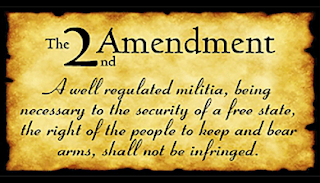
The Fifth Circuit is one of the thirteen federal appellate courts that sit below the Supreme Court and above the country’s district courts. Its jurisdiction covers Mississippi, Louisiana, and Texas, and it is often the last word on the law for the roughly thirty-seven million people who live in those states. Like the district court in Perez-Gallan, the circuit court in Rahimi had to rule on the constitutionality of a federal statute that bans gun possession for people who have protective orders against them. The Fifth Circuit had heard and rejected this exact challenge multiple times, concluding that the statute was reasonably adapted to the compelling government interest of reducing domestic gun violence. But the court was asked to reconsider its jurisprudence in light of Bruen. The court accepted the invitation to reevaluate its precedent and concluded that there was no sufficiently analogous law when the country was founded, so it struck the statute down. Even though there were historical statutes that prohibited gun possession for certain people, the court distinguished those laws away by highlighting that the Founding-era laws disarmed classes of people—specifically, Native Americans and enslaved Black people—in order to protect the discriminatory social order and prevent armed rebellion, while the statute in question disarmed people after individualized findings of credible threats to their partner or child. This rationale encapsulates the intellectual and moral bankruptcy of the originalist ideology. Rahimi concluded that intimate partner violence was not a constitutionally acceptable reason to place limits on gun possession and instead lifted up rank bigotry as the standard to which today’s gun laws must be held. Originalism observes that white supremacy dominated the country’s past and reasons that it must also dominate the country’s future. The Department of Justice petitioned the Supreme Court to review the Fifth Circuit’s decision, and the Court heard oral argument in United States v. Rahimi in November 2023. Soon it will have the opportunity to clarify how Bruen applies to statutes disarming people subject to orders of protection. Perhaps the Court will twist itself into an originalist pretzel to avoid further damaging its reputation by affirming the Fifth Circuit’s horrific reasoning. Perhaps not.
The ominous implications of the district court’s decision in Perez-Gallan and the Fifth Circuit’s decision in Rahimi should make even the most ardent gun lovers nervous. Taking the Supreme Court’s jurisprudence seriously empowers lower courts to strip us of innumerable freedoms if they have any reason to think that we would have been unfree in early America. Originalism is regressive by nature: an outsized focus on the alleged original meaning of the Constitution at the time of drafting means the rights of modern-day individuals—and the ability of legislatures to protect those rights—must be constrained by the outdated concerns of the Framers, like keeping British soldiers out of their living rooms. Former justice Stephen Breyer’s dissenting opinion in Bruen spotlighted how originalism binds lawmakers from meeting the present needs of their constituents. Even if the justices were trained historians (which, remember, they aren’t), Breyer argued that “laws addressing repeating crossbows, launcegays, dirks, dagges, skeines, stilladers, and other ancient weapons will be of little help to courts confronting modern problems.” This, to be sure, was the plan all along. The originalist ideology declares that random historical windows of conservatives’ choosing are society’s high-water marks, and we are constitutionally powerless to surpass them without formal amendment. The core function of originalism is providing aesthetically pleasing legal flourishes around the uglier idea that things shouldn’t get better than they’ve been. And if originalism is left unchecked, things will keep getting worse.
Dennie, Madiba K. The Originalism Trap (pp. 13-15). Random House Publishing Group. Kindle Edition.
I have yet to read the full opinion, including the several divergent concurrences, and Justice Thomas's reportedly cranky lone Dissent.
I've been episodically crackin' on "Originalist / Textualism" since my 1998 grad thesis (pdf):
 |
| Quoting Antonin Scalia, 1996. Pg. 162 of 297 |
Madiba K. Dennie, interesting person. Fun read thus far.
Pretty cool TwitterX handle.

Kinda jumped the line from the stuff I've been contemplating in my prior post. "Overbooked" as usual. Still working on my new M3 Mac Air migration, too.
BTW, I've had my snarky blog Sport with Originalist "Textualism" across the years.
Uhhh... also, Dobbs, anyone?
UPDATE: BTW...
I would also recommend a side-by-side read with this previously-cited book:

"Rightsism?"
Stay tuned...
_________