


Mask Up
Published by Steven Novella under Science and Medicine
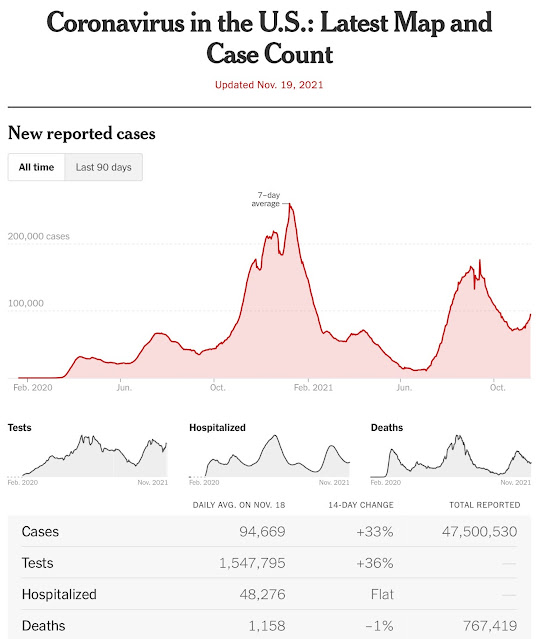
The COVID-19 pandemic is not done with us yet. We are still in the middle of the delta surge, and while delta will eventually pass, the omicron variant is right on its heels. In the US we just passed the milestone of 800,000 people dead from COVID with over 50 million cases. More Americans died of COVID in 2021 than in 2020, although in 2021 most deaths were among the unvaccinated. The vaccines remain our best defense against this pandemic, which is why it is tragic that there are still holdouts for tribal or ideological reasons. Regardless, it is extremely likely that we will be dealing with COVID through 2022. It is also likely that COVID is now endemic, and while it may fade down to flu-like proportions, we will also very likely have to deal with it for years to come. COVID is also likely not the last respiratory pandemic we will have to deal with this century.
All of this is why masks are still important. We just have to accept the fact that face masks are now an important part of life. At least for the foreseeable future we will need face masks as a layer of protection in health care settings, large indoor crowds, among vulnerable populations, and for anyone who is symptomatic. Walking around in the public maskless, sneezing and coughing from a “cold” is no longer socially acceptable…

Like most of my colleagues, I haven’t arrived at this moment unscathed. I weathered the brutal first wave of the pandemic, often witnessing more COVID deaths during my shifts in New York City than I saw working in an Ebola-treatment center in West Africa in 2014.
When I was vaccinated against COVID a year ago, I was already exhausted. But better times seemed close at hand. Perhaps soon we wouldn’t have to endure wearing full personal protective equipment for hours on end. I was wrong.
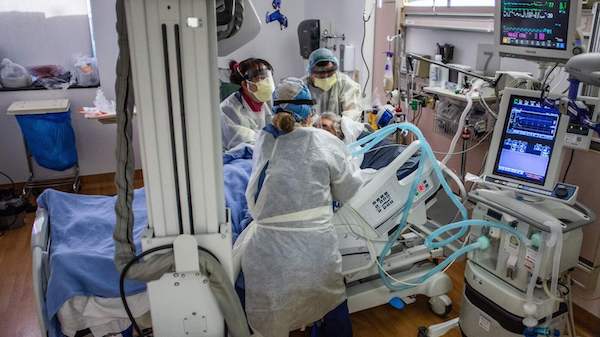
After two years of dealing with this virus—working extra shifts, watching families sob on grainy FaceTime calls while their loved ones slipped away—many health-care workers are already in a dark place. With a new wave of COVID upon us, we face this grim truth: You can’t surge a circuit that’s been burned out. For frontline providers, there’s simply no new fuse that can fix the fact that we’re fried.
Many people are holding out hope for the possibility that the Omicron variant may cause less severe disease. But this is little comfort for those worried about our hospitals and the people who work there: A large surge of even a more mild variant will still produce more patients than our already maxed-out system can handle. Moreover, doctors and nurses will themselves get sick…
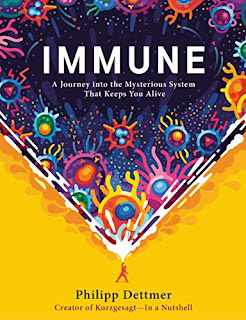
INTRODUCTIONImagine waking up tomorrow, feeling a bit under the weather. An annoying pain in your throat, your nose is runny, you cough a bit. All in all, not bad enough to skip work, you think, as you step into the shower, pretty annoyed about how hard your life is. While you are totally not being a whiny little baby, your immune system is not complaining. It is busy keeping you alive so you can live to whine another day. And so, while intruders roam your body, killing hundreds of thousands of your cells, your immune system is organizing complex defenses, communicating over vast distances, activating intricate defense networks, and dishing out a swift death to millions, if not billions, of enemies. All while you are standing in the shower, mildly annoyed.But this complexity is largely hidden.
Which is a real shame because there are not many things that have such a crucial impact on the quality of your life as your immune system. It is all-embracing and all-encompassing, protecting you from bothersome nuisances like the common cold, scratches, and cuts, to life-threatening stuff from cancer and pneumonia to deadly infections like COVID-19. Your immune system is as indispensable as your heart or your lungs. And actually, it is one of the largest and most widespread organ systems throughout your body, although we don’t tend to think about it in these terms.
For most of us, the immune system is a vague and cloud-like entity that follows strange and untransparent rules, and which seems to sometimes work and sometimes not. It is a bit like the weather, extremely hard to predict and subject to endless speculations and opinions, resulting in actions that feel random to us. Unfortunately many people speak about the immune system with confidence but without actually understanding it, it can be hard to know which information to trust and why. But what even is the immune system and how does it actually work?
Understanding the mechanisms that are keeping you alive as you read this is not just a nice exercise in intellectual curiosity; it is desperately needed knowledge. If you know how the immune system works, you can understand and appreciate vaccines and how they can save your life or the lives of your children, and approach disease and sickness with a very different mindset and far less fear. You become less susceptible to snake oil salesmen who offer wonder drugs that are entirely devoid of logic. You get a better grasp on the kinds of medication that might actually help you when you are sick. You get to know what you can do to boost your immune system. You can protect your kids from dangerous microbes while also not being too stressed-out if they get dirty playing outside. And in the very unlikely case of, say, a global pandemic, knowing what a virus does to you and how your body fights it, might help you understand what the public health experts say...
Dettmer, Philipp. Immune (pp. xi-xii). Random House Publishing Group. Kindle Edition.


In the mid-19th century, the polymath William Whewell coined the term “consilience” to describe the progress of science through time (1). According to Whewell, inductive knowledge should “jump together” with evidence from different disciplines of science supporting more and more general, unified knowledge claims. The historian Kyle Harper explicitly adopts and enlarges this goal—which he attributes to E. O. Wilson—beyond science proper, incorporating insights from history, economics, anthropology, paleogenomics, parasitology, ecology, and phylogenetics, to write an ambitious, engaging, and unified history of humanity’s interaction with infectious disease….
"...Panoramic in scope, Plagues upon the Earth traces the role of disease in the transition to farming, the spread of cities, the advance of transportation, and the stupendous increase in human population. Harper offers a new interpretation of humanity’s path to control over infectious disease—one where rising evolutionary threats constantly push back against human progress, and where the devastating effects of modernization contribute to the great divergence between societies. The book reminds us that human health is globally interdependent—and inseparable from the well-being of the planet itself.688 pages. I am never bored.
Putting the COVID-19 pandemic in perspective, Plagues upon the Earth tells the story of how we got here as a species, and it may help us decide where we want to go."
"The book reminds us that human health is globally interdependent—and inseparable from the well-being of the planet itself."Anthropocene, anyone?


What Even Counts as Science Writing Anymore?
The pandemic made it clear that science touches everything, and everything touches science.
By Ed Yong

In theory, 2020 should have been a banner year for science writers. A virus upended the world and gripped its attention. Arcana of epidemiology and immunology—super-spreading, herd immunity, cytokine storms, mRNA vaccines—became dinner-table fodder. Public-health experts (and pseudo-experts) gained massive followings on social media. Anthony Fauci became a household name. The biggest story of the year—perhaps of the decade—was a science story, and science writers seemed ideally placed to tell it.Ed Yong rocks.
When done properly, covering science trains a writer to bring clarity to complexity, to embrace nuance, to understand that everything new is built upon old foundations, and to probe the unknown while delimiting the bounds of their own ignorance. The best science writers learn that science is not a procession of facts and breakthroughs, but an erratic stumble toward gradually diminished uncertainty; that peer-reviewed publications are not gospel and even prestigious journals are polluted by nonsense; and that the scientific endeavor is plagued by all-too-human failings such as hubris. All of these qualities should have been invaluable in the midst of a global calamity, where clear explanations were needed, misinformation was rife, and answers were in high demand but short supply.
But the pandemic hasn’t just been a science story. It is an omnicrisis that has warped and upended every aspect of our lives. While the virus assaulted our cells, it also besieged our societies, seeping into every crack and exploiting every weakness it could find. It found many. To understand why the United States has fared so badly against COVID-19, despite its enormous wealth and biomedical savvy, one must understand not just matters of virology but also the nation’s history of racism and genocide, its carceral state, its nursing homes, its historical attitudes toward medicine and health, its national idiosyncrasies, the algorithms that govern social media, and the grossly deficient character of its 45th president…
…When this pandemic started, my background as a science writer, and one who had specifically reported on pandemics, was undoubtedly useful, but to a limited degree—it gave me a half-mile head start, with a full marathon left to run. Throughout the year, many of my peers caviled about journalists from other beats who wrote about the pandemic without a foundation of expertise. But does anyone truly have the expertise to cover an omnicrisis that, by extension, is also an omnistory?…
…To the extent that the pandemic has been a science story, it’s also been a story about the limitations of what science has become. Perverse academic incentives that reward researchers primarily for publishing papers in high-impact journals have long pushed entire fields toward sloppy, irreproducible work; during the pandemic, scientists have flooded the literature with similarly half-baked and misleading research. Pundits have urged people to “listen to the science,” as if “the science” is a tome of facts and not an amorphous, dynamic entity, born from the collective minds of thousands of individual people who argue and disagree about data that can be interpreted in a range of ways…
…Science is often caricatured as a purely empirical and objective pursuit. But in reality, a scientist’s interpretation of the world is influenced by the data she collects, which are influenced by the experiments she designs, which are influenced by the questions she thinks to ask, which are influenced by her identity, her values, her predecessors, and her imagination…
"Our understanding of nature has been profoundly shaped by our culture, our social norms, and our collective decisions about who gets to be a scientist at all. And our relationship with nature—whether we succumb to it, whether we learn from it, whether we can save it—depends on our collective decisions too."I reflect in particular over my last couple of posts. i.e., Science denial. Genomic science and politics.


...I feel no inconsistency in celebrating what scientists are discovering about genomics and simultaneously insisting that environment, resources, and leadership—that is, politics—matter.
Finally, you can’t beat something with nothing. Skeptics’ and Rejecters’ warnings and critiques must be taken seriously, and some warrant action: government surveillance, racial essentialism, agribusiness control of food production, parents’ demands for perfect babies, “playing God” with species, bioterrorism—all range between threatening and pernicious.
However, many concerns of Skeptics and Rejecters tend to be fairly abstract, hypothetical, and inattentive to possible countermeasures. At least at this point in the history of genomics, these concerns do not in my view outweigh the compelling immediacy of using gene therapy to prevent a child’s death from leukemia, growing genetically modified rice that will provide vitamins to millions of malnourished people, freeing Black men from wrongful imprisonment that resulted from bad luck and lousy lawyering.20 Technology optimists can make gauzy promises that match up to pessimists’ abstract fears, but so far, the benefits of genomics are disproportionately concrete and its risks disproportionately diffuse. Thus the former outweigh the latter in my judgment...
Hochschild, Jennifer. Genomic Politics (pp. 233-234). Oxford University Press. Kindle Edition.
"There has long been a view of science writing that imagines it’s about opening up the ivory tower and making its obscure contents accessible to the masses. But this is a strange model, laden with troubling corollaries. It implicitly assumes that science is beleaguered and unappreciated, and that unwilling audiences must be convinced of its importance and value. It equates science with journals, universities, and other grand institutions that are indeed opaque and cloistered. And treating science as a special entity that normies are finally being invited to take part in is also somewhat patronizing." —Ed YongInteresting. Perhaps re-posting some Jennifer Hochschild is warranted.
The choice of good decision-makers—and of those who should be left out of the room where it happens—is a matter of politics, not rationality. The social science experts’ long lists of appropriate and inappropriate decision-makers make it clear that we can expect no consensus around a small set of “the correct” governors. Many actors have claims; people have varied evaluations of the legitimacy and priority of those claims; there is no authority or consensual process for evaluating the actors or their claims. That is why political activity is essential—and entirely warranted in a democratic polity. Decision-making about societal uses of genomics will and mostly should include negotiation, emotion, rational discourse, scientific evidence, procedures and precedents, trade-offs and pay-offs, and power grabs. It may never be finally resolved.—Genomic Politics (pp. 218-219)._________


In the senior community where my mom lives, death is a frequent visitor. When we talk about a recent loss, the story is often the same: her neighbor fell, and things got worse from there. Falls are the seventh-leading cause of death for adults aged 65 and older in the U.S., and their prevalence has jumped more than 30 percent in recent years, according to a 2018 report from the U.S. Centers for Disease Control and Prevention. Even when a spill doesn't cause serious injuries, it can be the beginning of the end for elderly adults, explains Patricia Dykes, who studies fall prevention at Brigham and Women's Hospital in Boston. “They become afraid to move. They'll think, ‘Maybe I shouldn't walk so much.’ Then they get weaker, and their balance gets poorer.” This starts a spiral of more falls, increased injuries and worsening health.“Fear of falling prevents older people from doing the things that would prevent falls,” she says. There are likely many reasons for the rise in fall-related deaths. For one thing, more people are surviving heart disease, cancer and strokes and living into their 80s and 90s with impairments and chronic conditions that make them unsteady, says epidemiologist Elizabeth Burns of the CDC, who co-authored the 2018 report. “We also know that Americans use more medications than they used to,” she says. Polypharmacy—taking four or more medications—increases the chance of falling. So does taking a drug that impacts the central nervous system, such as an opioid or antidepressant. Age-related changes in eyesight, cognition, muscle strength and balance also raise risk.
But experts insist that falling is not inevitable. Targeted exercises, modified drug regimens and fixing vision problems can reduce the risk. New technology may help, including smartphone apps that analyze gait, as well as AI tools that alert busy health-care providers to fall risks among their patients…


POLICYIndeed. Dr. Oreskes rocks. See also my #SciComm posts.
Scientists: When Talking to the Public, Please Speak Plainly
Jargon is appropriate when you’re speaking with colleagues, but it’s a turnoff for the rest of us
By Naomi Oreskes | Scientific American October 2021 Issue
With the persistence of vaccine denial, as well as many Americans still reluctant to face the facts of climate change even in the face of devastating floods and record-breaking heat, social media has been suffused with theories about why people don't trust science. In my own work, I have talked about how 40 years of partisan attacks on government have led to distrust of government science and then of science generally.
But this past year another issue has been bugging me. It's the way scientists talk. This is not a new concern. Many years ago science writer Susan Hassol and atmospheric scientist Richard Somerville wrote a humorous but serious piece about how the terms that climate scientists use mean one thing to them but often something very different to others. In the climate system, for example, “positive feedback” refers to amplifying feedback loops, such as the ice-albedo feedback. (“Albedo,” itself a bit of jargon, basically means “reflectivity.”) The loop in question develops when global warming causes Arctic ice to melt, exposing water that is darker and reflects less of the sun's warming rays, which leads to more warming, which leads to more melting ... and so on. In the climate system, this positive feedback is a bad thing. But for most, it conjures reassuring images, such as receiving praise from your boss…
Examples of confusing and misleading scientific terms abound. When astronomers say “metals,” they mean any element heavier than helium, which includes oxygen and nitrogen, a usage that is massively confusing not just to laypeople but also to chemists. The Big Dipper isn't a constellation to them; it is an “asterism.” Computational scientists declare a model “validated” when they mean that it has been tested against a data set—not necessarily that it is valid. In AI, there is machine “intelligence,” which isn't intelligence at all but something more like “machine capability.” In ecology, there are “ecosystem services,” which you might reasonably think refers to companies that clean up oil spills, but it is ecological jargon for all the good things that the natural world does for us. And then there's my favorite, which is especially relevant here: the theory of “communication accommodation,” which means speaking so that the listener can understand.
Studies show that alien terms are, in fact, alienating; they confuse people and make them feel excluded. One study showed that even when participants were given definitions for the terms being used, jargon-laden materials made them less likely to identify with the scientific community and decreased their overall interest in the subject. In plain words: jargon turns people off…
…Consider the news this week that now one in five hundred Americans has died in the pandemic; total deaths in the country approach seven hundred thousand. What’s worse, covid deaths—the vast majority of them preventable, avoidable deaths, now that science and the federal government have provided us with free vaccines—are continuing to rise across large swaths of vaccine-resistant Trump country. This is not a tragic mistake but a calculated choice by many Republicans who have made vaccine resistance synonymous with resistance to Biden and the Democrats. The current average of more than nineteen hundred dead a day means that a 9/11’s worth of Americans are perishing from covid roughly every thirty-eight hours. To my mind, this is the biggest news of the Biden Presidency so far, and it has nothing to do with Afghanistan, or the fate of the budget-reconciliation bill, or Bob Woodward’s new book.
America spent twenty years fighting wars in Afghanistan and the Middle East because of 9/11. The 2001 attacks reordered American foreign-policy and national-security thinking for a generation. Does anyone believe that something comparable will happen as a result of the pandemic’s catastrophic death toll, which is far vaster than that of any other crisis in the modern era? It’s hard to imagine, especially because the continuing loss of life is a result of G.O.P. political strategies that intentionally undermine the success of Biden’s policies. How can this President, or any President, reset from that?…

