Search the KHIT Blog

Showing posts with label healthcare. Show all posts

Thursday, December 11, 2025

We in the U.S. just want health care "PLANS," not actual health care, I guess

"Obamacare is a radical expansion of the status quo.JD Kleinke
    
Sept 2012
December 2025
When SCOTUS initially upheld the constitutionality of "Obamacare" (the PPACA), lyrics to a song promptly fell right outa my head in about 10 minutes. Two days later I posted a goofy YouTube music video.
 

BTW: Noted medical economist / novelist JD Kleinke is my friend (fellow guitar cat). He once told me "an economist is someone who sees something that works in practice and tries to determine whether it'll work in theory." 
 
OK, BACK UP TO 1994
 
My first grad school paper. An "argument analysis & evaluation" assessment of the "Single Payer" proposal published in JAMA.
UNLV EPS 701 Fall 1994, Argument Analysis Paper (pdf)

A Better Quality Alternative:
Single-Payer National Health System Reform


Gordon D. Schiff, MD, Andrew M. Bindman, MD, Troyen A. Brennan, MD, JD, MPH; 

Physicians for a National Health Program Quality of Care Working Group.
JAMA, September 14, 1994—VoL 272, No. 10

Argument synopsis:
Notwithstanding public misgivings about making significant public policy driven changes in the U.S. health care industry, there is extensive and persuasive empirical evidence of costly inadequacies in the system—such as lack of access/coverage, uneven levels of quality of service and outcomes, market-driven rather clinical priorities, waste and duplication, etc.—that can best be corrected by a unified approach to improvement driven by a scientific focus on quality issues (broadly defined) rather than those of short-term cost-control, competition, and piecemeal regulatory strategies and tactics. A single-payer health care system reformed by implementation of the ten principles detailed herein would at once extend medical access to all, reduce costs, improve clinical outcomes of the sick and injured, and elevate the overall health status of the nation, resulting in win-win consequences for providers and citizens alike.
I first flowcharted every declarative sentence / sub-clause "truth claim" sequentially to get at what the authors were precisely advocating ("seek first to understand'). Only after that would I go on to "evaluation" ("seek then to be understood")—basically making my argument going to the cogency of the proffer. (Basically, think "ASSUMING - BECAUSE - DESPITE - THEREFORE - ELSE" logic and concomitant evidence)
 

I had at least 100 hours in that paper. Great fun. Notwithstanding a 2nd grad course in "History of Ethics" (11 required textbooks) and my day gig at the Nevada Medicare Peer Review.
 
I'm revisiting my conclusions (to wit, pg 54).
Overall Evaluation:
The following alternative courses of action are generally advanced in the health care debate:
  1. Status quo: the system works fine, and normal incremental quality improvements at the provider level will suffice. Get a job.
  2. Insurance reform: prohibit exclusion and enforce community rating to reduce the insurance premium stratification characteristic of the present system.
  3. Expand existing public payer programs such as Medicare to cover the working poor and otherwise uninsurable.
  4. Capitated managed competition, with "employer mandates" to provide choices in beneficiary alliances for pooled coverage bry*g power, administered though the workplace.
  5. Tax inducement programs such as the "Medi-save" approach in which workers use pre-tax dollars to purchase catastrophic coverage and pay for routine health expenses themselves.
  6. The public single-payer system based more or less on the Canadian model.
No one can dispute that the health care industry can be improved. Any system an be improved. Problems such as lack of access, arbitrary and often wildly excessive pricing, inexplicable variations in clinical practice and outcomes are well-documented and cry out for solution. That tends to rule out option 1. The question is one of extent: has the case been made that the health care industry requires comprehensive national reform?

In sum, the authors' argument has many strengths, particularly in their exhaustively documented enumeration of the shortcomings of our present health care system—to the extent to which it can be characterized as a "system." There is, however, a plausible alternative to a public national single payer system that would meet many of the goals sought by these advocates, and it is not a theoretical one. Utah's IHC (Intermountain Health Care) organization is a private, vertically-integrated health care corporation serving Utah and western Wyoming residents. It is a large for-profit network of hospitals, clinics, physicians, and related operations such as home health services. IHC is essentially a managed-care system with subscribers who pay set fees and minimal co-payments. Unlike other HMO-type operations in the state that typically experience subscriber turnover rates of approximately 15% per year, IHC’s turnover rate is less than 0.5% (that's 0.005), at competitive prices. They accomplish this by an organization-wide, enthusiastic, almost religious commitment to the very CQI principles outlined above. IHC quality improvement programs are directed byDr.  Brent James, a surgeon and nationally respected leader in health care CQI education. Having myself undergone their health care CQI training course over the period of the past six months as a part of my work, I can attest that IHC, while not yet perfect, effectively applies nearly all of the recommendations cited in this article, albeit on a smaller scale (and that may indeed be a significant virtue). They  are in essence a microcosmic single-payer system, but one successful in the private sector, driven not by publicly imposed mandates, but by their own thorough knowledge of and dedication to CQL IT is difficult to see at this point whether the asserted advantages of a national public system would add net value beyond the type of operation that IHC represents.

To be fair, IHC operating in a fairly prosperous, culturally homogeneous region enjoying a great deal of social and political unity. Here in Nevada, by contrast, though we share a common border and similar population size and geography with Utah, the social milieu could not be more different. IHC might not encounter the same level of success in other regions, and their successes do not impact those who cannot obtain coverage-and a central issue of this article has been about the significant negative impact of such a deficit. The IHC example does, however, stand in stark relief to both the inadequate business-as-usual attitude, and the proposition advanced above that a national single-payer system is the best path to effective health care reform. other examples exist around the nation also; one that comes to mind is Northwest Hospital in Seattle whose presentation at the Annual Quality Congress of the American Society for Quality Control this year revealed yet another organization deriving significant cost savings and quality improvement from diligent application of CQI methods. 

Rule Number One of CQI is "listen to the customer," and thus far the customers are prohibitively wary of the idea of creating a huge new national program, a political reality that is unlikely to shift anytime soon. The argument presented by Schiff et al takes into account an enormous amount of evidence and theory generated from within health care and the wider quality sciences, but serious questions remain unresolved with respect to the needs and concerns of health care consumers, whose overwhelming support would be needed to implement a single-payer health care system. 
I've been gumshoeing this topic for a long time. e.g., see "Public Optional." "Shards of Health Care" anyone?
 
Stay tuned...

Thursday, December 5, 2024

Assassination in Manhattan,

United Healthcare CEO gunned down.
  
 
It has been a chaotic few days. Culminating in a grotesque, brazen murder caught on surveillance video.
 

Social media reactions:
 
 
apropos of "Single Payer," my first grad school semester paper (pdf) 30 years ago comprised a detailed argument analysis evaluation of the Single Payer proposal published in JAMA in 1994:

Argument synopsis:
Notwithstanding public misgivings about making significant public policy driven changes in the U.S. health care industry, there is extensive and persuasive empirical evidence of costly inadequacies in the system-such as lack of access/coverage, uneven levels of quality of service and outcomes, market-driven rather clinical priorities, waste and duplication, etc.-that can best be corrected by a unified approach to improvement driven by a scientific focus on quality issues (broadly defined) rather than those of short-term cost-control, competition, and piecemeal regulatory strategies and tactics. A single-payer health care system reformed by implementation of the ten principles detailed herein would at once extend medical access to all, reduce costs, improve clinical outcomes of the sick and injured, and elevate the overall health status of the nation, resulting in win-win consequences for providers and citizens alike.
I put at least 100 hours into that 57-page project. I had just finished my first stint (of 3) with the Nevada Medicare QIO at the time.

Fast forward to 2015, and my post "The U.S. healthcare "system" in one word: "shards"


My interaction with our healthcare industry is at once lengthy, broad, and deep—Medicare analyst, next-of-kin caregiver (both daughters, both parents, spanning 16 years), and acute care patient (now a Medicare"Bene"). I'm as exasperated as anyone by our "system."
 
But you don't accomplish anything by murdering people.
 
APRIL & MAY 2017 REFLECTIONS
 

My examination of Elisabeth Rosenthal's writing. Here, here, and here

I can keep going. Lots more from where that stuff came. Again, though, murdering this or that CEO is not gonna do anything to mitigate things.

UPDATE

I would think the authorities will collar this perp before long.


No, neither would I celebrate the assassination of the President-Elect, In case the rhetorical point escapes you.

UPDATE

Police in Altoona PA caught the ID’d suspect, 26 yr old Baltimore native Luigi Mangione. Physical forensic evidence is piling up at warp speed. More in subsequent posts.
_________
  

Sunday, January 2, 2022

And, away we go...

Buckle up, folks.
"Shards," anyone?
 
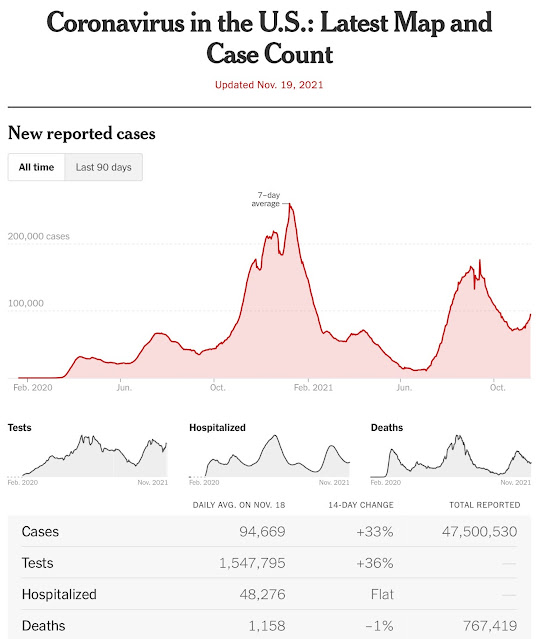
US Covid19 daily incidence rate (new confrmed cases) is now nearly 400,000. Deaths have now surpassed 825,000 in the US.


See my ongoing post on Medium.
__________
 

Friday, November 19, 2021

#COVID19: And, here we go yet again

 
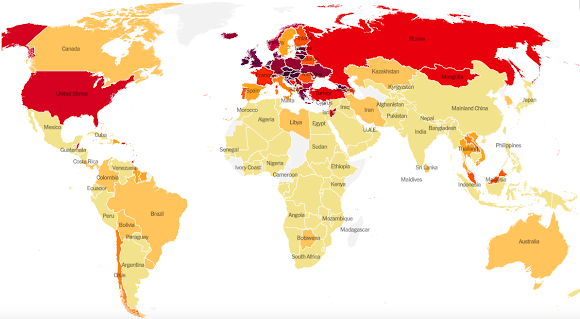
We'll easily get to more than 800,000 US Covid-19 deaths by year's end. New case incidence is again bounding back up in other nations as well.
 
 
Cheryl and I got our Moderna booster shots yesterday at Kaiser. Just have to continue to lie low. This is all getting real old, I'm sure you agree.

Then, there's this crap.

 
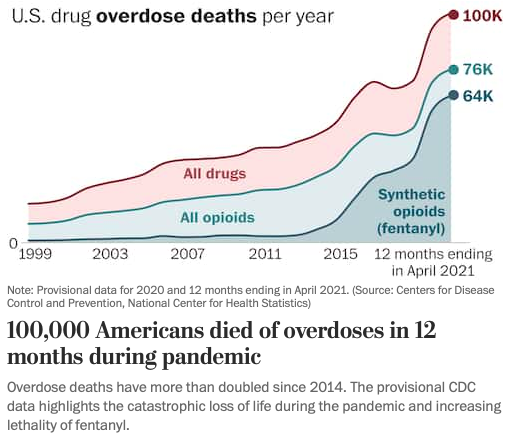
See my 2019 post "In Pain."
 
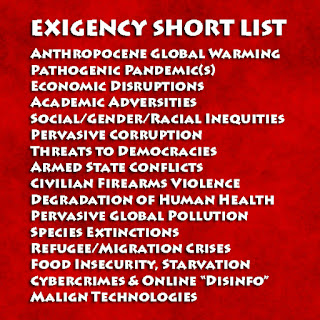
Still wondering whether this category of acute social/public health malaise should get its own top "Exigencies" line item?

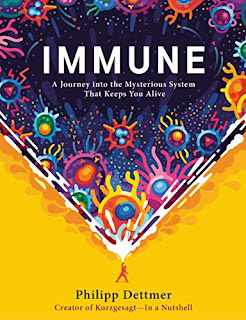
ONE MORE NEW BOOK

INTRODUCTION
Imagine waking up tomorrow, feeling a bit under the weather. An annoying pain in your throat, your nose is runny, you cough a bit. All in all, not bad enough to skip work, you think, as you step into the shower, pretty annoyed about how hard your life is. While you are totally not being a whiny little baby, your immune system is not complaining. It is busy keeping you alive so you can live to whine another day. And so, while intruders roam your body, killing hundreds of thousands of your cells, your immune system is organizing complex defenses, communicating over vast distances, activating intricate defense networks, and dishing out a swift death to millions, if not billions, of enemies. All while you are standing in the shower, mildly annoyed.

But this complexity is largely hidden.

Which is a real shame because there are not many things that have such a crucial impact on the quality of your life as your immune system. It is all-embracing and all-encompassing, protecting you from bothersome nuisances like the common cold, scratches, and cuts, to life-threatening stuff from cancer and pneumonia to deadly infections like COVID-19. Your immune system is as indispensable as your heart or your lungs. And actually, it is one of the largest and most widespread organ systems throughout your body, although we don’t tend to think about it in these terms.

For most of us, the immune system is a vague and cloud-like entity that follows strange and untransparent rules, and which seems to sometimes work and sometimes not. It is a bit like the weather, extremely hard to predict and subject to endless speculations and opinions, resulting in actions that feel random to us. Unfortunately many people speak about the immune system with confidence but without actually understanding it, it can be hard to know which information to trust and why. But what even is the immune system and how does it actually work?

Understanding the mechanisms that are keeping you alive as you read this is not just a nice exercise in intellectual curiosity; it is desperately needed knowledge. If you know how the immune system works, you can understand and appreciate vaccines and how they can save your life or the lives of your children, and approach disease and sickness with a very different mindset and far less fear. You become less susceptible to snake oil salesmen who offer wonder drugs that are entirely devoid of logic. You get a better grasp on the kinds of medication that might actually help you when you are sick. You get to know what you can do to boost your immune system. You can protect your kids from dangerous microbes while also not being too stressed-out if they get dirty playing outside. And in the very unlikely case of, say, a global pandemic, knowing what a virus does to you and how your body fights it, might help you understand what the public health experts say...


Dettmer, Philipp. Immune (pp. xi-xii). Random House Publishing Group. Kindle Edition.


News you can use. Stay tuned.
 
COVID-19 UPDATE: THE DAY IN STUPID
 

 GOP "Conservative Political Action Committee."

UPDATE

__________
 

Tuesday, November 9, 2021

"Science: Stay in your lane!"

Or, build some new ones.

 
New editorial in Science.
 
A recent Science editorial on the social and political headwinds that have blunted, obfuscated, and confused public behavior in the United States’ COVID-19 response cautioned both politicians who appoint themselves scientists and scientists—including virologists and epidemiologists—to stay in their lanes. The warning raises an important question: Should science add another lane?


Despite the remarkable development of safe and effective vaccines, only about two-thirds of Americans have received their first dose. Even nonmedical actions (social distancing and masking) supported by rigorous evidence are met with widespread indifference, resistance, and rage. Unfortunately, this number is the rule rather than the exception. Broadly, Americans receive about 55% of clinical interventions known to benefit their health.


To address this failing, science needs to add another lane—one called implementation research. Implementation scientists move beyond medication and device development and study how to facilitate their use by clinics, front-line health care providers, patients, communities, and policy-makers. Public health failures that could have been avoided, as well as successes attributable to this science, illustrate the importance of this work... 

...{R]esearch on how to expand the use of proven COVID-19 interventions is underway but must be scaled up substantially to address pressing questions: What strategies lead to vaccine acceptability, feasibility, fidelity, equity, scale-up, and spread? What social marketing messages are most effective? Who are the best opinion leaders? How can health systems overcome delays in identifying mildly ill outpatients eligible for monoclonal antibodies? Data are emerging about how to equip vaccine champions with the resources necessary to train others, build coalitions, and optimize organizations to administer vaccines as widely as possible. But more must be done, especially given the current politicized pandemic response and frayed social fabric.


Society needs a lane of science that studies rapid uptake of proven interventions. Questions pursued in implementation research require cross-disciplinary collaborations among scientists who understand communication, marketing, anthropology, economics, and social psychology—disciplines that have not historically interacted with one another.
..

...The US National Institutes of Health (NIH) should create an Office of Implementation Research with funding that institutes must compete for, modeled on the Office of AIDS Research. The office would study emerging interventions and address obstacles to their use. Insights would guide health delivery, making learning-while-doing a standard. The office should support innovations that track rates of intervention use (vaccination and effective therapeutics) and capture the strategies leading to their uptake. And the NIH should support networks for implementation research, similar to the AIDS Clinical Trials Group. At least 10% of the NIH budget should be dedicated to this work. If this seems expensive, consider the costs of not taking these steps: Effective interventions that are not used optimally will fail to reap value from existing investments.

COVID-19 has shown the world that “knowing what to do” does not ensure “doing what we know.” It demonstrates that intervention discovery is the start, not the end, of the scientific journey. There is no better time for science to establish a new lane, one devoted to ensuring that our nation’s health discoveries are used to improve population health...
Well, given that we are now apparently going to have all of this federally funded "infrastructure" building and re-building going on pursuant to President Biden's recent legislative victories, I would certainly support rational initiatives via which to increase the effectiveness of the breadth of applied sciences. "Exigencies? Priorities?" Hello?
 
apropos?
This open access book provides a broad context for the understanding of current problems of science and of the different movements aiming to improve the societal impact of science and research.

The author offers insights with regard to ideas, old and new, about science, and their historical origins in philosophy and sociology of science, which is of interest to a broad readership. The book shows that scientifically grounded knowledge is required and helpful in understanding intellectual and political positions in various discussions on the grand challenges of our time and how science makes impact on society. The book reveals why interventions that look good or even obvious, are often met with resistance and are hard to realize in practice. [emphasis mine]

Based on a thorough analysis, as well as personal experiences in aids research, university administration and as a science observer, the author provides—while being totally open regarding science's limitations—a realistic narrative about how research is conducted, and how reliable ‘objective’ knowledge is produced. His idea of science, which draws heavily on American pragmatism, fits in with the global Open Science movement. It is argued that Open Science is a truly and historically unique movement in that it translates the analysis of the problems of science into major institutional actions of system change in order to improve academic culture and the impact of science, engaging all actors in the field of science and academia. [emphasis mine]
'eh? 
 
From the book:
It is truly amazing, that a way to do science and research, that for the majority of its practitioners and the public and policy makers makes a lot of sense, and which has been around for quite some time, has not been embraced to become common practice. To answer this question, we have to delve deep into the science of science and research. We have to understand ‘the idea of science’ that does exist in the plural. We have to analyse why in particular one of these concepts and its corresponding public image has been dominant practically since 1945 and what that has done to science and scientists. That philosophical/sociological idea has been the basis for the ideologic narrative with which science has been internally organized and is being used to claim a unique position, authority and funding for science. With this narrative, the scientific community promised that science would be there to the benefit of society, at least when her autonomy and neutrality are respected. How come that although this legendary image and its narrative by the philosophers, historians and sociologists has no philosophical and timeless foundation, scientists apparently without knowing this demise of their Legend keep using that narrative? It may well be the fear, the insecurity that comes with the awareness that knowledge production in science is based not on a given metaphysical foundation, but rests on a firm social process of a community of inquirers that relentlessly criticize, question, debate what the best knowledge claims are. Knowing very well that the consensus reached may work well but is never absolute and may be replaced by better ones by this same process of inquiry called science. Having said this, we realize that, despite the commonly held views, the ‘method’ of the ‘hard’ sciences and that of the ‘soft’ social science and humanities may not be all that different after all!

In our present-day world of hyper-modernity, where knowledge is everywhere to be found and always contested by some, the process of the production of knowledge cannot be insulated from potential users and interested critical other parties. Clinging to the idea of a unique method for absolute truth and a foundation for science is understandable but a wrong reflex in debates with the public about its problems. Explaining how science really works and produces knowledge would be the best response…
[Open Science, The Very Idea, vii-viii]
Again, "is there a 'science' of science communication?"
 
MORE FROM OPEN SCIENCE:
Chapter 8
Epilogue: Open Science in an Open Society


Abstract The European Union has chosen Open Science as the way to do science and research based on its cultural and social values. Open Science can only really thrive in democracies and Open Societies to the benefit of humanity. This relationship between science, scientists and society is not trivial and sometimes endangered, therefore we need to continuously engage in research with and for society...
[Page 211].

Taking stock of science in the COVID-19 crises, it seems that science and scientists as an international community are committed and more than ready to practice Open Science. However, the open society—with its plurality, economic inequality, the speed and the use and abuse of social media, the higher levels of education, but also the increasing differences in education levels, the populism fueled by politicians—is often felt to make the connection between science and the public no less complex and to some even dangerous. Social media and the role of the tech giants since 1990 have had an enormous impact on how, when and where the debates in the public sphere take place. Fueled by ugly partisan battles, the internet it seems has divided countries and people more than it has resulted in open debates, in which listening to each other’s fears and opinions is being practiced, to reach mutual agreements. This is a major problem for science and society. Recently we have seen the worst of it in the USA, where partisan battle lines already since the 1980s are raging… [Page 217].

The time is long gone that the claims and views of science and experts were automatically accepted because of mythical ‘God given’ authority or a ‘unique scientific method’. As I have argued and demonstrated, the sciences, in their many different communities of inquirers do produce reliable and robust knowledge that has proven successful and has in the past contributed enormously to the quality of life. Much is still to be done and at this very moment scientist around the world are working 24/7 on therapies and vaccines for COVID-19 which are badly needed. To make clear what science has to offer we have to engage tirelessly in continuous conversation, debate and discussions about science and society. With the same energy and perseverance, because of geopolitics, ugly partisan politics and outright suppression we have to keep campaigning for open debates and deliberative democracies, as the stakes for humanity are higher than ever, this needs to be done within our own region, country, in the EU and in global collaborations around the globe…[Page 218]. 
"We have to keep campaigning for open debates and deliberative democracies, as the stakes for humanity are higher than ever..."

"Deliberative democracies?" Hmmm... Is there a "science of deliberation?"
 
"BUILD SOME NEW LANES?"
 
Yeah, and perhaps invest in some off-road vehicles, too. 

 
OPEN SCIENCE TED TALK
 
After the increasingly toxic environment of modern research culture forced her to nearly abandon her career, astrophysicist Dr Rachael Ainsworth began to question why the subject she loved had become so inhospitable. Identifying some of the pressures placed on her peers that encouraged aggressive competitiveness, unfair benchmarking and shoddy research practices also helped her identify a compelling potential solution.

Dr Rachael Ainsworth is a Research Associate and Open Science Champion at the Jodrell Bank Centre for Astrophysics at the University of Manchester. She has a PhD in Astrophysics, a BSc in Physics and was an intern at NASA’s Jet Propulsion Laboratory. She is an expert in the interpretation of radio emissions from protostellar systems in nearby star-forming regions and her research involves observing jets from young stars with next-generation radio telescopes to investigate the physical processes that assemble stars like our Sun.

She is passionate about openness, transparency, reproducibility and inclusion in research, and organises a women-in-data meetup group in Manchester called HER+Data MCR. Originally from Hampton, New Hampshire, USA, Dr Ainsworth is now based in Manchester. Dr Rachael Ainsworth is a Research Associate and Open Science Champion at the Jodrell Bank Centre for Astrophysics at the University of Manchester. She has a PhD in Astrophysics, a BSc in Physics and was an intern at NASA’s Jet Propulsion Laboratory. She is an expert in the interpretation of radio emission from protostellar systems in nearby star forming regions and her research involves observing jets from young stars with next-generation radio telescopes to investigate the physical processes that assemble stars like our Sun. She is passionate about openness, transparency, reproducibility and inclusion in research and organises a women in data meetup group in Manchester called HER+Data MCR. Originally from Hampton, New Hampshire, USA Rachael now lives in Manchester.
Dr. Ainsworth on Twitter.
__________
 

Friday, October 29, 2021

The definition of an "economist?"

"Someone who sees something that works in practice and tries to determine whether it will work in theory."—JD Kleinke
 
 
apropos,


I am reminded of an old Jay Leno Tonight Show joke, wherein he sarcastically mocked mindless TV ad copy platitudes:
"Do you want the highest quality at the lowest price?"
"NO, we wanna pay top dollar for crap!"
I've riffed on the U.S. healthcare system at some length across the years. See also my Hahnemann debacle post.
 
From the above Healthcare Triage video:
 
 
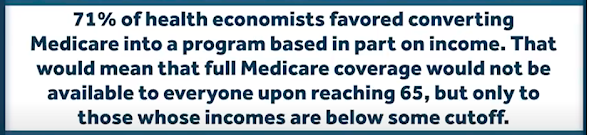
OK, 71% of health care economists have apparently not gotten The Memo. **
(** Wait a minute. The v/o contradicts the slide. Which is it? Favored or opposed?)
I am now 75 and a Medicare bene, as is my 71 yr old wife. We hit the Medicare "high income earners" threshold several years ago, approximately doubling our monthly "Medicare Premium Deduction" (it has since gone back down to "normal"). Cheryl was still working, and we'd taken a couple of sizable IRA disbursements (which count as taxable "earned" income in the year withdrawn). So, some significant "means testing" is already in effect. Not that hard-liners don't still want to convert Medicare into a flat-out penurious welfare program, with "asset" limits as well as income ceilings. Spend-down-to-poverty-for-eligibility.
 
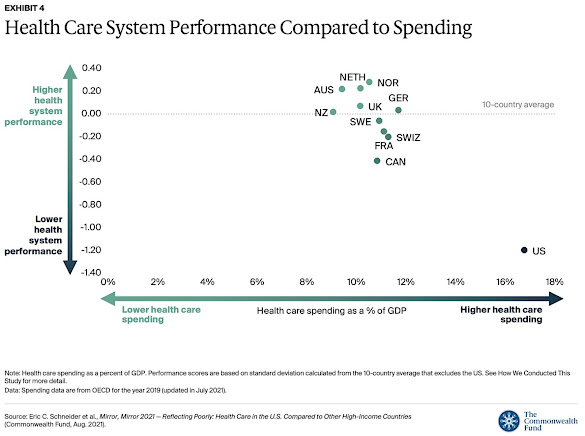
"Netherlands, Norway, Australia, New Zealand, UK, Germany, Sweden, Switzerland, France, Canada?" Higher-performing, lower costs? Buncha Commies.

No, we'll stick with Paying Top Dollar For Crap.
 
I first came to the healthcare space in 1993, as a QIO analyst, just as the corporatization of the sector was getting up to warp speed.
 
 
Interesting. This blog ensued during my 2nd QIO tenure in Health Information Technology. We were gonna materially improve outcomes quality and "bend the cost curve," in large measure via the widespread deployment of digital IT.
 
We mostly just MBA-ified it. 

MORE HEALTHCARE TRIAGE

  
I often reflect on what I wrote in 2009, when "Obamacare" was in the legislative oven.
Some reform advocates have long argued that we can indeed [1] extend health care coverage to all citizens, with [2] significantly increased quality of care, while at the same time [3] significantly reducing the national (and individual) cost. A trifecta "Win-Win-Win." Others find the very notion preposterous on its face. In the summer of 2009, this policy battle is now joined in full fury…

THE U.S. "HEALTH CARE" "SYSTEM"?

I will by no means be the first to note that our medical industry is not really a "system," nor is it predominantly about "health care." It is more aptly described as a patchwork post hoc disease and injury management and remediation enterprise, one that is more or less "systematic" in any true sense only at the clinical level. Beyond that it comprises a confounding perplex of endlessly contending for-profit and not-for-profit entities acting far too often at ruinously expensive cross-purposes…
__________
 

Friday, August 4, 2017

KHIT topics


Mostly in no particular order above (and relatively limited sub-topical granularity), other than to note that this blog began with gumshoeing "EHRs" as "The REC Blog" shortly after I was re-hired by HealthInsight in 2010 to resume EHR support work (that I'd begun in 2005 under the precursor federal QIO "DOQ-IT" initiative (before getting laid off in 2007 as a result of 8SOW budget mismanagement above me). See also here, from another of my blogs at the time.
I can only legitimately lay claim to relative "SME" status (Subject Matter Expert) to a few of the foregoing areas: e.g., EHRs (outpatient), Workflow, Process QI, Analytics, HIPAA, and, of course, Patient. For the remainder, I am simply a fairly well-read, endlessly curious student (ongoing) and activist citizen/reporter, and I take care here to cite (typically at some length) the best thinkers I encounter. I should be getting residuals from Amazon for all of the books I've touted and linked.
This blog started principally as an online "diary" of my experience of the Meaningful Use initiative within which I served as a workflow and HIPAA security consultant to small to medium primary care practices ("Project Coordinater" was my official title).

My incoming hope (naive, as it would turn out) was that we might leverage the REC opportunity to help practices materially improve their operations broadly (with perhaps collaborative involvement from my ASQ Health Care Division), with InfoTech at the center of that effort (after all, Medicare "QIOs" had been re-named to be "Quality Improvement Organizations," succeeding their prior designation as "PROs" -- Peer Review Organizations).

My REC, like all of them, quickly became simply "body count" focused -- getting MU client practices from EHR adoption to Stage I MU "attestation." We got paid incrementally through ONC via "milestone" achievements, and, being significantly understaffed to meet our practice recruitment and MU progress targets, "milestone compliance" it would be. Noble devotion to process QI would be seriously backburnered. Early on, I took some annoying crap from one of my Utah HQ Sups for even pushing the idea ("...exceeding your scope").

Whatever. I didn't make any secret of my reaction to that.

Given that the blog was my nights and weekends personal sidebar project, I began to broaden my scope to whatever I thought relevant to health care QI, always episodically rotating back around to Health IT. Hence the roaming span now comprising the effort. I've never entertained the idea of trying to "monetize" it. Now nominally "retired," I continue to write here simply because it's important, and maybe my little ankle-biting, no-ulterior-motives solo effort will add a bit of signal to the noise. I am grateful for all of you who stop by and read this stuff. I will try to keep showing up at the major Health IT and QI conferences.

Given my younger daughter's grave illness, it's been difficult to keep up with focus and pace lately. But, I will try to soldier on. As I post this today, she completes round 7 of her indeterminate length course of chemo. New CT and MRI scans on tap for next week. Imagine our anxiety.

FALL 2019 UPDATE

My younger daughter Danielle died on April 27th 2018, I had open-heart aortic valve replacement surgery on August 23rd 2018, and we moved to Baltimore on April 15h 2019. My blog focus is shifting more and more to topics such as Global Warming, socioeconomic justice, and "Deliberation Science"--and science more broadly.

While my continuing interest in all things healthcare space remains, there are larger, significantly more pressing matters at hand. Thanks for continuing to read these rants. I will do my best to try to add value.
__

INTERESTING STAT ARTICLE
Armed with science (and snark), a gynecologist takes on Trump, Goop, and all manner of bizarre health trends'

he tweets while she’s walking Luna, her nearly blind cat. (Yes, walking her. On a leash.) And while she’s at home, waiting for the sourdough to rise. She blogs while she’s directing her two teenage sons to fold the laundry.

In posts that careen between empathy, outrage, and snark, Dr. Jennifer Gunter presses a provocative crusade to protect women’s health, preserve reproductive freedoms — and, while she’s at it, dismantle all the dubious, dangerous medical advice she comes across in the wilds of the internet…
ONE OF MY LATEST READS


Stay tuned. See their antecedent paper "Why do humans reason?" (pdf) apropos of topics in cognitive neuroscience as they go to AI/NLP.

JUNE 2021 UPDATE
 
What a difference eight years out of the clinical trenches, a cross-country relocation, a Parkinson's dx, and a pandemic make. My views on Health IT are increasingly abstract and academic, my on-the-ground HIT observations relegated principally to those of a Medicare patient (though, the SOAP Note workflow process has not changed materially in the past decade). 

There are numerous more pressing concerns to be addressed, many of which involve information technologies. I try to stay on top of many of them and post constructively about them.

FALL 2021


No shortage of pressing work to do.
____________


More to come...