Search the KHIT Blog

Showing posts with label Evidence. Show all posts

Friday, November 14, 2025

So, I asked Gemini AI "What are the fundamentals of logical reasoning in ordinary language?"

This is what it spit back in 2-3 seconds. 
Logical reasoning in ordinary language is the process of using everyday language to analyze information and construct or evaluate arguments in a rational, systematic way. It involves identifying the structure of arguments, distinguishing good reasoning from bad, and recognizing potential flaws like logical fallacies. 

Core Concepts
* Arguments: The fundamental unit of logical reasoning, consisting of a set of premises(facts or assumptions) that provide reasons to accept a conclusion.
* Inference: The logical connection or bridge that links the premises to the conclusion. Reasoning is the activity of drawing these inferences.
* Validity: A characteristic of a deductive argument's structure where if the premises are true, the conclusion must be true. Validity depends on the form, not the actual truth of the premises.
* Soundness: A sound argument is one that is not only valid but also has factually truepremises.
* Strength/Cogency: These terms apply to inductive arguments. A strong argument makes the conclusion likely or probable, but not certain.
* Assumptions/Hidden Premises: Unstated beliefs or premises that are necessary for an argument to reach its conclusion. Identifying these is crucial for evaluation.
* Fallacies: Common errors or defects in reasoning that weaken an argument or make it deceptive, even if it seems persuasive on the surface (e.g., "begging the question", "hasty generalizations"). 

Types of Reasoning
Logical reasoning broadly includes several types, which differ in their goals and the certainty of their conclusions: 

Type of Reasoning    Description    Certainty of Conclusion    Example in Ordinary Language
Deductive    Moves from general principles to a specific conclusion.    Guaranteed (if premises are true and valid)    "All humans are mortal. Socrates is a human. Therefore, Socrates is mortal."
Inductive    Moves from specific observations to a broader generalization or hypothesis.    Probable/Likely, but not certain    "Every time I've observed adult stem cells, they've treated patients successfully. Therefore, adult stem cells may be an ideal source for clinical therapy."
Abductive    Starts with an incomplete set of observations and proceeds to the likeliest possible explanation (a "best guess").    Best possible explanation at the time    A doctor making a diagnosis based on a limited set of symptoms.
Practical Application
In everyday language, logical reasoning skills empower individuals to:
* Analyze texts and arguments effectively.
* Construct strong, coherent arguments in writing and discussion.
* Identify biases and flaws in others' reasoning.
* Make
informed decisions and solve problems more effectively in various contexts, from personal life to professional fields like law, science, and computer programming. 
To improve these skills, practice is essential, including breaking down arguments...
Not bad, for starters. Of course, I already knew the material. having first taught it nearly 30 years ago. So, I was just "AI-curious."
 
Interesting topical video below:
 

 See my prior post from a cou[le of days prior.
 
Just getting re-started,,,
 

Monday, November 10, 2025

"Thinking critically?"

 
I got to teach collegiate "critical thinking" for 5 fun years while living in Las Vegas (evening school adjunct faculty; my day gig was that of a credit risk analyst in a bank). I never really liked the curricular title. I'm likewise guarded about cavalierly using the word "idiot."
Too many of my students came in thinking "oh, cool, we're just gonna argue about stuff endlessly and get our gripes off our chests..." 

Also, "idiot" is not a dtrect synonym for "stupid," notwithstanding common invective usage. Greek "idios," aware of only one's self. Yeah, one could argue that such egocentric fixations are "stupid:" I suppose, but, dunno, brosdly.
Stay tuned... 
 
UPDATE
 
Will have to get back to this. Cleto Escobedo III just died.

Wednesday, May 3, 2023

"Deliberation Science?" A Creative Commons cross-post

Respectful persuasion is a relay race, not a solo sprint – 3 keys to putting it in practice

Sure, you can try to force people to agree with you–
but respectful persuasion is something else.
Andrii Yalanskyi/iStock via Getty Images Plus

Colin Marshall, University of Washington

The 2024 presidential election is still a year and a half away, but it can feel much closer: President Joe Biden has made his reelection bid official, presumed candidates are giving out-of-state speeches, pundits are already weighing in on nomination hopefuls, and social media is, as ever, a mess of people trying to persuade strangers to back their favorite. All for good reason: Even a little political persuasion in the next year could change the course of history.
 
I’m a philosopher who studies and teaches the ethics of persuasion. My students are eager to find ways to persuade their friends, family and neighbors about political issues such as climate change and abortion. Moreover, many of them want to persuade with integrity: They want to engage the people they’re talking with respectfully, instead of using the manipulative tricks they regularly see in politics and marketing. But what is respectful persuasion, and what distinguishes it from disrespectful manipulation?
 
There’s no simple formula for respectful persuasion. However, some philosophers see crucial hints in the work of 18th-century philosopher Immanuel Kant, whose theory of respect has guided many ethicists and policymakers for the past two centuries.
 
Drawing on Kant’s work, and that of other philosophers inspired by him, I think we can isolate three key components of respectful persuasion. This isn’t just an academic exercise. My students and I have found that these factors increase the chances of deep, meaningful conversation.

1. Giving reasons

Broadly speaking, reasons are considerations that rationally support some belief or action, including both empirical evidence and abstract arguments. For example, astronauts’ pictures of a round Earth rationally support the belief that the Earth is round. When we sincerely give someone reasons, we show respect for their rationality: their ability to recognize good reasons. 
 
By contrast, a hallmark of manipulation is bypassing rationality, such as repeatedly exposing people to false statements to make them appear true – something that psychologists call the “illusory truth effect.”
 
Manipulation can be effective, but psychologists have found that persuasion using reasons is more durable than nonrational persuasion such as repetition-based tricks. For example, someone who comes to believe in climate change based on the scientific evidence probably will not be as easily swayed later on by repeated exposure to climate skepticism. The rational support that good reasons provide for a belief can make that belief more stable.

2. Being open to learning

Giving reasons is not difficult by itself. The second component of respectful persuasion, however, is much more challenging: being open to receiving the other side’s reasons – a form of intellectual humility. This is especially hard for persuaders, since they have to give up some of the time they would have used to make their case.
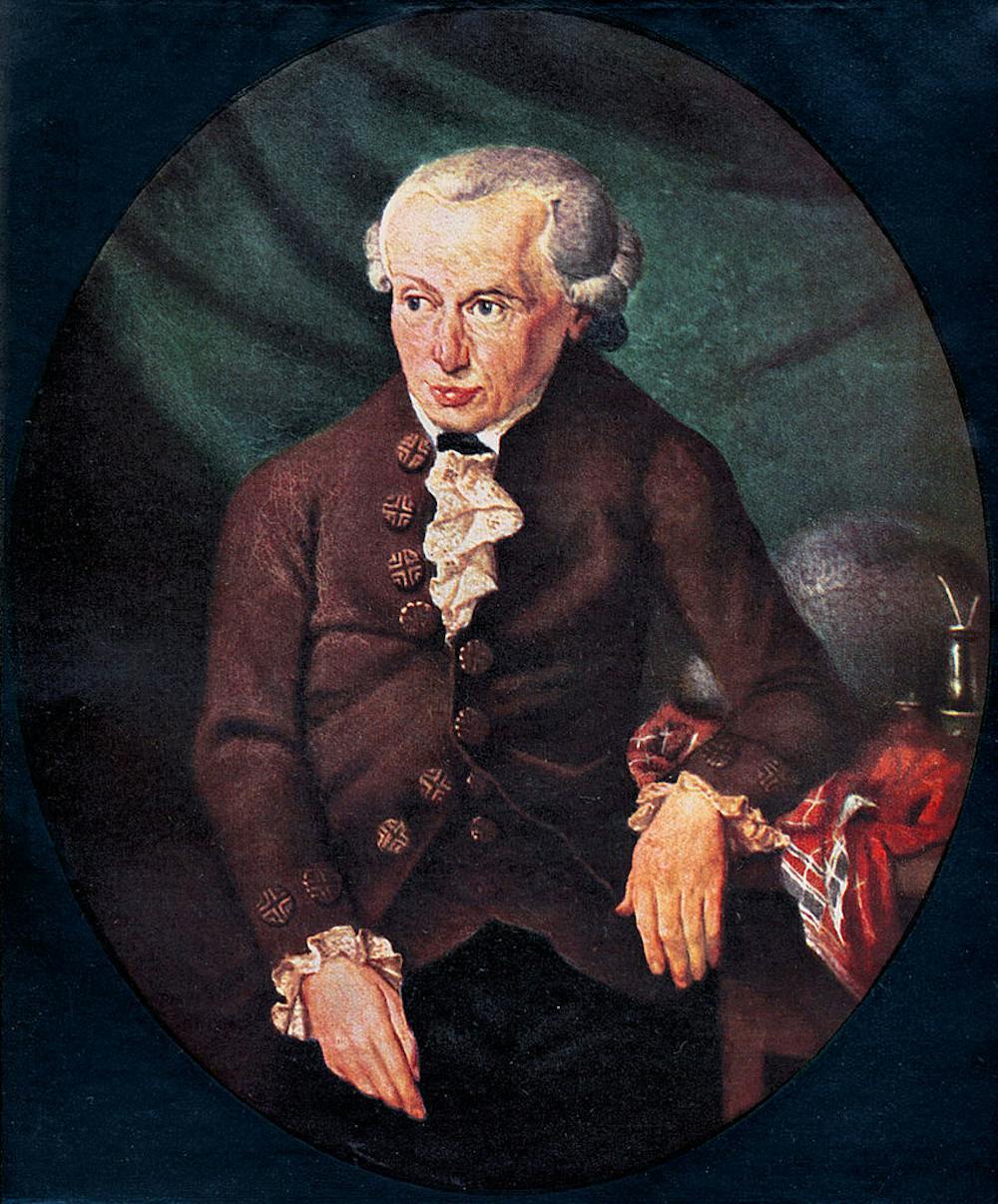
A centuries-old painting of a serious-looking seated man in a powdered wig and brown suit.
Kant’s ideas about respect are still helpful for thinking through sticky situations today.
Culture Club/Hulton Archive via Getty Images
Kant expressed this core idea nicely. Even someone encountering a person whose opinion seems obviously wrong, Kant wrote, has “a duty … to suppose that his judgment must yet contain some truth and to seek this out.” This isn’t merely a suggestion to listen to people one wants to persuade. Instead, respect demands actively seeking out truth in what the other person says. 
 
In fact, some studies suggest that intellectual humility makes people better able to evaluate the strength of arguments. This means that intellectually humble people may be more likely to recognize that a persuader’s arguments are actually better than their own, and have to reconsider their views – which can pose a real risk to someone’s self-esteem.
 
But being open to other people’s reasons also increases the chance of their being open to yours – a form of reciprocity in which you take turns learning from each other. Decades of psychological research have shown that, especially in two-person exchanges, people value reciprocity in communication and see it as a way of treating each other fairly. 
 
In other words, if you show openness to learning from someone else, rather than just lecturing, it may seem fair to them to be open to you too. 
 
That is why faking this kind of respect can be a powerful manipulative tool. A psychologically savvy canvasser, for instance, can manipulate swing voters by pretending to be open to learning about their own opinions. But this carries its own risk, since people who discover they have been manipulated may resent it.

3. Live and let live

Kant’s central principle of respect is that one should “not degrade any other as a mere means” to one’s ends. This requires people to rein in their own self-love out of consideration for others. In popular culture, this might be summed up in the idea of “live and let live”: Other things being equal, we shouldn’t interfere in other people’s lives. 
 
Overlooking this principle can make persuasion disrespectful in a variety of ways, even when the persuader has good intentions. The philosopher George Tsai argues that this happens in cases of unsolicited advice: Imagine, he writes, that while your date goes to the restroom, an eavesdropping stranger tells you that she thinks you could do better. Even if the stranger is right, it’s simply none of her business.
Two men in business attire chat while a woman in a sleeveless white top listens in, looking concerned.
Having an opinion doesn’t mean you need to share it.
DragonImages/iStock via Getty Images Plus
Another example of how interference can make persuasion disrespectful is that changing someone’s mind can harm their dignity and disrupt their connection to their community. For example, say that you persuade a relative who lives in a small ranching community to become vegan. That change might lead to their being ostracized by people they rely on.
 
Because persuasion can affect other people’s lives in many ways, this third component of respect is the most difficult to adhere to. Sometimes, people may be justified in interfering in other people’s lives, such as if lives are at stake or in particularly close relationships – but those are special circumstances.

One conversation at a time

In class, my students attempt to persuade one another four times, using a range of formats: five minutes vs. a whole week; in person vs. over Zoom. At the end, they score one another on effectiveness and respectfulness.
 
My students are smart, informed and passionate, and the class offers them a positive, carefully structured environment. Despite all that, they almost never succeed in persuading one another – at least not when it comes to politics.
 
Something interesting happens, though, when they let respect guide their conversations. Instead of launching into lectures, they start seeing each exchange as an opportunity to learn from each other – perhaps as an opportunity to leave their partner thinking about something in a new way, without fully persuading them.
 
If you approach our conversation as a chance to exchange ideas, without trying to change my mind, you may lay a cornerstone of trust. That, in turn, could make me more receptive to similar viewpoints in the future – even if I’m speaking with other people. Truly respectful political persuasion might best be seen as an extended team effort, not a one-time, one-person task.
___The Conversation
 
Colin Marshall, Associate Professor of Philosophy, University of Washington
 
This article is republished from The Conversation under a Creative Commons license. Read the original article.
__________
 
Is there in fact a "Science of Deliberation?" See also "The Truth About Denial." And, how about "Mental Immunity" from disinformation and fabulism? Hmmm... "Collective Illusions?" After all, we all want to be "influential," right?

Monday, May 20, 2019

Define "evidence"

Ahhh... "Just the facts." 

My (non-dictionary) definition:
EVIDENCE: Information which renders a true conclusion more likely, or (much more rarely), constitutes proof of a true conclusion (a.k.a. "dispositive evidence").
Anyone see anything at least episodically problematic there? Say tuned. Lots to unpack in this upcoming post. Let's just say for openers I'm a bit of a pedantic stickler for precise definitions as a starting point for rational and productive discourse (e.g., "Deliberation Science," anyone?).

It behooves us to all be singing from the same sheet of music.
“EVIDENCE,” OXFORD DICTIONARY

1. The available body of facts or information indicating whether a belief or proposition is true or valid. ‘the study finds little evidence of overt discrimination’

1.1 (Law) Information drawn from personal testimony, a document, or a material object, used to establish facts in a legal investigation or admissible as testimony in a law court. ‘without evidence, they can't bring a charge’


1.2 Signs or indications of something. ‘there was no obvious evidence of a break-in’
BTW, apropos of 1.1, my trusty Black's Law Dictionary (10th ed.) devotes five pages [pp 576-581] to the word "evidence" and its related phrases and usages (most of them obviously pertaining to the legal domain).
"Information which renders a true conclusion more likely..." The briefest reflection extends that definition to sensory organ initiated perceptions. Is that rustling in the bushes outside your tent that of a bear? Does that acute smell of gas portend an incipient explosion? Is that "sound of 100 approaching freight trains" evidence of a tornado headed your way? Is that mole cancerous? etc.
In terms of human "arguments," any assertive premise statement ("truth claim") that fails to improve the likelihood of a true conclusion is at best simply rhetorical noise, and at worst a rhetorical fallacy. We have too much of it in our discourse.
SPEAKING OF "THE LAW"

A recent article in my AAAS Science Magazine made me aware of this:
H. R. 4174, ‘‘Foundations for Evidence-Based Policymaking Act of 2018’’—01/14/2019, Public Law No: 115-435.
"There is no natural constituency for evidence-based policy. It should, by rights, be the public who wants the most from their government (and their public funds). But the public, like most politicians, is often not aware of the ins and outs of evaluation methods and evidence. Think tanks and academics have long filled this gap and will likely continue to play key roles. But legislation signed into law in early 2019 could transform the way U.S. government officials design programs by introducing more scientific evidence into the process…"
Really? Under a Donald Trump administration? How did that happen? He signed the final bill. We can rest assured he carefully read every word of its 29 pages.
‘SUBCHAPTER II—FEDERAL EVIDENCE-BUILDING ACTIVITIES
 

‘‘§ 311. Definitions
‘‘In this subchapter:

‘‘(3) EVALUATION.—The term ‘evaluation’ means an assessment using systematic data collection and analysis of one or more programs, policies, and organizations intended to assess their effectiveness and efficiency.
‘‘(4) EVIDENCE.—The term ‘evidence’ has the meaning given that term in section 3561 of title 44.
44.USC.3561

(6)Evidence.—
The term “evidence” means information produced as a result of statistical activities conducted for a statistical purpose.

(10)Statistical activities.—The term “statistical activities”—
(A) means the collection, compilation, processing, or analysis of data for the purpose of describing or making estimates concerning the whole, or relevant groups or components within, the economy, society, or the natural environment; and
(B) includes the development of methods or resources that support those activities, such as measurement methods, models, statistical classifications, or sampling frames.

(12)Statistical purpose.—The term “statistical purpose”—
(A) means the description, estimation, or analysis of the characteristics of groups, without identifying the individuals or organizations that comprise such groups; and
(B) includes the development, implementation, or maintenance of methods, technical or administrative procedures, or information resources that support the purposes described in subparagraph (A)...
Well, isn't that interesting? Enter "Data Science," anyone?
A couple of passing thoughts on evaluative classification of empirical "evidence." In conventional usage, we often resort to qualitative ordinal ranking, with evidence strength thought of as ranging from "dispositive" to "nll," with (descendingly) "extremely strong," "strong," "moderate," "weak," "extremely weak" designations in between. Sometimes we gussy things up by stating nominally "quantitative" evidentiary "probabilities" when, properly, to cite just one caveat, we should be proffering what are really "probability estimates." The potential problems with inferential statistics bloom exponentially from there. See, e.g., my 1998 thesis rant on drug testing lab stats naivete.
UPDATE: just in, of relevance,
EPA Changes Math to Allow Burning of More Coal
___

"EBM," ANYONE?

"Evidence-Based Medicine." Not universally loved, historically. Still often dissed as anti-innovation "cookbook medicine" by apologists for "Eminence-Based Medicine."
"[S]ince antiquity, the mark of distinction of a learned man had been the certainty of his knowledge. A doctor knew—he did not need to test his kind of knowledge empirically because this would imply acknowledgement of uncertainty."—Ulrich Tröhler
DONALD TRUMP CLAIMS "EXPERTS ARE ALWAYS WRONG ABOUT EVERYTHING. CONSEQUENTLY..."

Are they?

The Neurologica Blog asks "How do we know?"
"...Science itself is not a set of “facts” but a method of exploration. It starts from specific premises, and it doesn’t even hold that these premises are Truth, just that they are necessary for science to function. We call these premises methodological naturalism – every material effect has a material cause, and there is no magic or miracles (arbitrary suspensions of the laws of nature). At least you cannot invoke such miracles when making an argument. Based on this premise, science uses logic and observation not to prove things correct, but to prove things wrong. (That is a key point – you can never prove something wrong if you can invoke miracles as needed.) By conducting experiments and making observations science can exclude hypotheses that are incompatible with the evidence. Whatever is left, the explanations that have survived dedicated attempts at proving them wrong, are then considered tentatively to be possible or even probable explanations. The longer a scientific notion survives, and the more independent lines of evidence that lead us to the same conclusion, the higher our confidence in that idea..."
SCIENCE MAGAZINE UPDATE
"At a time rife with a disregard for facts and the methods used to produce them (even when they portend a catastrophic future), perhaps [C.P.] Snow, were he alive today, would encourage scientists and humanists, engineers and artists, to focus on the one culture to which we all  belong."
In May 1959, Charles Percy Snow took the stage at the Senate House in Cambridge to give the annual Rede lecture. The British chemist-turned-novelist’s appearance—a rotund jowly face atop a bulky, shambling figure—led wags to comment that the speaker was well rounded in more than just his intellect.

Snow’s talk, titled “The Two Cultures and the Scientific Revolution,” broadly diagnosed a problem he believed challenged the future of all western democracies. For years, he had noted that British humanists and scientists shared “little but different kinds of incomprehension and dislike” (1, 2). The inability of literary scholars and scientists to understand and communicate with one another was not just an intellectual loss, Snow claimed, but something that threatened the ability of modern states to address the world’s problems...
Great, extensive, timely review I ordered the book. Only six bucks in paperback.

YET ANOTHER BOOK TO CONSIDER

This was cited in the notes of the Science Magazine article:


Downloaded it, read it in short order. Excellent.
The Cold War was a time when psychology came into its own as a tool of social analysis. With marked rapidity the structural, institutional, and economic ways of understanding American society that had dominated academic and public discourse in preceding decades gave way to explanations framed in terms of the psyche…

If psychology could explain everything, there was one aspect of the self that held special importance to the intellectual and policy worlds: open-mindedness. Open-mindedness was a kind of mind characterized by autonomy, creativity, and the use of reason. To the scientific experts, intellectuals, and policy makers who developed and utilized the concept of the open mind, this type of self served simultaneously as model and ideal of national and intellectual character. They projected upon the open mind their aspirations for the American character and liberal pluralist democracy, for scientific thinking and true intellectual inquiry. Indeed, for some of these individuals the open mind transcended the academic and political, as its traits were even conscripted to serve as criteria for human nature itself.

Cold War intellectuals and policy makers saw in open-mindedness solutions to the most pressing problems faced by the nation. Those who defined American foreign policy believed that open-minded autonomy, a hallmark of American virtue, posed a threat to the communist system. Traditional or authoritarian societies could not be sustained in the presence of a citizen body that thought autonomously, but for a modern democracy like America, open-mindedness would have the opposite effect, offering social cohesion. The open mind meant a respect for individuality, tolerance of difference, appreciation of pluralism, and appreciation of freedom of thought. If citizens were sufficiently equipped with these virtues, thought policy makers and social critics, the nation would flourish…


Cohen-Cole, Jamie. The Open Mind (pp. 1-2). University of Chicago Press. Kindle Edition.
I wrote an Amazon review.
I emailed the author: "You are one damn fine scholar." A compelling tour through my 73 years (and my many years working in science / engineering / tech domains) and the decades that preceded them. "Open-mindedness" has hit a serious rough patch in recent years--in particular in the turbulent wake of the last Presidential election. We are coming upon a time when it may well soon be ruled at the highest level that behaviors grounded in "open-mindedness" violate some peoples' Constitutionally-protected "religious freedom," and that, reciprocally, behaviors stemming from irrational, close-minded prejudice will be ruled as "Constitutionally-protected" on grounds of "religious freedom." (Not just "opinions," actions.)

You want a good historical understanding of how we got here, read this book. Beyond its erudition and cogent observations, I found it a FUN read.
_____________

More to come...