Search the KHIT Blog

Friday, May 12, 2023

Donald Trump on reproductive rights: CNN "Town Hall"

COLLINS: Mr. President. I want you to meet Julie Miles, a registered nurse from Merrimack. She’s a Republican who voted for you in 2020. Julie, what’s your question for the president?

QUESTION: Thank you, Mr. President. I appreciate you answering this question this evening. How do you plan to appeal to women voters in New Hampshire who are concerned about the Dobbs decision and how states may change their laws?


TRUMP: … it was such a great victory … Getting rid of Roe v. Wade was an incredible thing for pro-life because it gave pro-life something to negotiate with. Pro-life had absolutely nothing, being stuck in Roe v. Wade to negotiate with … for 50 years, this has been going on. I was able to do it, and I was very honored to do it. But by doing it, things are happening that are very, very positive … I consider the other side to be radical. Because the other side, under Roe v. Wade and other things, the other side, they’re radical. Because they will … “Rip the baby out of the womb at the end of the ninth month, they will kill the baby in the ninth month.” If you look at that crazy governor of Virginia … where he said, “No, the baby will be born and then we’ll decide,” essentially whether or not to execute the baby … It’s not the pro-life people that are radical…

COLLINS: … and you’re back in the Oval Office, and you get legislation to your desk, would you sign a federal abortion ban into law?


TRUMP: What I will do is negotiate so that people are happy. But the fact that we were able – I was able – I’m so proud of it …

COLLINS: So you – just to be clear – just to be clear, Mr. President, you – you would sign a federal abortion ban into law?

TRUMP: Well, I said this. I said this. I want to do what’s right. And we’re looking. And we want to do what’s right for everybody … But now, for the first time, the people that are pro-life have negotiating capability, because you didn’t have it before. They could kill the baby in the ninth month or after the baby was born. Now they won’t be able to do that …

COLLINS: But I think this is a really important question for you to answer … would you sign a federal abortion ban into law?

TRUMP: Well, … I am. First of all, I am honored to have done what I did, and a lot of people said – they said, “In 150 years, he’s now the most consequential president because he saved so many lives.” And I’m honored to have done it … And – and because of what I’ve done, we now have a great negotiating ability. That’s what I do in life. I negotiate …

COLLINS: But what do you mean “negotiating ability?” Because the question that Republicans have, and some of your allies on Capitol Hill say that they want to introduce legislation when it comes to banning abortion. If they send it to your desk, would you sign it? … Where’s President Trump?

TRUMP: President Trump is going to make a determination what he thinks is great for the country and what’s fair for the country. But the fact that I was able to terminate Roe v. Wade, after 50 years of trying – they worked for 50 years. I’ve never seen anything like it. They worked – and I was even – I was so honored to have done it. We are in a very good negotiating position right now, only because of what I was able to do.

And remember this, again, you talk about radicalism. People that will kill a baby in the ninth month or the eighth month or the seventh month, or after the baby is born, they’re the radicals, not the pro-life people.

COLLINS: I just want to give you one more chance, though, because you did not answer whether or not you’d sign a federal abortion ban or how many weeks into pregnancy you believe abortion should be banned.

TRUMP: Yeah, but I’ve given you…

COLLINS: Can you answer either of those tonight?

TRUMP: I’ve given you the answer probably four times already.

COLLINS: Which one is it, then?

TRUMP: I’m looking – I’m looking…

COLLINS: You haven’t answered it.

TRUMP: … at a solution that’s going to work – very complex issue for the country. You have people on both sides of an issue. But we are now in a very strong position. Pro-life people are in a strong position to make a deal that’s going to be good and going to be satisfactory for them … If you weren’t able to get rid of – you wouldn’t even be having a discussion if you weren’t able to get rid of Roe v. Wade, which put pro-life in a dead position, a horrible position. They could kill the baby at any time they wanted to. But we did something that nobody thought was do-able … I’ll make the right decision.
Excerpted from the full transcript for your convenience and sanity.

"Pro-life people are in a strong position to make a deal that’s going to be good and going to be satisfactory for them."
 
For THEM.

BobbyG: 
A woman's reproductive decisions are rightfully no one else's business. 
__________
 

Wednesday, May 10, 2023

Unfortunately or Fortunately

the WHICH hunt will continue.
   
 Which case will he lose next?
 
AND THE HITS JUST KEEP ON COMIN'
 
Oopsie: 

We fixin' to run outa popcorn... OK, George, look on the bright side. Maybe you won't have to have a cellie, there'll be so much spare bed space courtesy of the Democrats.
 
UPDATE
Predictably lame. Transcript.
 
OK, CLASSMATES, RECESS IS OVER
 
Back onto real-world exigent topics.  First, another excellent new read:

Science doesn’t sit very comfortably in American society. Some of us believe that it’s the foundation of social progress and national security. They worry that we aren’t doing enough to support it, that we are failing to invest in research that will improve our lives and spur innovation to compete with our adversaries around the globe for military and economic dominance. Others are convinced that science is leading the country astray, believing that scientists routinely push suspect medical treatments on the public, make politically biased recommendations, or, in the case of global warming, have engineered a hoax of proportions never before seen. Science often seems trapped in a never-ending game of king-of-the-hill with advocates forever boosting science toward the top—seeking to expand its status and influence inch by inch—and skeptics trying equally hard to knock it down in the eyes of the public. It’s an odd relationship to be sure.

The cultural struggle over the place of science in our lives isn’t new. There have always been science boosters among us. The truth is that nearly 75 percent of the public is firmly behind science, believing that its benefits outweigh any harms. But there have always been detractors too. Long before the climate-change and COVID-vaccine skeptics, there were the anti-vaccination societies in the late nineteenth century, opposition to science in the 1930s based on its perceived immorality, and a prominent anti-drinking-water-fluoridation movement in the 1950s, among others.

It seems that the detractors have gotten the upper hand of late…


Rudolph, John L. Why We Teach Science (pp. 14-15). OUP Oxford. Kindle Edition.

I cited an earlier book by Dr. Rudolph in a prior post, "Define 'Science'."
 
OK, science education needs to step up its game, ja"
Build a Science Education Based on Evidence

The foundation of science is its commitment to the evidence of our senses, that the hypotheses, theories, and conjectures scientists come up with are all eventually tested by comparing them to what happens in the world. However, we continue to allow a whole series of untested working hypotheses guide students’ experiences in science classrooms across the country.
  • We assume that learning the scientific accounts and explanations of various aspects of the world—of phase changes, heat transfer, species variability, or human immune response—will enable us to make better everyday decisions.

  • We imagine that engaging in the process of science—doing labs, collecting water samples, or measuring daily temperature and humidity—will help us think critically and reason logically in our day-to-day affairs.

  • We accept—even double down on—the belief that raising standardized test scores and increasing Advanced Placement enrollments will spur technological innovation and lead to national economic prosperity.

  • And we feel in our hearts that those higher science test scores and the repeated immersion in science laboratories will somehow translate into a public willing and able to intelligently debate and come to enlightened policy decisions about some of the most challenging science-related challenges of our time.
Yet, the problem remains that we have no hard evidence to support any of these assumptions or working hypotheses about science education—certainly not for the science education we currently have or even that the latest policy initiatives aspire to. It seems beyond comprehension that the overwhelming majority of scientists and science educators continue to maintain their commitments to these faith-based positions without seeking evidence that would support or refute them…

… I’ve tried to point out the flaws in these assumptions. There is plenty of evidence to draw on from a variety of sources, including the fields of developmental psychology, science communication, cultural cognition, economics, sociology, history, and corners of science education. And we have data from agencies such as the Census Bureau, the Bureau of Labor Statistics, and the National Center for Education Statistics, and even from our own experience—if we stop to reflect on it—to help us see the situation before us. We only need to use this knowledge of how education works, how people make sense of the world around them, and how they interact with others individually and collectively to create the kind of science education we desperately need.

… There is plenty of evidence, in fact, that what we’re currently doing is making things worse, that what we’re doing, while seeming to meet pressing societal needs, is actually making it harder for science to grow and thrive as an essential part of our culture. What I’ve laid out in these pages is a reason to change, a reason to do something different from what we’ve been doing for the past sixty years or so. My only hope is that we begin to really think about why it is we think science education is so important to our future and work to create a science education that will realize that vision—that is, to think about why it is we teach science, and why we should.
[John Rudolph, pp. 181-183]
Yeah. "Define 'Evidence'."
__________
 

Friday, May 5, 2023

Science.org Parkinson's update


Surfed over to check my Science Magazine website. This story led.
 
Apparently not (yet) paywalled. I wasn't logged in at the time (I'm an AAAS member).
SEVERAL YEARS AGO, Tim Greenamyre, a neuroscientist and physician who directs the Pittsburgh Institute for Neurodegenerative Diseases at the University of Pittsburgh (Pitt), began to notice unsettling symptoms in his own body. He couldn’t smell things. He was constipated. He was shouting and kicking in his sleep. His left arm didn’t swing when he walked.

In July 2021, Greenamyre turned to a neurologist colleague to confirm the diagnosis he already suspected. He had Parkinson’s disease, an illness he has devoted himself to treating and trying to cure. Over the course of his long and productive career, the 67-year-old has not only won the admiration of his patients and clinical colleagues, but also developed a widely used animal model of Parkinson’s and contributed key insights into environmental triggers. That work exposed him to chemicals that induce the disease in rodents, a possible factor in his own illness.

“The irony is obvious,” says Greenamyre, a shy man with a dry sense of humor and a penchant for practical jokes who, to the unpracticed eye, shows few if any signs of the disease. (For now, he says, medication is helping.)

For colleagues, the news has been shocking and heartbreaking. “I was so deeply affected I could not respond right away,” says Laurie Sanders, a neuroscientist who studies Parkinson’s at Duke University School of Medicine and is a former Greenamyre postdoc. “All I really honestly wanted to do was just drive to Pittsburgh and give him a hug.”

Nearly all of Greenamyre’s 200 or so Parkinson’s patients, some of whom he has looked after for more than a decade, will learn of his diagnosis from this article, in which he is reluctantly making his condition public because it’s becoming the subject of rumors. He worries it will distract them. “I want their visits to be focused on them, not on me,” he says.

Compounding the irony, Greenamyre’s diagnosis comes at a time of fresh optimism among Parkinson’s researchers, who believe they might at last be closing in on treatments that could slow or stop the progression of the second most common neurodegenerative disease after Alzheimer’s. Parkinson’s disease afflicts roughly 1 million people in the United States, with nearly 90,000 new cases diagnosed each year. Globally, more than 8.5 million people have the disease, which is the fastest growing neurological disease in the world by one estimate.

The classic motor symptoms of Parkinson’s disease, described in 1817 by English surgeon James Parkinson, result from the degeneration of cells that produce the neurotransmitter dopamine in the substantia nigra, a midbrain area involved in movement control. This causes a variety of symptoms including, most commonly, tremors, muscle stiffness, and trouble with balance and coordination. As the disease advances, people may have difficulty speaking and initiating movement. Later, many develop dementia. Parkinson’s itself doesn’t kill, but its complications, particularly aspiration pneumonia due to difficulty swallowing, often do.

Dopamine, delivered in an oral drug combination of levodopa (L-Dopa) and carbidopa, has been the front-line therapy since it was approved in the U.S. in the 1970s, although it remains unavailable or unaffordable for many globally. The drug improves motor symptoms, but with time it begins to wear off more quickly, and sometimes-intolerable side effects— including involuntary, jerking movements called dyskinesia—frequently develop. Fifty years on, the failure of science to produce a therapy that stops the disease instead of targeting its symptoms has been painful and frustrating for patients and their families…
A fairly long, technical-clinical read. I loved it. It was quite a personal gut punch, though.
 
I too have Parkinson's.
 

At 77, I'm 10 years older than Dr. Greenamyre. In general, I'm just grateful to still be alive. My PD is a steadily worsening hassle, but, everyone should have my problems. Me and my 2018 bovine replacement aortic valve just tickin' along ok.

And, Sinemet still
DR. GREENAMYRE
 
We're lucky to have these people. Doc, I wish you the best.
Like the million other Americans with Parkinson’s, Greenamyre’s patients are all waiting for something beyond dopamine. “It’s still a disease without a cure,” Hannan says. “I keep asking every time I come: ‘Is there something close?’”
APROPOS, FROM A PRIOR POST

JUST LEARNED A NEW ACRONYM

"MRgFUS"

What? Cheryl hipped me to an ad in Baltimore Magazine touting "Magnetic Resonance Guided Focused Ultrasound" tx now approved by FDA and being offered by the University of Maryland Medical Center (and elsewhere).

A non-invasive ultrasound treatment for Parkinson's disease that was tested in a pivotal trial led by University of Maryland School of Medicine (UMSOM) researchers is now more broadly available at the University of Maryland Medical Center (UMMC). Recent FDA approval of a device used in the procedure effectively opens up access to focused ultrasound beyond clinical trial participation. 

The device, called Exablate Neuro and manufactured by Insightec, was approved in late 2021 by the U.S. Food and Drug Administration to treat advanced Parkinson's disease on one side of the brain. UMMC is one of only several sites in the Mid-Atlantic region with the capabilities and expertise to perform focused ultrasound for Parkinson's disease and other movement disorders. The procedure requires a multi-disciplinary team, including a neurosurgeon, movement disorder neurologist, and neuroradiologist...

CPT Code 0398T (People gotta get paid.)
___

I checked into it. Efficacy looks pretty good (though the "n" remains small based on the trials). $15k outa pocket—NO insurors cover it (and we're Kaiser MA anyway). I got the money, but, I'd be pissed were I a non-responder.

More to come.
__________
 

Wednesday, May 3, 2023

"Deliberation Science?" A Creative Commons cross-post

Respectful persuasion is a relay race, not a solo sprint – 3 keys to putting it in practice

Sure, you can try to force people to agree with you–
but respectful persuasion is something else.
Andrii Yalanskyi/iStock via Getty Images Plus

Colin Marshall, University of Washington

The 2024 presidential election is still a year and a half away, but it can feel much closer: President Joe Biden has made his reelection bid official, presumed candidates are giving out-of-state speeches, pundits are already weighing in on nomination hopefuls, and social media is, as ever, a mess of people trying to persuade strangers to back their favorite. All for good reason: Even a little political persuasion in the next year could change the course of history.
 
I’m a philosopher who studies and teaches the ethics of persuasion. My students are eager to find ways to persuade their friends, family and neighbors about political issues such as climate change and abortion. Moreover, many of them want to persuade with integrity: They want to engage the people they’re talking with respectfully, instead of using the manipulative tricks they regularly see in politics and marketing. But what is respectful persuasion, and what distinguishes it from disrespectful manipulation?
 
There’s no simple formula for respectful persuasion. However, some philosophers see crucial hints in the work of 18th-century philosopher Immanuel Kant, whose theory of respect has guided many ethicists and policymakers for the past two centuries.
 
Drawing on Kant’s work, and that of other philosophers inspired by him, I think we can isolate three key components of respectful persuasion. This isn’t just an academic exercise. My students and I have found that these factors increase the chances of deep, meaningful conversation.

1. Giving reasons

Broadly speaking, reasons are considerations that rationally support some belief or action, including both empirical evidence and abstract arguments. For example, astronauts’ pictures of a round Earth rationally support the belief that the Earth is round. When we sincerely give someone reasons, we show respect for their rationality: their ability to recognize good reasons. 
 
By contrast, a hallmark of manipulation is bypassing rationality, such as repeatedly exposing people to false statements to make them appear true – something that psychologists call the “illusory truth effect.”
 
Manipulation can be effective, but psychologists have found that persuasion using reasons is more durable than nonrational persuasion such as repetition-based tricks. For example, someone who comes to believe in climate change based on the scientific evidence probably will not be as easily swayed later on by repeated exposure to climate skepticism. The rational support that good reasons provide for a belief can make that belief more stable.

2. Being open to learning

Giving reasons is not difficult by itself. The second component of respectful persuasion, however, is much more challenging: being open to receiving the other side’s reasons – a form of intellectual humility. This is especially hard for persuaders, since they have to give up some of the time they would have used to make their case.
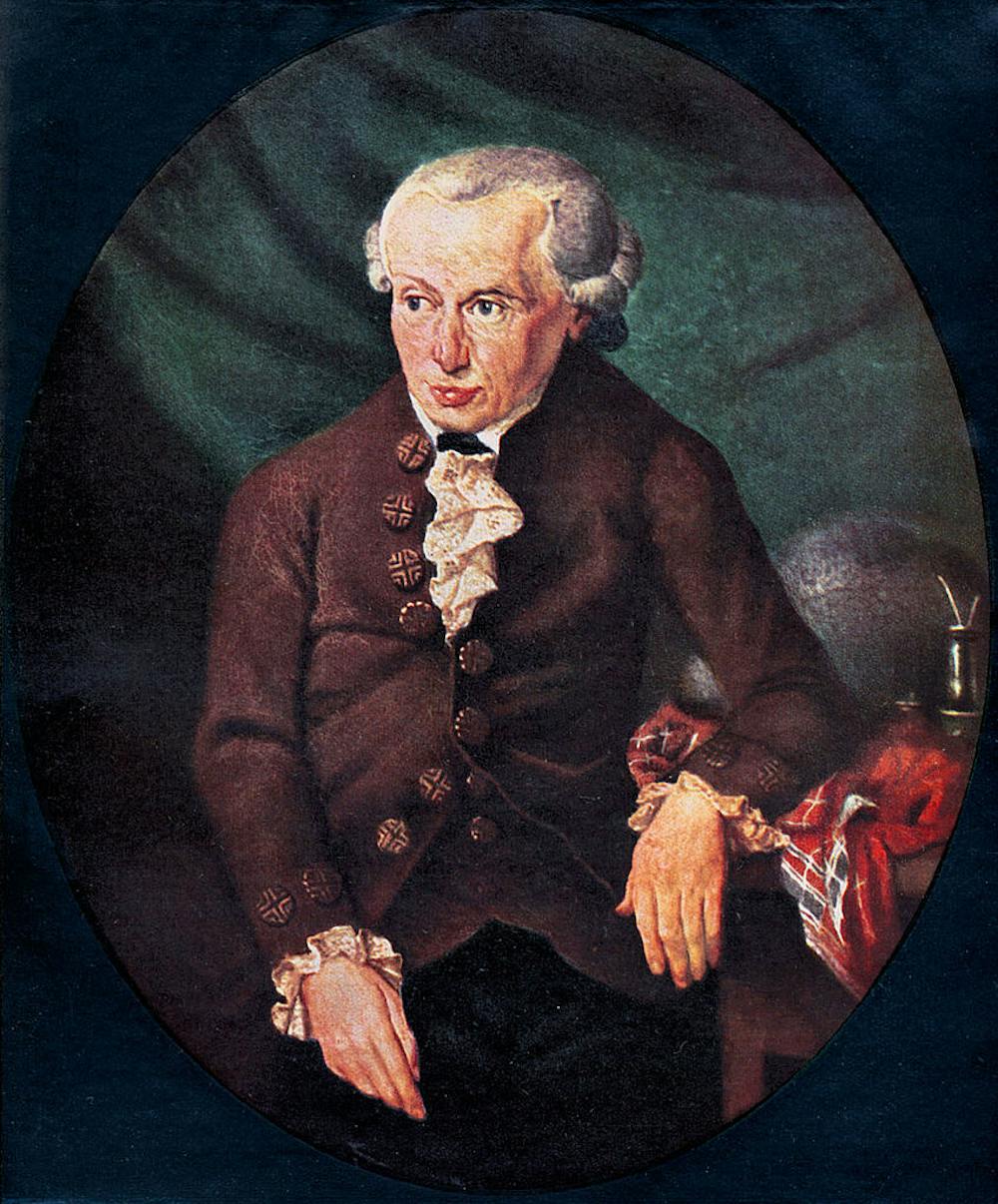
A centuries-old painting of a serious-looking seated man in a powdered wig and brown suit.
Kant’s ideas about respect are still helpful for thinking through sticky situations today.
Culture Club/Hulton Archive via Getty Images
Kant expressed this core idea nicely. Even someone encountering a person whose opinion seems obviously wrong, Kant wrote, has “a duty … to suppose that his judgment must yet contain some truth and to seek this out.” This isn’t merely a suggestion to listen to people one wants to persuade. Instead, respect demands actively seeking out truth in what the other person says. 
 
In fact, some studies suggest that intellectual humility makes people better able to evaluate the strength of arguments. This means that intellectually humble people may be more likely to recognize that a persuader’s arguments are actually better than their own, and have to reconsider their views – which can pose a real risk to someone’s self-esteem.
 
But being open to other people’s reasons also increases the chance of their being open to yours – a form of reciprocity in which you take turns learning from each other. Decades of psychological research have shown that, especially in two-person exchanges, people value reciprocity in communication and see it as a way of treating each other fairly. 
 
In other words, if you show openness to learning from someone else, rather than just lecturing, it may seem fair to them to be open to you too. 
 
That is why faking this kind of respect can be a powerful manipulative tool. A psychologically savvy canvasser, for instance, can manipulate swing voters by pretending to be open to learning about their own opinions. But this carries its own risk, since people who discover they have been manipulated may resent it.

3. Live and let live

Kant’s central principle of respect is that one should “not degrade any other as a mere means” to one’s ends. This requires people to rein in their own self-love out of consideration for others. In popular culture, this might be summed up in the idea of “live and let live”: Other things being equal, we shouldn’t interfere in other people’s lives. 
 
Overlooking this principle can make persuasion disrespectful in a variety of ways, even when the persuader has good intentions. The philosopher George Tsai argues that this happens in cases of unsolicited advice: Imagine, he writes, that while your date goes to the restroom, an eavesdropping stranger tells you that she thinks you could do better. Even if the stranger is right, it’s simply none of her business.
Two men in business attire chat while a woman in a sleeveless white top listens in, looking concerned.
Having an opinion doesn’t mean you need to share it.
DragonImages/iStock via Getty Images Plus
Another example of how interference can make persuasion disrespectful is that changing someone’s mind can harm their dignity and disrupt their connection to their community. For example, say that you persuade a relative who lives in a small ranching community to become vegan. That change might lead to their being ostracized by people they rely on.
 
Because persuasion can affect other people’s lives in many ways, this third component of respect is the most difficult to adhere to. Sometimes, people may be justified in interfering in other people’s lives, such as if lives are at stake or in particularly close relationships – but those are special circumstances.

One conversation at a time

In class, my students attempt to persuade one another four times, using a range of formats: five minutes vs. a whole week; in person vs. over Zoom. At the end, they score one another on effectiveness and respectfulness.
 
My students are smart, informed and passionate, and the class offers them a positive, carefully structured environment. Despite all that, they almost never succeed in persuading one another – at least not when it comes to politics.
 
Something interesting happens, though, when they let respect guide their conversations. Instead of launching into lectures, they start seeing each exchange as an opportunity to learn from each other – perhaps as an opportunity to leave their partner thinking about something in a new way, without fully persuading them.
 
If you approach our conversation as a chance to exchange ideas, without trying to change my mind, you may lay a cornerstone of trust. That, in turn, could make me more receptive to similar viewpoints in the future – even if I’m speaking with other people. Truly respectful political persuasion might best be seen as an extended team effort, not a one-time, one-person task.
___The Conversation
 
Colin Marshall, Associate Professor of Philosophy, University of Washington
 
This article is republished from The Conversation under a Creative Commons license. Read the original article.
__________
 
Is there in fact a "Science of Deliberation?" See also "The Truth About Denial." And, how about "Mental Immunity" from disinformation and fabulism? Hmmm... "Collective Illusions?" After all, we all want to be "influential," right?

Monday, May 1, 2023

Reflecting on the Electronic Medical Record

Happy MayDay, btw.

Ten years ago this month I took my retirement from HealthInsight, the Nevada-Utah Medicare QIO. It'd been my 3rd tenure with them, and the focus of this work was on the federal "Meaningful Use" initiative, via which to accelerate the conversion of outpatient primary care clinics from paper-based medical records to HHS "Certified EMRs" (Electronic Medical Records, also more broadly dubbed "EHRs"—Electronic Health Records).
 
The goal—and assumption—was quantifiably improved health care outcomes resulting from having digitized current and longitudinal patient data always close at "hand" (literally, via keystrokes or mouse clicks).
 
I was certainly a Kool-aid drinking True Believer at the outset, particularly in light of my lengthy former work as a laboratory programmer and QC statistician (pdf) in Oak Ridge, and my abiding interest in all things QI as an ASQ Certified Quality Engineer. Things would turn out to be considerably more complex, however.
 
This morning I opened my New Yorker to find this:

The Curious Side Effects of Medical Transparency
When we peer into our patient portals, we don’t always see ourselves more clearly.
By Danielle Ofri


One afternoon not long ago, I sat entering notes into a patient’s medical record. She was in her forties, and her labs showed anemia. The causes of anemia range from menstruation to cancer, and so pinpointing the correct underlying diagnosis is critical. Physicians are trained to formulate a full roster of possibilities, known as the differential diagnosis, and then to work down the list systematically. We’re taught to cast a wide net—celiac disease, parasitic infections, thalassemia, lead poisoning, liver disease, B12 deficiency, myeloma, sickle-cell disease, G6PD deficiency—because you’ll never make a diagnosis if you haven’t included it in your differential.

But I hesitated before entering my differential into the computer system. Should I include the more serious possibilities, even though they were much less likely? In the past, I wouldn’t have thought twice about it, as the chart served primarily as a tool for the medical team to communicate among ourselves. But a new law, the 21st Century Cures Act, had recently been fully implemented, making medical records open to patients by default, in real time, including doctors’ notes. My in-box was already jammed with panicked messages from people convinced that they had catastrophic illnesses, based on minuscule lab discrepancies and panic-inducing Google searches. How would my patient react to seeing my ruminations about possible colon cancer or duodenal ulcer in the note?…

From my end of the stethoscope, it’s always seemed obvious that patients should own their medical records, and be able to see them. But openness can be challenging in practice. When our hospital initially rolled out its patient portal, a few of my older patients asked that I remove references to erectile dysfunction from their medical records. Their adult children handled the household tech, they explained, and my patients preferred to keep their Viagra prescriptions private. In other cases, multiple family members can access a patient’s chart, messaging me about test results and treatment plans, and it can be complicated to deduce the hierarchy of responsibility. Advocates have raised increasing concerns about the ease with which abusers can gain access to victims’ medical records; health-care settings have traditionally been secure places for people experiencing domestic violence, elder abuse, and human trafficking, but, with medical records becoming more accessible, patients may feel less certain that their words are safe.

At the same time, there are remarkable upsides to the transparent medical record. Patients are able to review their diagnoses, medications, and treatments at their own pace. They are able to share information with family members if they choose. They can spot errors—medications they are no longer taking, medical history that’s missing, allergies that aren’t noted. They can prepare for their next visit, and perhaps feel on more equal footing with their doctor. And they can obtain test results without the interminable wait for the doctor’s call.

Medicine is a highly specialized field, and like philosophy it involves the challenge of bridging the gap between experts and nonexperts. Regulations coming out of the Cures Act prohibit “information blocking,” and in effect require that test results and doctors’ notes be released immediately to patient portals. In practice, this means that patients often see results before their doctors do and are presented with a fire hose of raw data, shorn of context. And yet on many patient portals, because of algorithms that offer only a binary distinction between normal and abnormal, lab values that stray a meaningless half percentage point out of range are labelled as “abnormal” along with results that have grave portent. Doctors’ ubiquitous use of multicomponent lab panels, which bundle together many different tests, virtually guarantees that every patient receives at least one “abnormal,” which, in our hospital’s system, is written in blood-red letters with garish yellow highlighting, plus an exclamation point, just in case the takeaway hasn’t been fully conveyed. Even seemingly straightforward yes-or-no results, such as those from H.I.V. or covid tests, can be easily misinterpreted, since false positives and false negatives occur depending on the course of the disease and the operating characteristics of the test. Meanwhile, results such as CT scans and MRIs often contain paragraphs’ worth of information that looks alarming but isn’t. Try reading the CT report of your lumbar spine and not coming away convinced that you’ll be paralyzed for life.

Patients turn from the portal to Google, then flood doctors’ in-boxes with messages, panicked by the possibility that they have cancer or multiple sclerosis or any of an assortment of inglorious diseases that appear on the Internet grossly out of proportion to their actual prevalence. But some abnormal test results will indeed be real, and some will be seriously concerning. In our current transparent system, tests showing brain atrophy or liver masses are released to the portal in the same manner as cholesterol levels and blood-pressure readings. For some patients, discovering these results on their own can be empowering; for others, it can be catastrophic. In one devastating stretch of twenty-four hours, two of my patients learned of their cancers’ metastatic reappearance by way of the portal. Their in-boxes pinged with new test results; they read them before either their oncologist or I had even seen the scans, let alone called.

Each morning, I log into our medical-record system with a certain amount of dread. Which will I tackle first—the torrent of test results or the deluge of responses it’s inspired? Some patients will have to be talked down from a ledge over a minor lab abnormality. Far worse is the serious result to which I haven’t yet had time to formulate a response: a biopsy result for which I’ve not yet tracked down the appropriate specialist to sketch a road map, or an adrenal mass on a CT scan for which I’ve not yet orchestrated the intricate endocrine evaluation. In the past, I’d do the legwork before I called the patient. Now that buffer is gone, and I am pressured to act immediately: the patient has seen the result, and further delay would be unconscionable. This timbre of rush imperils thoughtful analysis, and I worry incessantly about missteps…
It's a paywalled long-read, and well worth your time.

Long-time Danielle Ofri FanBoy here.

Her most recent book.
CHAPTER ONE
JUMBO JETS CRASHING


“Is this really true?” my editor at Beacon Press emailed me skeptically. It was a spring afternoon in 2016 and she had tacked on an article from the British Medical Journal (BMJ) that caused headlines in the mainstream media (though it stirred up a healthy dose of criticism in academic circles).1 Medical error, the article concluded, was the third-leading cause of death in the United States.

I floundered for an answer to her question, and not just because I hadn’t been keeping up with the medical journals that pile up relentlessly in my clinic, in my mailbox, in my inbox, and, okay, even in my bathroom. I floundered because I genuinely could not answer her question. Third-leading cause of death? Really? Did medical error really beat out breast cancer, stroke, Alzheimer’s disease, accidents, diabetes, and pneumonia?

As a practicing internist for the past twenty-five years at Bellevue Hospital, one of the largest and busiest hospitals in the United States, I feel as though I see a reasonable cross-section of medicine today. My patients suffer overwhelmingly from the ailments of a twenty-first-century “developed” society—obesity, diabetes, heart disease, hypertension, cancer.

If medical error is the third-leading cause of death, then I should be seeing it all the time, right? I should be hearing about it from friends and family. If medical error clocks in just after heart disease and cancer as a killer, it should be part of my everyday medical experience.

But it isn’t.

Or at least it doesn’t feel that way.

I have witnessed medical errors, of course, and I’ve certainly made my share of them. I’ve heard bone-chilling tales in hospital corridors and read shocking, heart-wrenching stories in the media. Yet these all feel like exceptions—rare and horrible. These deaths don’t pop up in my clinical practice with a frequency remotely near that of congestive heart failure, lung cancer, or emphysema.

Yet the data keep coming. From the first Institute of Medicine report in 19992 that estimated 44,000 to 98,000 deaths per year from medical error to this BMJ analysis suggesting upward of 250,000 deaths per year—medical error seems on the verge of a public health emergency. Even if the numbers aren’t completely precise—the methodologies of these papers have been challenged—researchers are in agreement that the number of errors is not small at all.

Are the data wrong? Or am I wrong?

Am I—and most medical staff—simply not seeing this epidemic? Are we biased? In denial? Are we clinicians killing our patients at an unprecedented rate and somehow remaining blithely unaware? If that’s really the case, perhaps we should take down our collective shingles and spare our patients the damage. We could just tack a note onto the door: “Eat quinoa and beans. Take the stairs. Stay away from the healthcare system.”

While the “third leading cause of death” claim is likely an overstatement, there is definitely a yawning gap between the published statistics of medical error and the experience of the everyday clinician. And then there are the experiences of the everyday patient, which also diverge from the data but in different ways.

As a practicing physician—and an occasional patient myself—I feel I have to get to the bottom of this. What I experience and what the published data conjecture seem at complete odds. One of us is calling it wrong, and my goal is to find out who…

Ofri, Danielle (2020-03-31T23:58:59.000). When We Do Harm. Beacon Press. Kindle Edition.
FanBoy.
 
After QIO retirement, I continued on for several years covering the (mostly Silicon Valley) Health IT startup space. But, now I'm just a cranky retired 77 yr-old patient with Parkinson's, no longer up-to-date competent to opine on the status of EHRs.
 
I sure had my fun. Here as well. “There’s a whole lot of things that I never done, but I ain’t never had too much fun.” For example, from a prior post in June 2019:
 
CLINIC MONKEY ERRATUM

Back when I was working for the HealthInsight REC ("Meaningful Use" program) I routinely bit the hand that fed me when I felt it was warranted. Among other irreverent things, I posted a spoof "Certified EHR" site I called "Clinic Monkey" (tangentially riffing on Survey Monkey, which we used all the time).
When I put it up I embedded "under the hood" an mp3 autoplay endless loop file of ambulance sirens and jungle critters screeching and yacking, for comic effect. No longer works in Safari. I think it's an html thing, no longer supporting the old legacy "embed code." Whatever. It was funny.
One morning I got to the office and found a toy set of simian "office workers" on my chair. One of my colleagues had bought it for me. A Clinic Monkey admirer, no doubt.

Off to the garage I go forthwith after work.


BobbyG's on-the-fly Dollar Store photoshoot cyc.


Yeah, I have an Attitude. One frowned upon by the Really Serious (and snark-challenged) People. It's OK to lighten up.
 
ALL JOKING ASIDE: DR. OFRI ON THE EMR
…One morning in my clinic, as I was seeing my first patient of the day, I noticed that the electronic medical record (EMR) looked a little different. Apparently there had been some sort of “rollout” of various updates in the wee hours of the night, and now a bunch of minor things were out of order and tripping me up.

My fingers automatically knew, for example, that Spanish was #41 when it came to the language spoken by the patient, since Spanish is our most common second language. Knowing the number by heart saved me the aggravation of scrolling through the whole list. But somehow in this rollout, another language had been added, bumping Spanish to #42. My fingers still went to #41, though, so every patient that day came out speaking Serbian.

And then all of sudden, three brand-new fields popped up that I’d never seen before: latex allergies, food allergies, and environmental allergies. We’d always had a required allergies field, and you could enter any kind of allergy—medication allergies, food allergies—or even free-text other kinds of allergies (a few times I’d been tempted to write in “EMR allergy,” but I restrained myself). But now these three new required fields popped up, and they each demanded my attention.

Now, it’s not that I think latex, food, and environmental allergies are unimportant, but their inopportune debut made a hard day even harder. I typically type most of my notes after the patient has left the room, to avoid having the computer be the focus of a visit. So now I would encounter those new fields and face the prospect of sprinting out to flag down patients before they entered the elevator, hollering incoherently about latex gloves, kiwi fruits, and cat dander, smack in the middle of a day when everyone was suddenly speaking Serbian.

I recognized that these additional fields in the EMR were interventions to prevent medical error. They were placed there as part of a well-meaning effort on behalf of our patients to avoid using latex gloves if they were allergic or to make sure the staff didn’t inadvertently deck the halls with boughs of ragweed during holiday season. But I found myself incensed by the whole process. The hospital was already using latex-free gloves, so the potential yield on that effort was distinctly low. But filling in these boxes took away time from focusing on things such as diabetes and heart disease that were really posing threats to my patients’ safety.

You can be sure there was a 100% compliance rate on this effort—it was a required field, so no doctor could close out a note until something had been entered. Somewhere in some office there was a midlevel manager proudly reporting to his supervisor that the medical staff was “100% compliant.” Did this effort actually advance the cause of patient safety in our hospital? I highly doubt it, since nearly everyone gave up in frustration and just clicked “no” to the latex allergy question (and faked the food and environmental allergy questions as well).

At the time I viewed this whole episode as just one more EMR annoyance and one more example of bumbling administration. But after reviewing the experience with checklists, I can see it as an implementation disaster. It was a laudable patient-safety intervention that lacked even the slightest attention to implementation. We had not been given any heads-up that we’d have to start asking patients about latex allergies or that our Hispanic patients would start yammering away in Serbian. No one thought through the unintended consequences of rejiggering the workflow that hundreds of doctors were doing automatically. No one thought about the time it would take. No one seemed to weigh the potential value of this intervention in a hospital that does not use latex gloves. (Yes, there are some latex catheters, but gloves are the overwhelming source of latex.) No one asked whether the juice was worth the squeeze.

This approach to allergies illustrates how checklists can become victims of their own success. Once you start checklisting everything, it devolves into checklist overload. One of the reasons the central-line and surgical checklists worked well was that they were the only checklists on the block. Once you have dozens in play, doctors and nurses can’t cope. There are so many things to check off that you can hardly take care of your patients. Everyone just checks off everything to make it all go away. It’s not necessarily a deliberate gaming of the system; it’s a survival mechanism. A number of lessons can be gleaned from these initial forays into decreasing medical error and improving patient safety. One is that you have to address the system as a whole; piecemeal efforts get you only so far. Another is that if you overemphasize “100% compliance,” you will most certainly end up with people gaming the system, even if they aren’t doing it with malicious intent…
[Ofri, pp. 13-15]
Ouch. Yeah. I know this kind of stuff all too well.
__________
 

Friday, April 28, 2023

And, more on "The Battle For Your Brain"

  
WHYY, The Pulse. Interview with the author.

 "WHYY: The Pulse. Nita Narahany, The Battle for Your Brain" 
 
Excellent. Read her book. Earlier KHIT reviews here, and here.
_____
 
Interesting note of tangential relevance. I was recently apprised that UNLV has now fully digitized and published online their inventory of "retrospective theses and dissertations." My complete 1998 grad thesis is there:
283 pages of irascible ass-whup debunking the asserted policy efficacy and ethical propriety of privacy-invading mass drug testing. My old work-in-progress online draft is still here. See in particular chapters 4 and 5, on the topic of constitutional privacy rights.

Nita's work examines a whole new level of concern: total neural surveillance. No need to pee in a specimen vial or provide a snip of hair. We’ll just “non-invasively” detect traces of your illicit metabolite activity (and your bad attitudes more broadly) via your neurons.
 
I could have likely written another 50-60 pages on that thesis rant, had I the time. But, I graduated six weeks before my elder daughter died from cancer in L.A. I'm not sure how I got through that period. I was so fried. My final cut was just a huge Microsoft Word document on a 3.5 inch disk (which I failed to archive as a PDF file). I have a long since I lost it, so this is nice to see online.
____

Enjoy the WHYY interview. Dr. Farahany is doing important work.

UPDATE

Harvard Med School interview on YouTube:

…It's a very natural evolution of technology, which is, people are very accustomed to sensors and their smart watches, and in their rings that track their heartbeats and footsteps and breaths and body temperatures.
8:47
And so the idea that brain sensors can now detect and decode our brain activity is a natural progression of where technology and the quantified self movement is. But it was only when I started to hear from technologists themselves about moving from.
9:05
You know what had been a category of technology that had really been niche products, with very limited applications
9:11
to embedding brain sensors into our everyday devices, like earbuds and headphones and watches and wearable tattoos, and how that not only will decode and give us access to our brain activity, but enable us to have a new way of interfacing with technology that I really understood
9:28
how urgent the conversation was that this was about to be a transformational technology. and, unlike AI, where everybody is talking about it. Nobody seems to be talking about this transformational technology that's happening. So
9:42
that made like it made it incredibly urgent for me to. Then, finally, with all these ideas percolating for a very long time to write this book, and to define this category of cognitive liberty and lawn in our lives…
I gotta say, feeling pretty puny relative to these three accomplished people.

UPDATE: DEMOCRACY UPSHOT?

Tech and democracy are not friends right now. We need to change that — fast.


As I’ve discussed previously in this series, social media has already knocked a pillar out from under our democratic institutions by making it exceptionally easy for people with extreme views to connect and coordinate. The designers of the Constitution thought geographic dispersal would put a brake on the potential power of dangerous factions. But people no longer need to go through political representatives to get their views into the public sphere.


Our democracy is reeling from this impact. We are only just beginning the work of renovating our representative institutions to find mechanisms (ranked choice voting, for instance) that can replace geographic dispersal as a brake on faction.


Now, here comes generative artificial intelligence, a tool that will help bad actors further accelerate the spread of misinformation...

The esteemed Danielle Allen.
 
apropos of my episodic "Science of Deliberation" riffs. To that end, Dr. Narahany:
The chilling effects of government surveillance have been extensively documented. Dr. Elizabeth Stoycheff, a professor of communications at Wayne State University, studies the ways that mass surveillance affects people’s behavior. In one study, Stoycheff created a baseline psychological profile of research participants based on their surveyed ideological beliefs, personality traits, and online activity. Then she subtly reminded a random subset of those participants that they were subjects of mass government surveillance. Afterward, all the participants were shown a made-up newspaper headline which stated that the United States had undertaken airstrikes against the Islamic State in Iraq and were asked their opinion about it, including how they thought other Americans would feel and whether they would be willing to voice their own opinions in public. The participants who had been primed to think about mass government surveillance were significantly more reluctant to share their nonconforming views, even when their personality profiles predicted otherwise. This underscores the significant impact of self-censorship in response to surveillance and reinforces decades of research on the “spiral of silence” that was first identified in 1974 by the German political scientist Elisabeth Noelle-Neumann—the phenomenon in which the perception that one’s opinion is unpopular makes one reluctant to express it.

What most dismayed Stoycheff was people’s cavalier dismissal of surveillance. “So many people I’ve talked with say they don’t care about online surveillance because they don’t break any laws and don’t have anything to hide. I find these rationales deeply troubling,” she mused. “It concerns me that surveillance seems to be enabling a culture of self-censorship because it further disenfranchises minority groups. It is difficult to protect and extend the rights of these vulnerable populations when their voices aren’t part of the discussion. Democracy thrives on a diversity of ideas and self-censorship starves it. Shifting this discussion so Americans understand that civil liberties are as fundamental to the country’s long-term well-being as thwarting very rare terrorist attacks is a necessary move.”

Freedom of thought is at the heart of those civil liberties; without it, the diversity of ideas necessary for human flourishing is silenced. Just as surveillance chills people from sharing their nonconforming views, thought surveillance will inevitably lead people to attempt thought modification—trying to silence their inner voices, risking a dangerous spiral that ends with the suppression of even their innermost views. Making it of paramount importance that we prohibit governments’ surveillance of thought.

Government surveillance of brain activity will inevitably push us toward greater conformity. With greater conformity comes a passive acceptance of authority and authoritarianism, either out of fear or in hopes of appearing cooperative, even when that conflicts with one’s own moral compass. Children are particularly susceptible to pressure to conform and so are even likelier to try to redirect divergent thinking for fear of being ostracized. Many of the worst atrocities are “crimes of obedience”: acts carried out in response to orders from authority that violate legal and social norms.

To know the difference between right and wrong, and to decide for ourselves what that is, we must have the freedom to think critically about the world around us. Freedom of thought guarantees us a private space to think and self-reflect, where we are free from fear of reprisal. This gives us the wherewithal to reject orders that we know are wrong.

This freedom is critical for all of us, not just great thinkers. John Stuart Mill made this point eloquently in On Liberty, arguing that “it is as much, and even more indispensable to enable average human beings to attain the mental stature which they are capable of.” When we have the freedom to think, we can decide for ourselves whether we want to be angry about a setback or an insult from another; we can investigate our feelings and align our instincts with our self-identity. But we can do so only in a mental space that is free from government surveillance.


Farahany, Nita. The Battle for Your Brain (pp. 75-77). St. Martin's Publishing Group. Kindle Edition.
__________
 

Tuesday, April 25, 2023